Obesity Research Center, College of Medicine, King Saud University, P.O. Box 2925 (98), Riyadh 11461, Saudi Arabia.
Department of Medicine, College of Medicine, King Saud University, P.O. Box 2925 (38), Riyadh 11461, Saudi Arabia.
Int J Mol Sci. 2018 Jan 1;19(1):88. doi: 10.3390/ijms19010088.
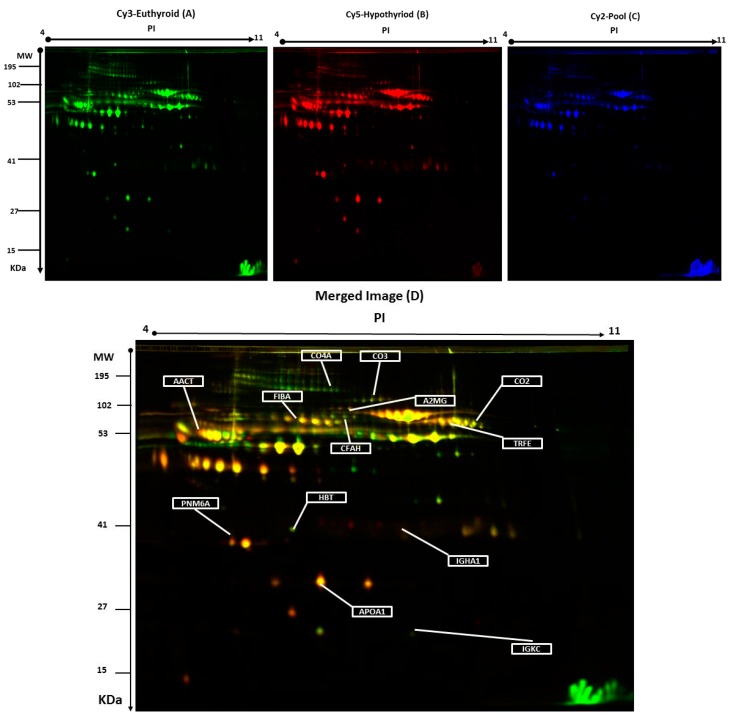
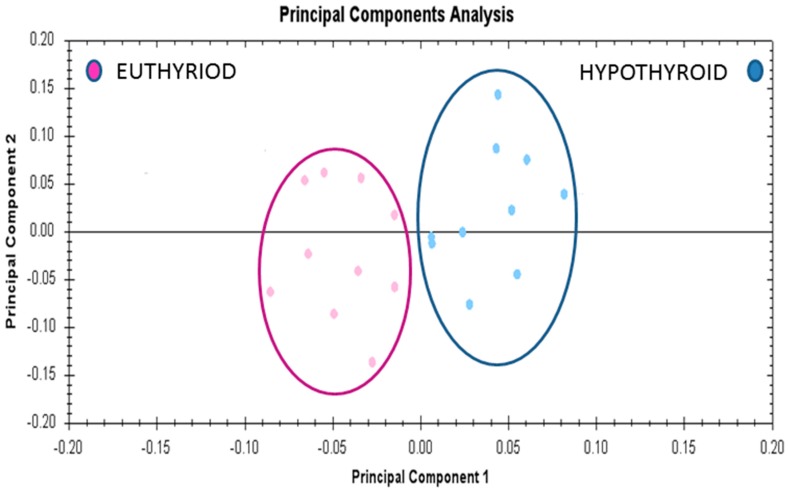
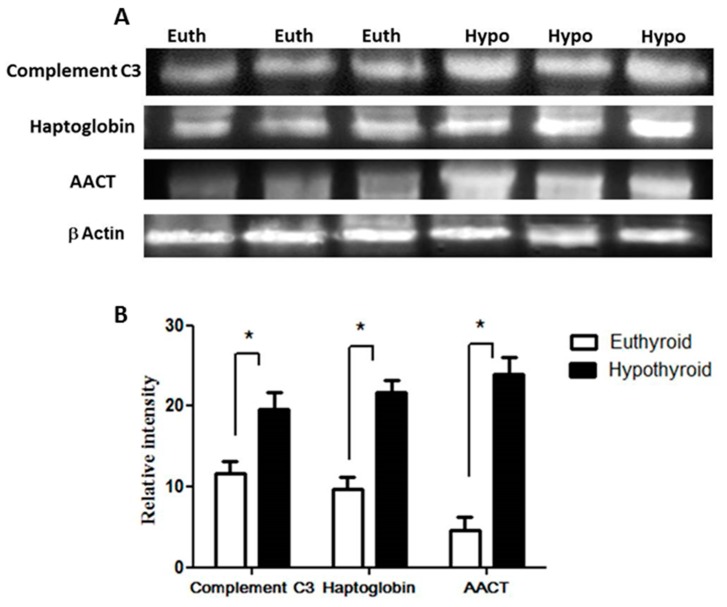
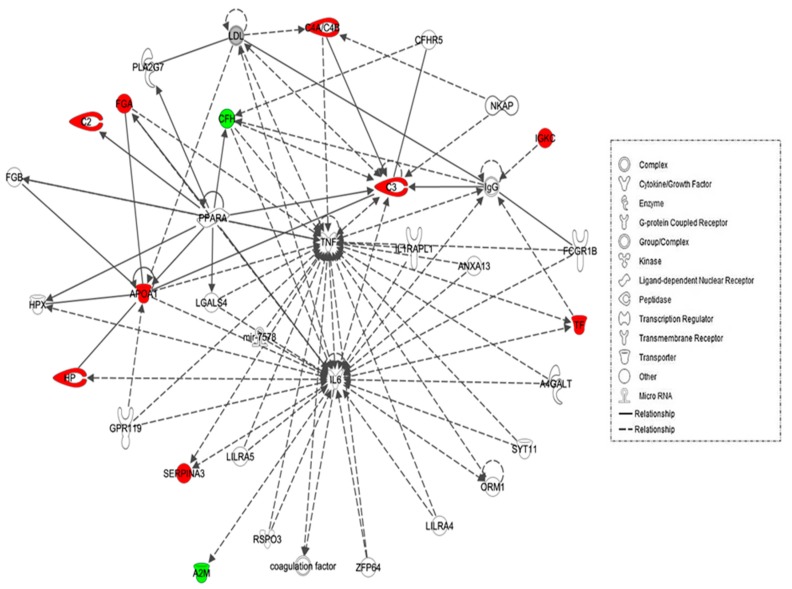
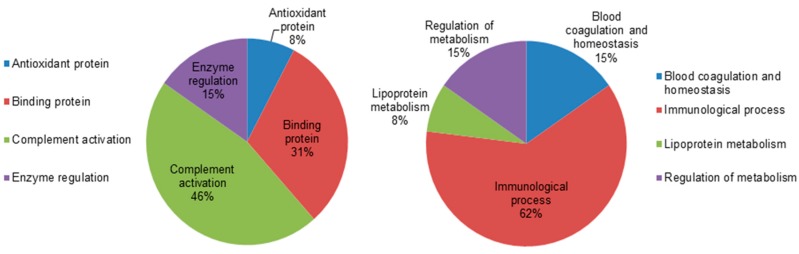
Thyroid hormone is a potent stimulator of metabolism, playing a critical role in regulating energy expenditure and in key physiological mechanisms, such as growth and development. Although administration of thyroid hormone in the form of levo thyroxine (l-thyroxine) has been used to treat hypothyroidism for many years, the precise molecular basis of its physiological actions remains uncertain. Our objective was to define the changes in circulating protein levels that characterize alterations in thyroid hormone status. To do this, an integrated untargeted proteomic approach with network analysis was used. This study included 10 age-matched subjects with newly diagnosed overt hypothyroidism. Blood was collected from subjects at baseline and at intervals post-treatment with l-thyroxine until they reached to euthyroid levels. Plasma protein levels were compared by two-dimensional difference in gel electrophoresis (2D-DIGE) pre- and post-treatment. Twenty differentially expressed protein spots were detected. Thirteen were identified, and were found to be unique protein sequences by MALDI-TOF mass spectrometry. Ten proteins were more abundant in the hypothyroid vs. euthyroid state: complement C2, serotransferrin, complement C3, Ig κ chain C region, α-1-antichymotrypsin, complement C4-A, haptoglobin, fibrinogen α chain, apolipoprotein A-I, and Ig α-1 chain C region. Three proteins were decreased in abundance in the hypothyroid vs. euthyroid state: complement factor H, paraneoplastic antigen-like protein 6A, and α-2-macroglobulin. The differentially abundant proteins were investigated by Ingenuity Pathway Analysis (IPA) to reveal their associations with known biological functions. Their connectivity map included interleukin-6 (IL-6) and tumour necrosis factor α (TNF-α) as central nodes and the pathway identified with the highest score was involved in neurological disease, psychological disorders, and cellular movement. The comparison of the plasma proteome between the hypothyroid vs euthyroid states revealed differences in the abundance of proteins involved in regulating the acute phase response.
甲状腺激素是一种强有力的代谢刺激物,在调节能量消耗和关键生理机制(如生长和发育)中起着至关重要的作用。尽管多年来一直使用左旋甲状腺素(l-甲状腺素)的形式来治疗甲状腺功能减退症,但它的生理作用的确切分子基础仍不确定。我们的目的是确定表征甲状腺激素状态变化的循环蛋白水平的变化。为此,我们使用了一种集成的非靶向蛋白质组学方法和网络分析。这项研究包括 10 名年龄匹配的新诊断为显性甲状腺功能减退症的患者。在基线和用 l-甲状腺素治疗后每隔一段时间从患者采集血液,直到他们达到甲状腺功能正常水平。用二维差异凝胶电泳(2D-DIGE)在治疗前后比较血浆蛋白水平。检测到 20 个差异表达的蛋白质斑点。通过 MALDI-TOF 质谱鉴定了 13 个,发现它们是独特的蛋白质序列。10 种蛋白质在甲状腺功能减退症状态下比甲状腺功能正常状态下更丰富:补体 C2、血清转铁蛋白、补体 C3、免疫球蛋白κ轻链 C 区、α-1-抗胰蛋白酶、补体 C4-A、触珠蛋白、纤维蛋白原α链、载脂蛋白 A-I 和免疫球蛋白α-1 链 C 区。在甲状腺功能减退症状态下,有 3 种蛋白质的丰度降低:补体因子 H、副肿瘤抗原样蛋白 6A 和α-2-巨球蛋白。通过 Ingenuity Pathway Analysis(IPA)对差异丰富的蛋白质进行了研究,以揭示它们与已知生物学功能的关联。他们的连接图包括白细胞介素 6(IL-6)和肿瘤坏死因子α(TNF-α)作为中心节点,得分最高的途径涉及神经疾病、心理障碍和细胞运动。甲状腺功能减退症与甲状腺功能正常状态之间的血浆蛋白质组比较显示,参与调节急性期反应的蛋白质丰度存在差异。