Takahashi Hideto, Takahashi Kunihiko, Shimura Hiroki, Yasumura Seiji, Suzuki Satoru, Ohtsuru Akira, Midorikawa Sanae, Ohira Tetsuya, Ohto Hitoshi, Yamashita Shunichi, Kamiya Kenji
National Institute of Public Health, Saitama Fukushima Medical University, Fukushima Department of Biostatistics, Nagoya University Graduate School of Medicine, Aichi Department of Laboratory Medicine, Fukushima Medical University School of Medicine Department of Public Health, School of Medicine, Fukushima Medical University School of Medicine Radiation Medical Science Center for the Fukushima Health Management Survey, Fukushima Medical University Department of Radiation Health Management, Radiation Medical Science Center for the Fukushima Health Management Survey, Fukushima Medical University Department of Epidemiology, Fukushima Medical University School of Medicine, Fukushima Department of Radiation Medical Sciences, Atomic Bomb Disease Institute, Nagasaki University, Nagasaki Research Institute for Radiation Biology and Medicine, Hiroshima University, Hiroshima, Japan.
Medicine (Baltimore). 2017 Dec;96(48):e8631. doi: 10.1097/MD.0000000000008631.
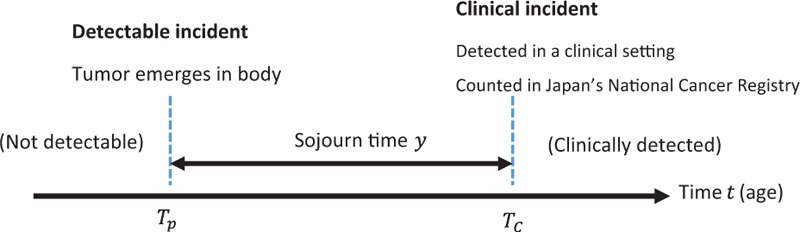
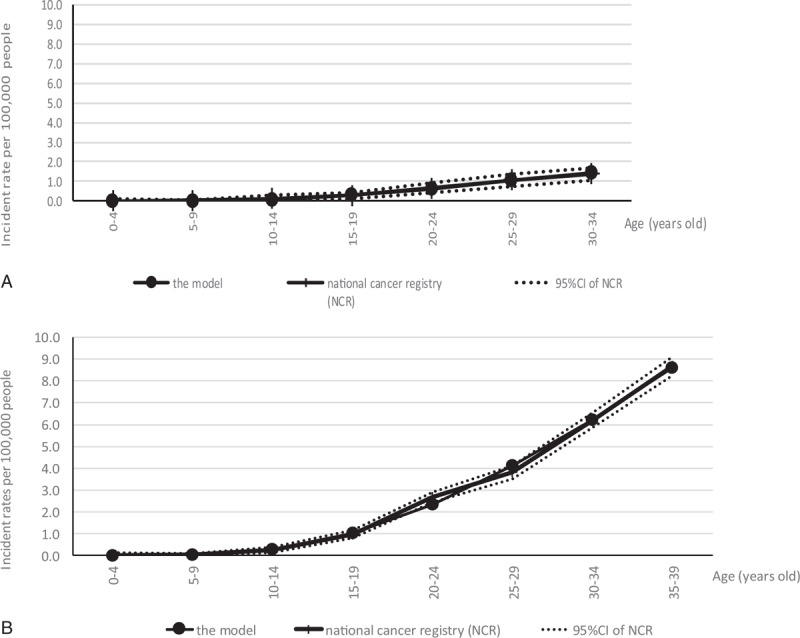
During the 4 years following the nuclear power plant accident of 2011, 39 males and 77 females were diagnosed with or suspected of having cancer based on the first-round thyroid examination of the Fukushima Health Management Survey (FHMS) targeting residents aged <19 years in Fukushima. Prior comparisons between the observed data and Japan's National Cancer Registry (NCR) data suggested that this incidence might be excessive, but such comparisons are problematic because they need not only to adjust index unit (prevalence proportion vs incidence rate), but also examine characteristics (complete enumeration mass screening for the aged 0 to 18 years vs detections in clinical settings for all the residents) and sensitivity of the examinations. The purpose of this study is to build a common model applicable to any region in Japan under nonaccident conditions, and estimate the expected prevalence based on the numbers of subjects surveyed in the FHMS using a simulation of the sensitivity.The cancer-progression model is an extension of Day and Walter's, the parameters of which were estimated by minimizing the weighted root mean squared error between the average age-specific thyroid incident rates from 2001 to 2010 in the NCR and those determined by the model. We estimated expected detectable prevalent cases by the model with their examination-participation proportions and simulated several sensitivities.Median sojourn times were 34 years (males) and 30 years (females) by the model. Simulation results showed that the numbers of observed prevalent cases were within the 95% confidence intervals of the expected prevalent cases with several sensitivities in each gender.We successfully built a cancer-progression model of thyroid cancer based on Japan's NCR data under no accident conditions. It is a tool for comparing the observed prevalence data of examinations and the NCR data, which resolved 3 issues of index unit, the characteristics and sensitivity of the examinations. Simulation results imply that the number of observed thyroid cancer cases can be detected by the FHMS first-round thyroid screening at several sensitivities under no accident conditions.
在2011年核电站事故后的4年里,福岛健康管理调查(FHMS)针对福岛19岁以下居民进行第一轮甲状腺检查,诊断出或疑似患有癌症的男性有39人,女性有77人。之前将观察数据与日本国家癌症登记处(NCR)数据进行比较表明,这一发病率可能过高,但此类比较存在问题,因为不仅需要调整指标单位(患病率比例与发病率),还需检查特征(0至18岁人群的全面普查与所有居民临床环境中的检测情况)以及检查的敏感性。本研究的目的是构建一个适用于日本任何地区非事故条件下的通用模型,并通过敏感性模拟,根据FHMS调查对象数量估计预期患病率。癌症进展模型是对戴和沃尔特模型的扩展,其参数通过最小化NCR中2001年至2010年特定年龄组甲状腺发病率平均值与该模型确定的发病率之间的加权均方根误差来估计。我们通过该模型及其检查参与比例估计预期可检测的现患病例数,并模拟了几种敏感性。该模型得出的中位停留时间男性为34年,女性为30年。模拟结果表明,在每种性别中,几种敏感性下观察到的现患病例数均在预期现患病例数的95%置信区间内。我们成功构建了基于日本NCR数据的非事故条件下甲状腺癌的癌症进展模型。它是一种用于比较检查的观察患病率数据与NCR数据的工具,解决了指标单位、检查特征和敏感性这三个问题。模拟结果表明,在非事故条件下,FHMS第一轮甲状腺筛查在几种敏感性水平下能够检测到观察到的甲状腺癌病例数。