Virginia Tech Carilion Research Institute, Roanoke, United States.
Department of Psychology, Virginia Tech, Blacksburg, United States.
Elife. 2018 Jan 9;7:e30150. doi: 10.7554/eLife.30150.
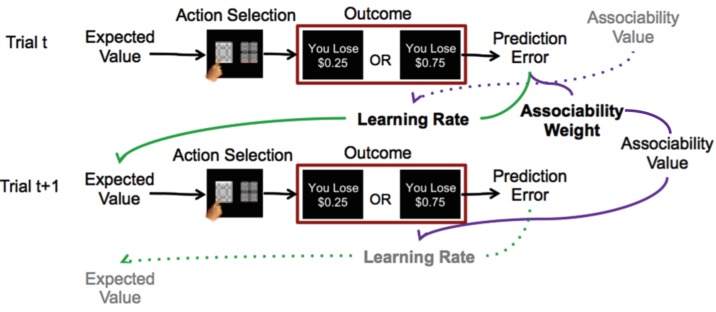
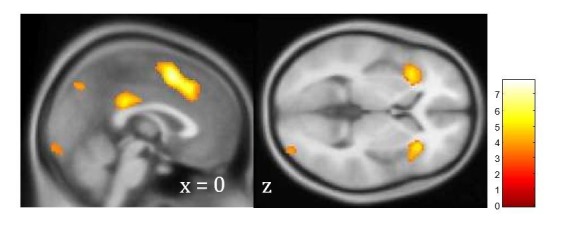
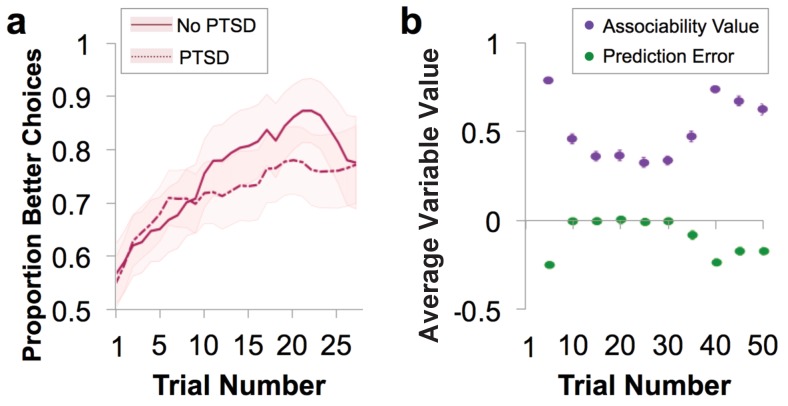
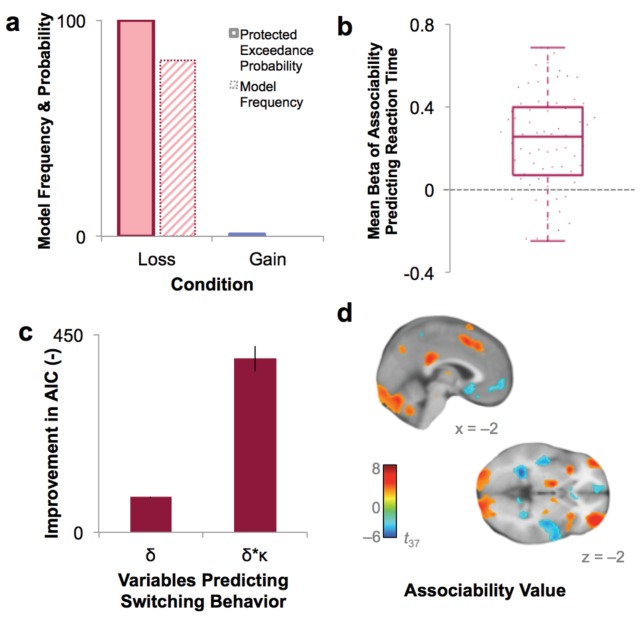
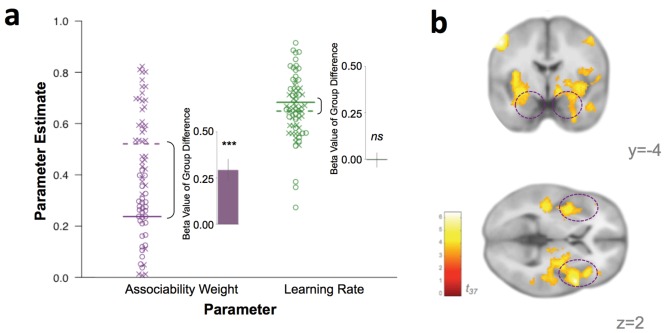
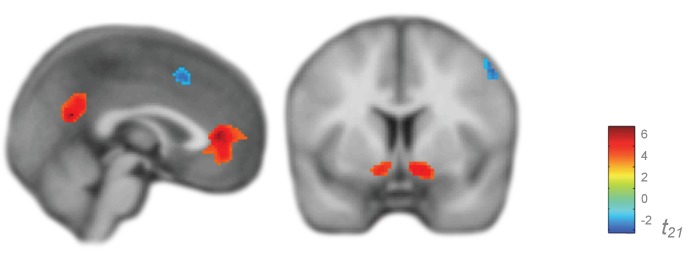
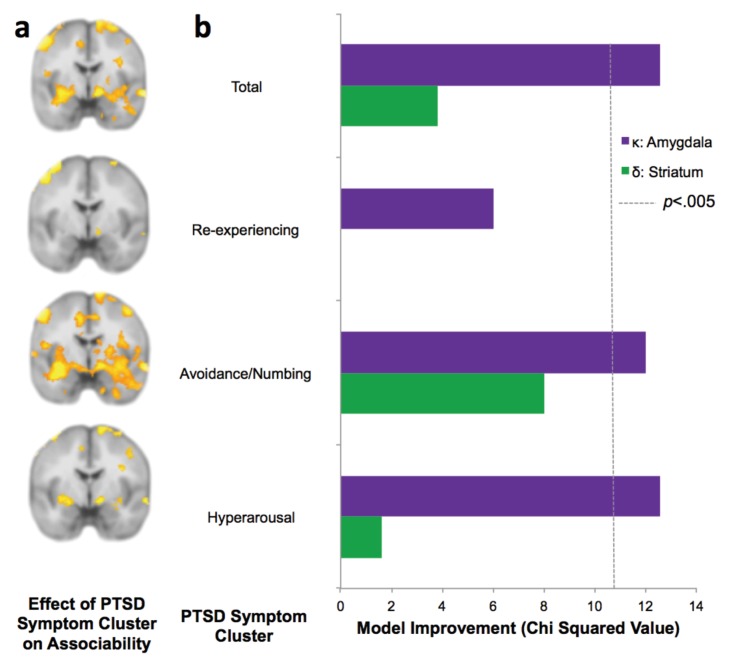
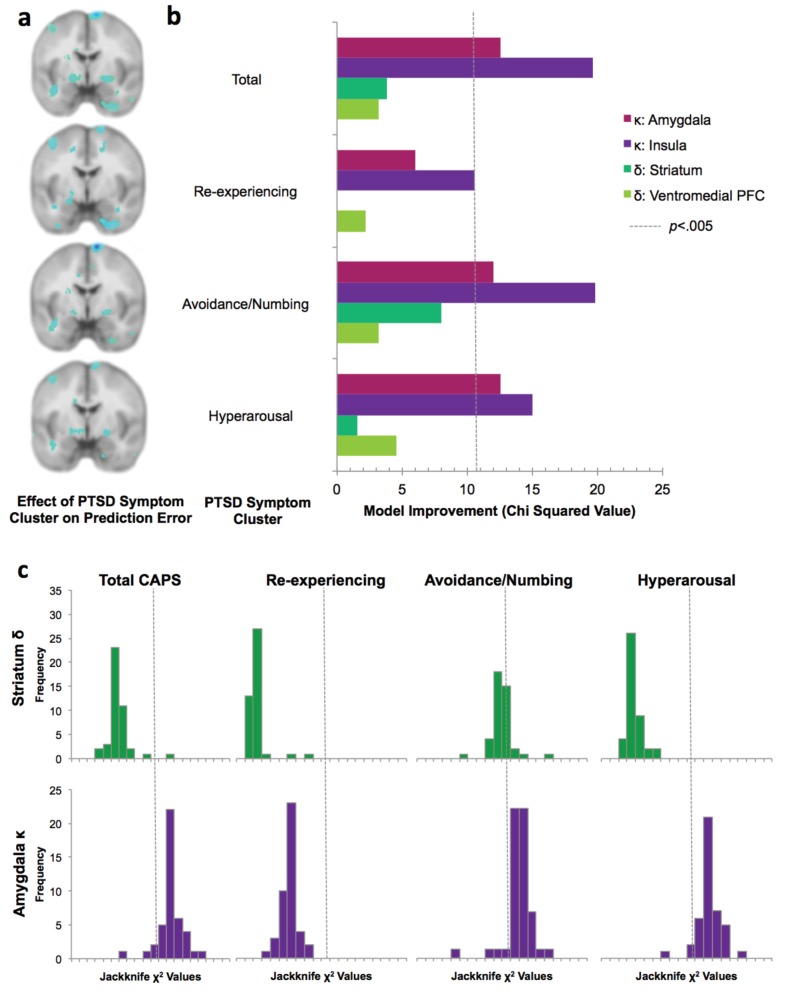
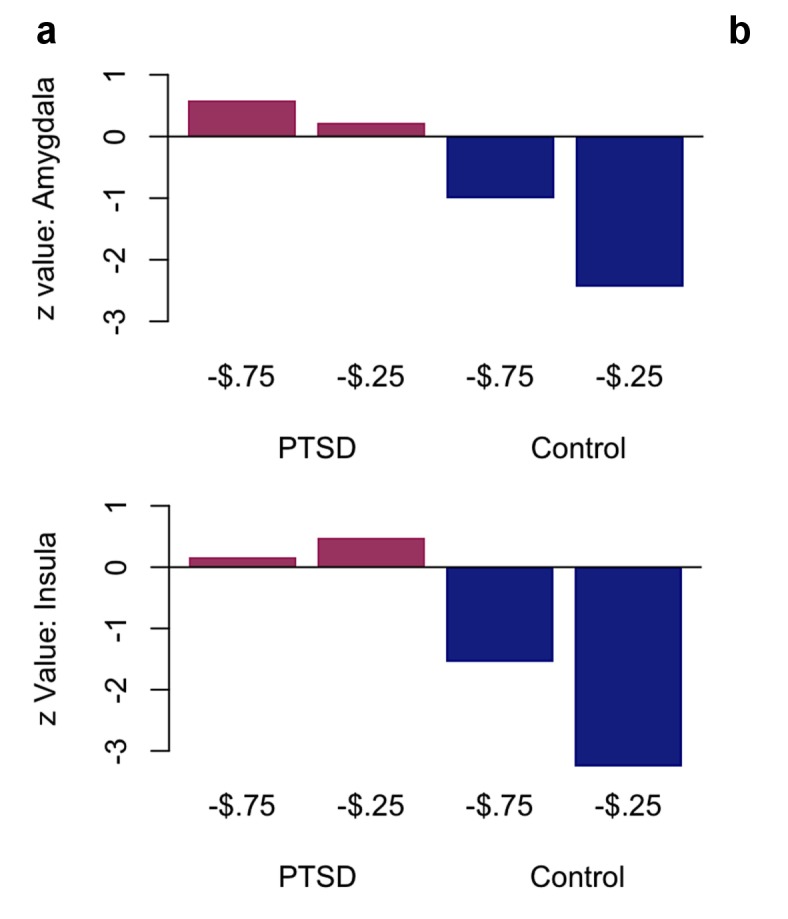
Disproportionate reactions to unexpected stimuli in the environment are a cardinal symptom of posttraumatic stress disorder (PTSD). Here, we test whether these heightened responses are associated with disruptions in distinct components of reinforcement learning. Specifically, using functional neuroimaging, a loss-learning task, and a computational model-based approach, we assessed the mechanistic hypothesis that overreactions to stimuli in PTSD arise from anomalous gating of attention during learning (i.e., associability). Behavioral choices of combat-deployed veterans with and without PTSD were fit to a reinforcement learning model, generating trial-by-trial prediction errors (signaling unexpected outcomes) and associability values (signaling attention allocation to the unexpected outcomes). Neural substrates of associability value and behavioral parameter estimates of associability updating, but not prediction error, increased with PTSD during loss learning. Moreover, the interaction of PTSD severity with neural markers of associability value predicted behavioral choices. These results indicate that increased attention-based learning may underlie aspects of PTSD and suggest potential neuromechanistic treatment targets.
对环境中意外刺激的过度反应是创伤后应激障碍(PTSD)的一个主要症状。在这里,我们测试这些增强的反应是否与强化学习的不同成分的中断有关。具体来说,我们使用功能神经影像学、损失学习任务和基于计算模型的方法,评估了一个机制假设,即 PTSD 中对刺激的过度反应源于学习期间注意力的异常门控(即联想)。患有和不患有 PTSD 的参战退伍军人的行为选择符合强化学习模型,产生逐次试验的预测误差(表示意外结果)和联想值(表示对意外结果的注意力分配)。在损失学习过程中,PTSD 会增加联想值的可变性和联想更新的行为参数估计,但不会增加预测误差的可变性。此外,PTSD 严重程度与联想值的神经标记物的相互作用预测了行为选择。这些结果表明,基于注意力的学习增加可能是 PTSD 的某些方面的基础,并为潜在的神经机制治疗靶点提供了线索。