Neurophysiology Unit, Cardiac Electrophysiology Research and Training Center, Faculty of Medicine, Chiang Mai University, Chiang Mai, 50200, Thailand.
Cardiac Electrophysiology Research and Training Center, Department of Physiology, Faculty of Medicine, Chiang Mai University, Chiang Mai, 50200, Thailand.
J Neuroinflammation. 2018 Jan 9;15(1):11. doi: 10.1186/s12974-018-1055-2.
Chronic high-fat diet (HFD) consumption caused not only obese-insulin resistance, but also cognitive decline and microglial hyperactivity. Modified gut microbiota by prebiotics and probiotics improved obese-insulin resistance. However, the effects of prebiotics, probiotics, and synbiotics on cognition and microglial activity in an obese-insulin resistant condition have not yet been investigated. We aimed to evaluate the effect of prebiotic (Xyloolidosaccharide), probiotic (Lactobacillus paracasei HII01), or synbiotics in male obese-insulin resistant rats induced by a HFD.
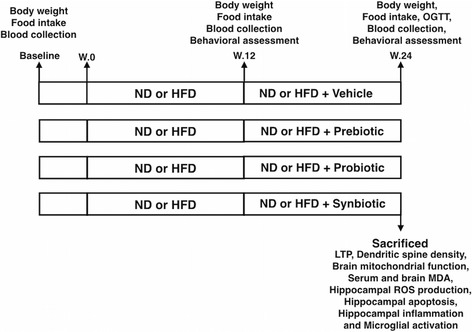
Male Wistar rats were fed with either a normal diet or a HFD for 12 weeks. At week 13, the rats in each dietary group were randomly divided into four subgroups including vehicle group, prebiotics group, probiotics group, and synbiotics group. Rats received their assigned intervention for an additional 12 weeks. At the end of experimental protocol, the cognitive functioning of each rat was investigated; blood and brain samples were collected to determine metabolic parameters and investigate brain pathology.
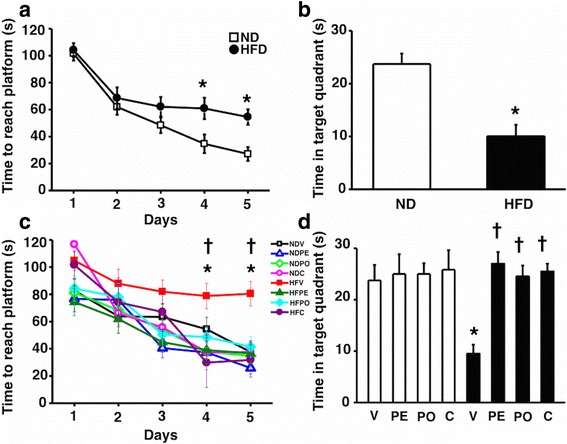
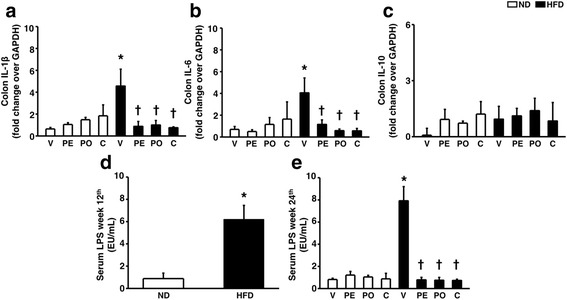
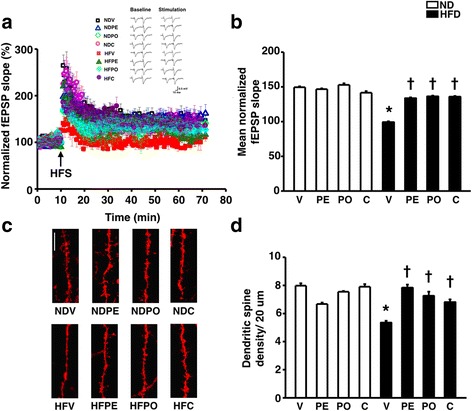
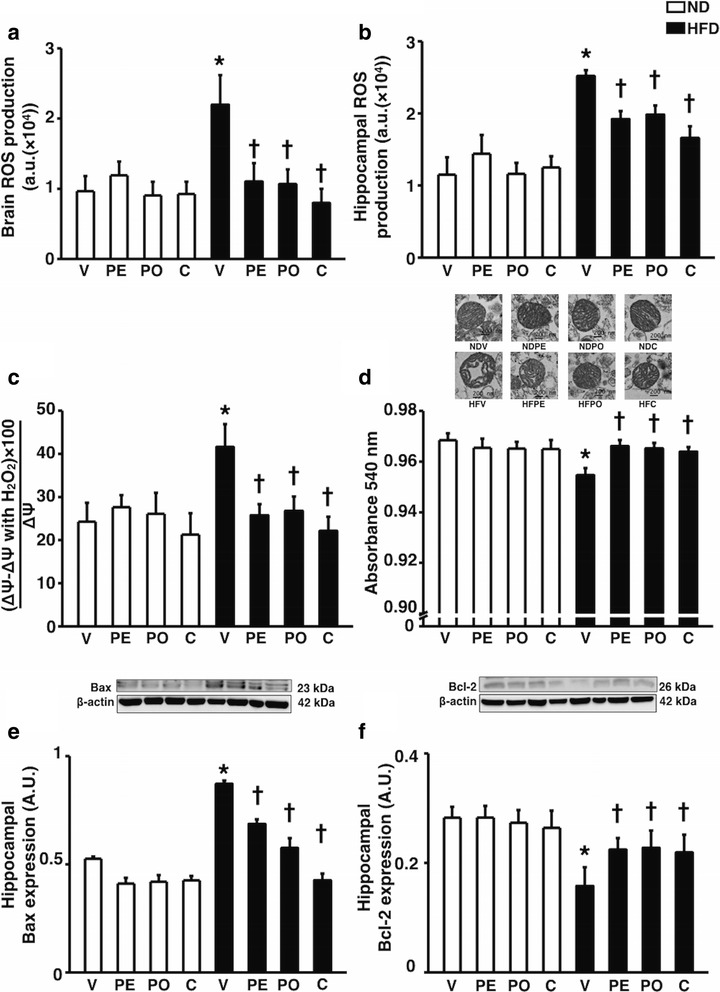
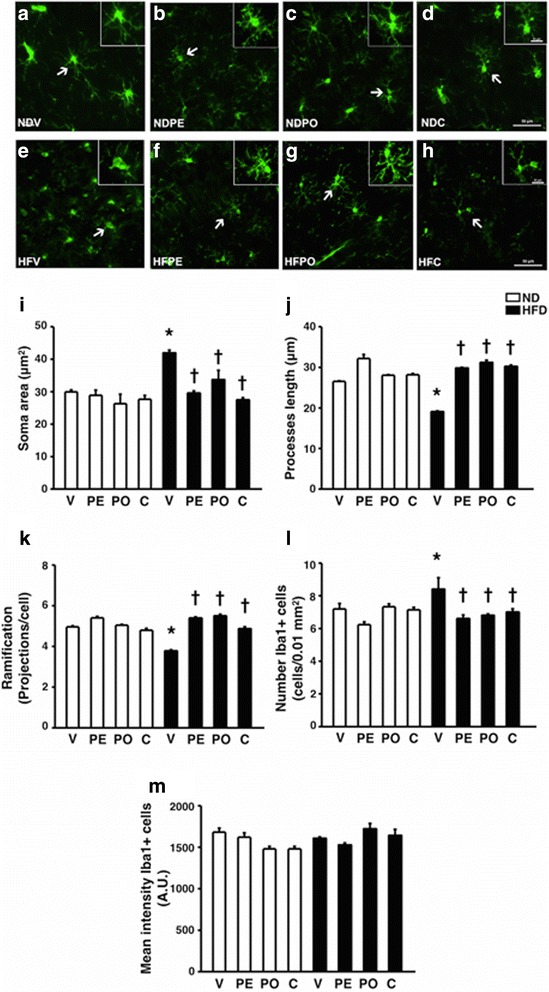
We found that chronic HFD consumption leads to gut and systemic inflammation and impaired peripheral insulin sensitivity, which were improved by all treatments. Prebiotics, probiotics, or synbiotics also improved hippocampal plasticity and attenuated brain mitochondrial dysfunction in HFD-fed rats. Interestingly, hippocampal oxidative stress and apoptosis were significantly decreased in HFD-fed rats with all therapies, which also decreased microglial activation, leading to restored cognitive function.
These findings suggest that consumption of prebiotics, probiotics, and synbiotics restored cognition in obese-insulin resistant subjects through gut-brain axis, leading to improved hippocampal plasticity, brain mitochondrial function, and decreased microglial activation.
慢性高脂肪饮食(HFD)不仅会导致肥胖型胰岛素抵抗,还会导致认知能力下降和小胶质细胞过度活跃。通过使用益生元和益生菌来改变肠道微生物群可以改善肥胖型胰岛素抵抗。然而,目前尚未研究过益生元、益生菌和合生菌对肥胖型胰岛素抵抗状态下的认知能力和小胶质细胞活性的影响。我们旨在评估益生元(木二糖)、益生菌(副干酪乳杆菌 HII01)或合生菌对 HFD 诱导的肥胖型胰岛素抵抗雄性大鼠的影响。
雄性 Wistar 大鼠分别喂食正常饮食或 HFD 长达 12 周。在第 13 周,每个饮食组的大鼠随机分为 4 个亚组,包括对照组、益生元组、益生菌组和合生菌组。大鼠接受指定的干预措施额外 12 周。在实验方案结束时,对每只大鼠的认知功能进行检测;采集血液和脑组织样本,以确定代谢参数和研究脑组织病理学。
我们发现,慢性 HFD 会导致肠道和全身炎症以及外周胰岛素敏感性受损,所有治疗均可改善这些问题。益生元、益生菌或合生菌也可改善 HFD 喂养大鼠的海马可塑性,并减轻其大脑线粒体功能障碍。有趣的是,在 HFD 喂养的大鼠中,所有治疗方法均显著降低了海马的氧化应激和细胞凋亡,从而改善了认知功能。这些治疗方法还降低了小胶质细胞的激活,导致认知功能恢复。
这些发现表明,通过肠-脑轴,益生元、益生菌和合生菌的摄入可恢复肥胖型胰岛素抵抗患者的认知功能,从而改善海马可塑性、大脑线粒体功能和减少小胶质细胞激活。