Ganesan Vijaydev, Li Zhenghong, Wang Xiaonan, Zhang Haoran
Department of Chemical and Biochemical Engineering, Rutgers, The State University of New Jersey, 98 Brett Rd, Piscataway, NJ 08854, USA.
Synth Syst Biotechnol. 2017 Aug 26;2(3):236-242. doi: 10.1016/j.synbio.2017.08.003. eCollection 2017 Sep.
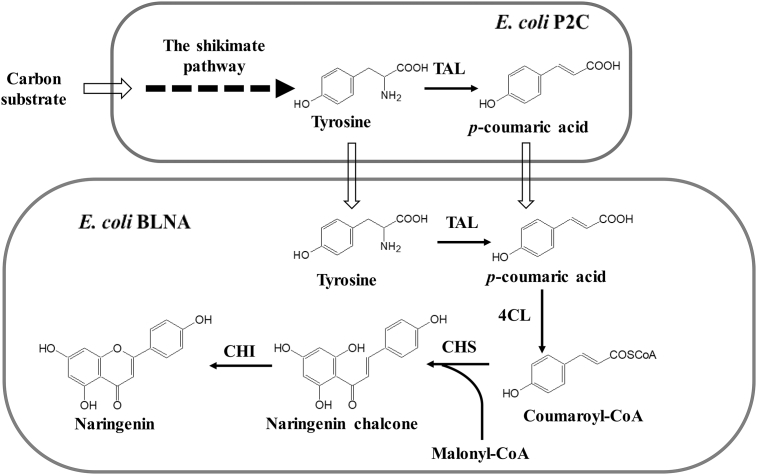
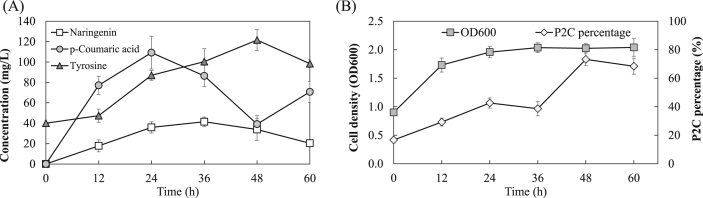
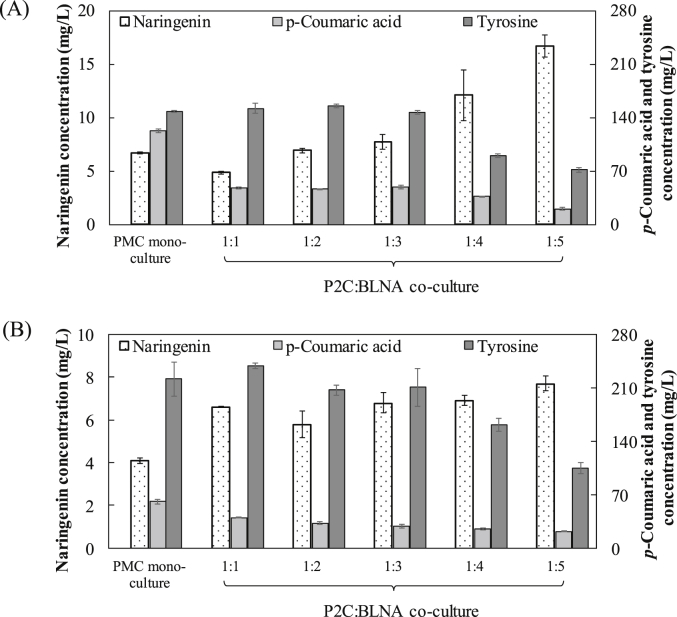
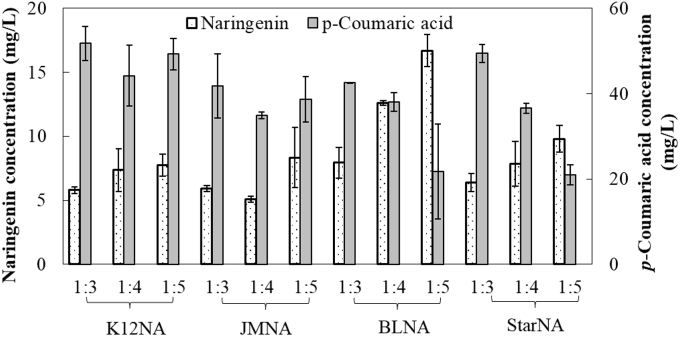
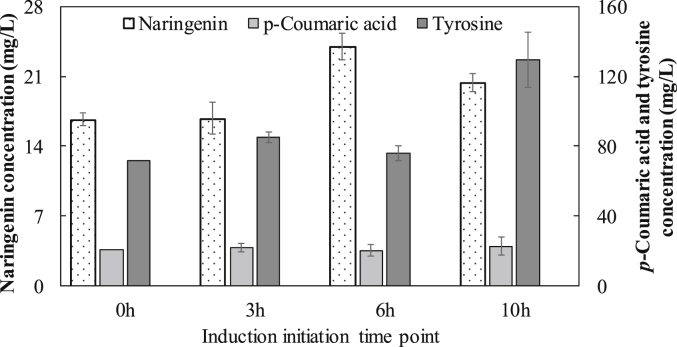
Co-culture engineering is an emerging approach for microbial biosynthesis of a variety of biochemicals. In this study, co-cultures were developed for heterologous biosynthesis of the natural product naringenin. The co-cultures were composed of two independent strains dedicated to functional expression of different portions of the biosynthetic pathway, respectively. The co-culture biosynthesis was optimized by investigating the effect of carbon source, strain selection, timing of IPTG induction and the inoculation ratio between the co-culture strains. Compared with the mono-culture strategy, the utilization of the designed co-cultures significantly improved the naringenin production, largely due to the reduction of metabolic stress, employment of proper hosts for improving pathway enzyme activities, and flexible adjustment of the relative biosynthetic strength between the co-culture strains. The findings of this study extend the applicability of co-culture engineering in complex natural product biosynthesis.
共培养工程是一种用于多种生化物质微生物合成的新兴方法。在本研究中,开发了用于天然产物柚皮素异源生物合成的共培养体系。该共培养体系由两个独立菌株组成,分别专门负责生物合成途径不同部分的功能表达。通过研究碳源、菌株选择、IPTG诱导时间以及共培养菌株之间的接种比例的影响,对共培养生物合成进行了优化。与单培养策略相比,所设计的共培养体系的应用显著提高了柚皮素的产量,这主要归因于代谢压力的降低、采用合适的宿主以提高途径酶活性以及灵活调整共培养菌株之间的相对生物合成强度。本研究结果扩展了共培养工程在复杂天然产物生物合成中的适用性。