Brazilian Synchrotron Light Laboratory (LNLS), Brazilian Center for Research in Energy and Materials (CNPEM)., Av. Giuseppe Máximo Scolfaro, 10000, 13083-100, Campinas, SP, Brazil.
Programa de Pós-Graduação em Física Biomolecular, Instituto de Física de São Carlos, Universidade de São Paulo, São Carlos, SP, Brazil.
Sci Rep. 2018 Jan 10;8(1):260. doi: 10.1038/s41598-017-18470-z.
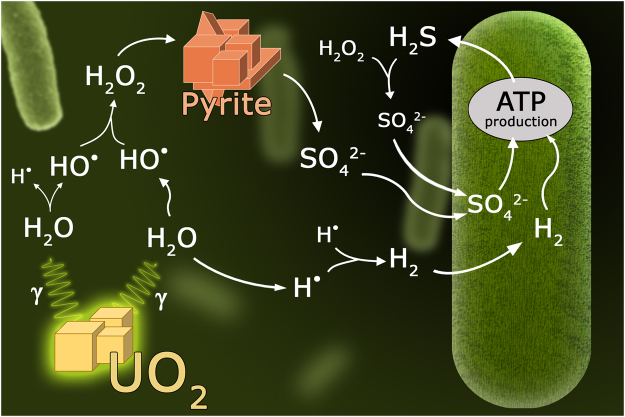
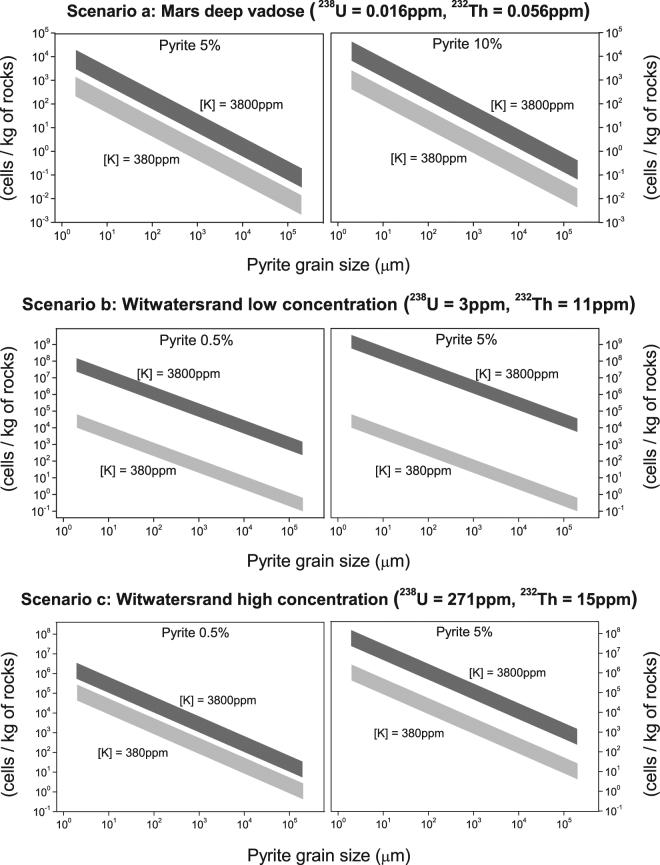
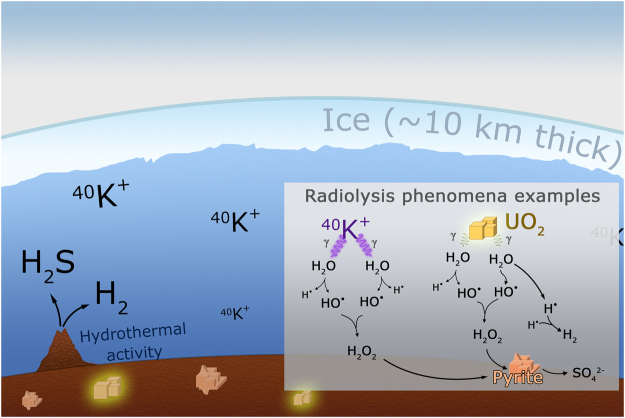
There is an increasing interest in the icy moons of the Solar System due to their potential habitability and as targets for future exploratory missions, which include astrobiological goals. Several studies have reported new results describing the details of these moons' geological settings; however, there is still a lack of information regarding the deep subsurface environment of the moons. The purpose of this article is to evaluate the microbial habitability of Europa constrained by terrestrial analogue environments and sustained by radioactive energy provided by natural unstable isotopes. The geological scenarios are based on known deep environments on Earth, and the bacterial ecosystem is based on a sulfate-reducing bacterial ecosystem found 2.8 km below the surface in a basin in South Africa. The results show the possibility of maintaining the modeled ecosystem based on the proposed scenarios and provides directions for future models and exploration missions for a more complete evaluation of the habitability of Europa and of icy moons in general.
由于其潜在的宜居性以及作为未来探索任务的目标(包括天体生物学目标),人们对太阳系的冰冷卫星越来越感兴趣。有几项研究报告了新的结果,描述了这些卫星地质背景的详细信息;然而,关于卫星的深部地下环境,仍然缺乏信息。本文的目的是通过受地球类似环境约束并由天然不稳定同位素提供的放射性能量来评估 Europa 的微生物可居住性。地质情景基于地球上已知的深部环境,细菌生态系统基于在南非一个盆地中地表以下 2.8 公里处发现的硫酸盐还原细菌生态系统。结果表明,根据提出的情景维持模拟生态系统的可能性,并为未来的模型和探索任务提供了方向,以便更全面地评估 Europa 以及一般来说的冰冷卫星的宜居性。