Department of Neurosurgery, Elisabeth-TweeSteden Hospital, Tilburg, The Netherlands.
Department of Cognitive Neuropsychology, Tilburg University, P.O. Box 90153, 5000 LE, Tilburg, The Netherlands.
J Neurooncol. 2018 May;137(3):523-532. doi: 10.1007/s11060-017-2738-8. Epub 2018 Jan 10.
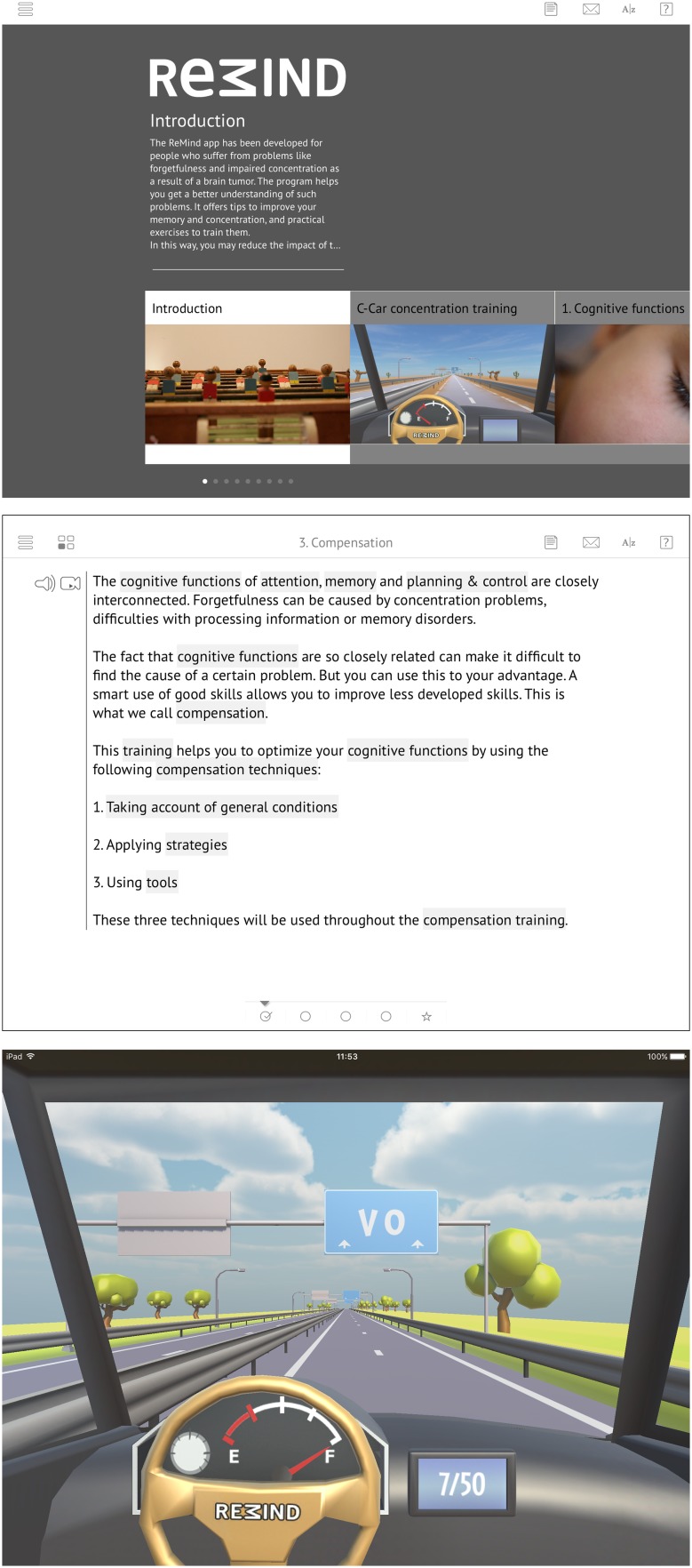
Many patients with primary brain tumors experience cognitive deficits. Cognitive rehabilitation programs focus on alleviating these deficits, but availability of such programs is limited. Our large randomized controlled trial (RCT) demonstrated positive effects of the cognitive rehabilitation program developed by our group. We converted the program into the iPad-based cognitive rehabilitation program ReMind, to increase its accessibility. The app incorporates psychoeducation, strategy training and retraining. This pilot study in patients with primary brain tumors evaluates the feasibility of the use of the ReMind-app in a clinical (research) setting in terms of accrual, attrition, adherence and patient satisfaction. The intervention commenced 3 months after resective surgery and patients were advised to spend 3 h per week on the program for 10 weeks. Of 28 eligible patients, 15 patients with presumed low-grade glioma or meningioma provided informed consent. Most important reason for decline was that patients (7) experienced no cognitive complaints. Participants completed on average 71% of the strategy training and 76% of the retraining. Some patients evaluated the retraining as too easy. Overall, 85% of the patients evaluated the intervention as "good" or "excellent". All patients indicated that they would recommend the program to other patients with brain tumors. The ReMind-app is the first evidence-based cognitive telerehabilitation program for adult patients with brain tumors and this pilot study suggests that postoperative cognitive rehabilitation via this app is feasible. Based on patients' feedback, we have expanded the retraining with more difficult exercises. We will evaluate the efficacy of ReMind in an RCT.
许多原发性脑肿瘤患者存在认知障碍。认知康复计划旨在缓解这些障碍,但此类计划的可及性有限。我们的大型随机对照试验(RCT)表明,我们小组开发的认知康复计划具有积极效果。我们将该计划转化为基于 iPad 的认知康复程序 ReMind,以提高其可及性。该应用程序结合了心理教育、策略培训和再培训。本研究旨在评估原发性脑肿瘤患者使用 ReMind 应用程序在临床(研究)环境中的可行性,包括入组、脱落、依从性和患者满意度。干预措施在切除手术后 3 个月开始,建议患者每周在该程序上花费 3 小时,持续 10 周。在 28 名符合条件的患者中,15 名患有低级别胶质瘤或脑膜瘤的患者提供了知情同意。下降的最重要原因是患者(7 名)没有认知问题。参与者平均完成了 71%的策略培训和 76%的再培训。一些患者认为再培训太简单了。总的来说,85%的患者认为干预“好”或“优秀”。所有患者都表示他们会将该程序推荐给其他脑肿瘤患者。ReMind 应用程序是第一个针对脑肿瘤成年患者的基于证据的认知远程康复程序,本研究表明,通过该应用程序进行术后认知康复是可行的。根据患者的反馈,我们已经用更难的练习扩展了再培训。我们将在 RCT 中评估 ReMind 的疗效。