Department of Chemical Engineering, Massachusetts Institute of Technology, Cambridge, MA, 02139, USA.
Biosystems & Micromechanics Interdisciplinary Research Group (BioSyM), Singapore-MIT Alliance in Research & Technology (SMART), Singapore, Singapore.
Sci Rep. 2018 Jan 11;8(1):478. doi: 10.1038/s41598-017-18744-6.
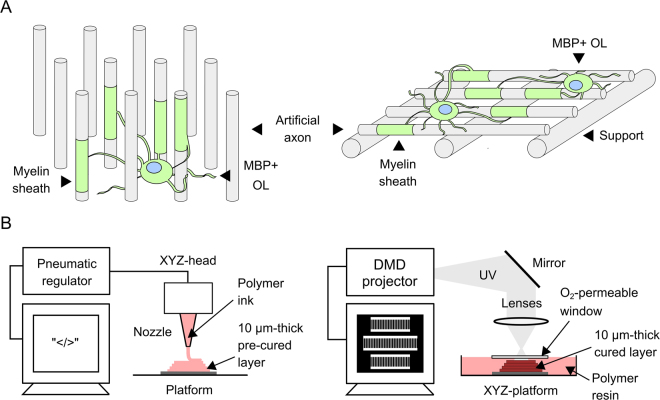
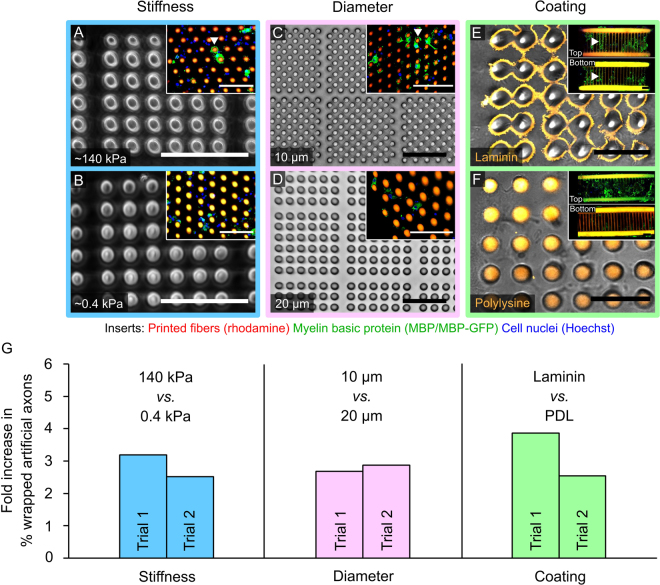
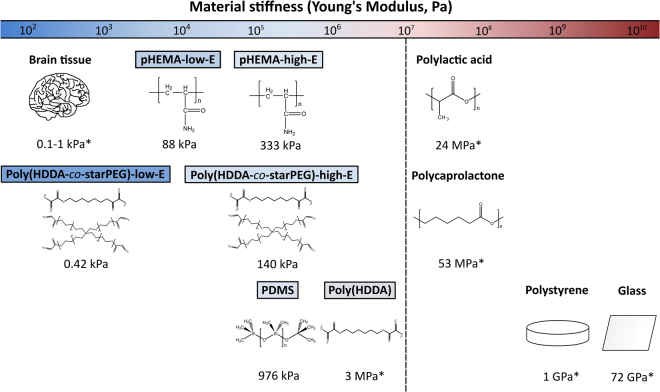
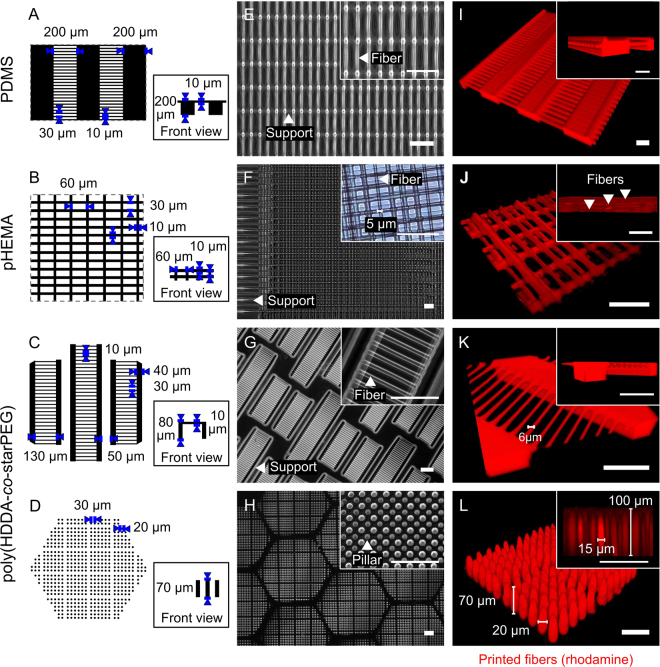
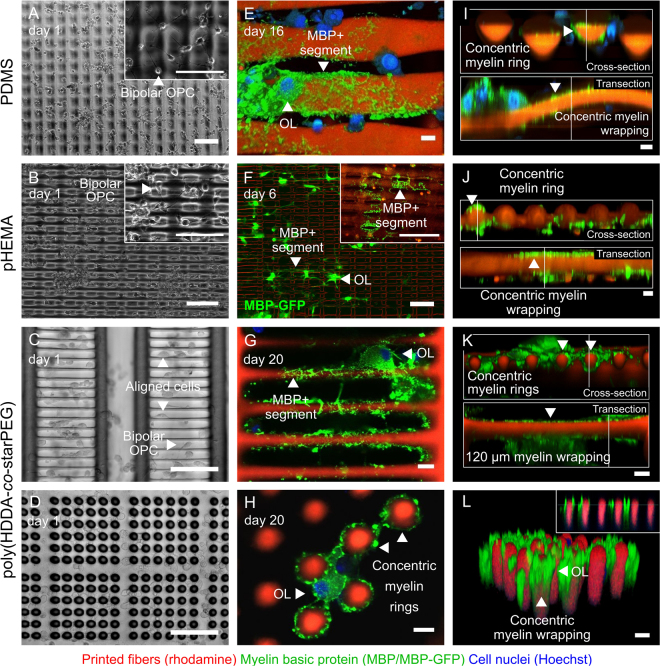
Myelination is critical for transduction of neuronal signals, neuron survival and normal function of the nervous system. Myelin disorders account for many debilitating neurological diseases such as multiple sclerosis and leukodystrophies. The lack of experimental models and tools to observe and manipulate this process in vitro has constrained progress in understanding and promoting myelination, and ultimately developing effective remyelination therapies. To address this problem, we developed synthetic mimics of neuronal axons, representing key geometric, mechanical, and surface chemistry components of biological axons. These artificial axons exhibit low mechanical stiffness approaching that of a human axon, over unsupported spans that facilitate engagement and wrapping by glial cells, to enable study of myelination in environments reflecting mechanical cues that neurons present in vivo. Our 3D printing approach provides the capacity to vary independently the complex features of the artificial axons that can reflect specific states of development, disease, or injury. Here, we demonstrate that oligodendrocytes' production and wrapping of myelin depend on artificial axon stiffness, diameter, and ligand coating. This biofidelic platform provides direct visualization and quantification of myelin formation and myelinating cells' response to both physical cues and pharmacological agents.
髓鞘形成对于神经元信号的转导、神经元的存活和神经系统的正常功能至关重要。髓鞘疾病是许多使人衰弱的神经疾病的原因,如多发性硬化症和白质营养不良。缺乏实验模型和工具来观察和体外操作这个过程,限制了对髓鞘形成的理解和促进,以及最终开发有效的髓鞘修复治疗方法的进展。为了解决这个问题,我们开发了神经元轴突的合成模拟物,代表了生物轴突的关键几何、机械和表面化学组成部分。这些人工轴突具有低机械刚度,接近人类轴突的机械刚度,在无支撑的跨度上,便于神经胶质细胞的接触和包裹,从而能够在反映神经元体内存在的机械线索的环境中研究髓鞘形成。我们的 3D 打印方法提供了独立改变人工轴突复杂特征的能力,这些特征可以反映特定的发育、疾病或损伤状态。在这里,我们证明少突胶质细胞的髓鞘形成和包裹取决于人工轴突的刚度、直径和配体涂层。这个仿生平台提供了对髓鞘形成和髓鞘形成细胞对物理线索和药物制剂反应的直接可视化和定量。