Portela A, Melero J A, Martínez C, Domingo E, Ortín J
Nucleic Acids Res. 1985 Nov 25;13(22):7959-77. doi: 10.1093/nar/13.22.7959.
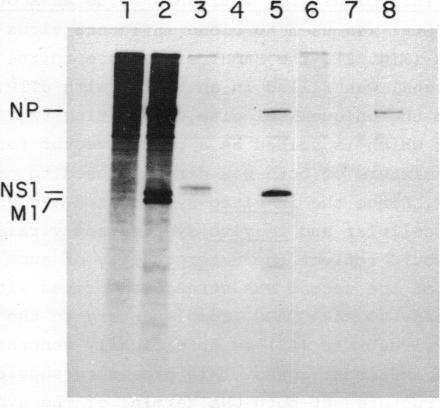
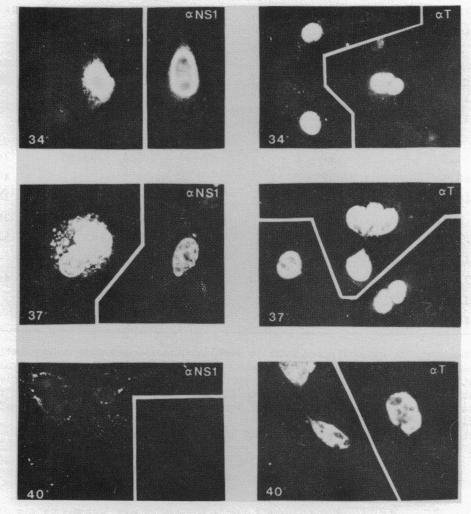
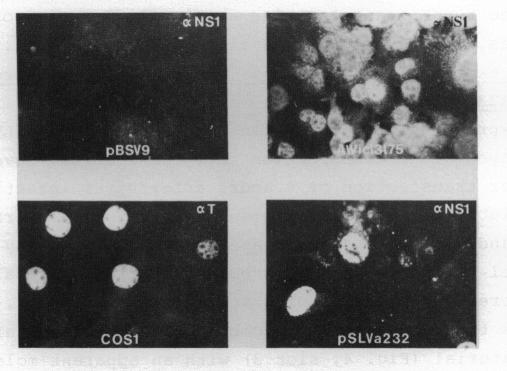
Influenza virus RNA segment 8 has been cloned into primer-vector pSLts1. This vector was designed to replicate in simian cells in a temperature dependent fashion by use of the SV40 tsA209 T-antigen gene. The oriented synthesis of cDNA on dT-tailed pSLts1 was performed on in vitro synthesized mRNA, and the second DNA strand was primed with an influenza-specific terminal oligodeoxynucleotide. Recombinant pSLVa232 contained the RNA segment 8 sequence directly fused to the SV40 late promoter contained in pSLts1, and followed by the SV40 polyadenylation signal. Expression of NS1 gene in transfected COS cells took place at a level comparable to that found in infected cells. When VERO cell cultures were transfected with recombinant pSLVa232, expression of the NS1 gene was temperature dependent. Close to one hundred fold increase in the amplification and expression of the cloned gene was observed after shift down of the transfected cells to permissive temperature. Vector pSLts1 and the cloning strategy described may be useful for the specific cloning and regulated expression of mRNAs of known 5'-terminal sequence.
流感病毒RNA片段8已被克隆到引物载体pSLts1中。该载体设计为通过使用SV40 tsA209 T抗原基因,以温度依赖的方式在猴细胞中复制。在体外合成的mRNA上进行dT尾化的pSLts1上cDNA的定向合成,第二条DNA链用流感特异性末端寡脱氧核苷酸引发。重组pSLVa232包含直接与pSLts1中所含SV40晚期启动子融合的RNA片段8序列,随后是SV40聚腺苷酸化信号。NS1基因在转染的COS细胞中的表达水平与在感染细胞中发现的水平相当。当用重组pSLVa232转染VERO细胞培养物时,NS1基因的表达是温度依赖性的。将转染细胞转移到允许温度后,观察到克隆基因的扩增和表达增加了近100倍。载体pSLts1和所述的克隆策略可能有助于已知5'末端序列的mRNA的特异性克隆和调控表达。