Boiteau Rene M, Hoyt David W, Nicora Carrie D, Kinmonth-Schultz Hannah A, Ward Joy K, Bingol Kerem
Environmental Molecular Sciences Laboratory, Pacific Northwest National Laboratory, Richland, WA 99354, USA.
Department of Ecology and Evolutionary Biology, University of Kansas, Lawrence, KS 66045, USA.
Metabolites. 2018 Jan 17;8(1):8. doi: 10.3390/metabo8010008.
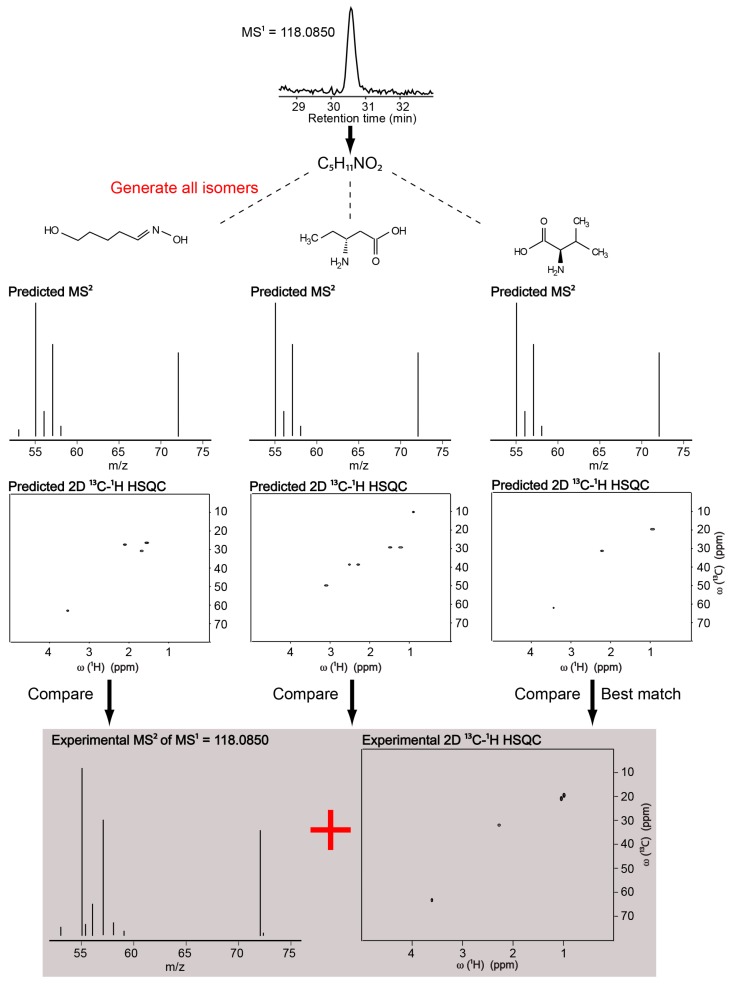
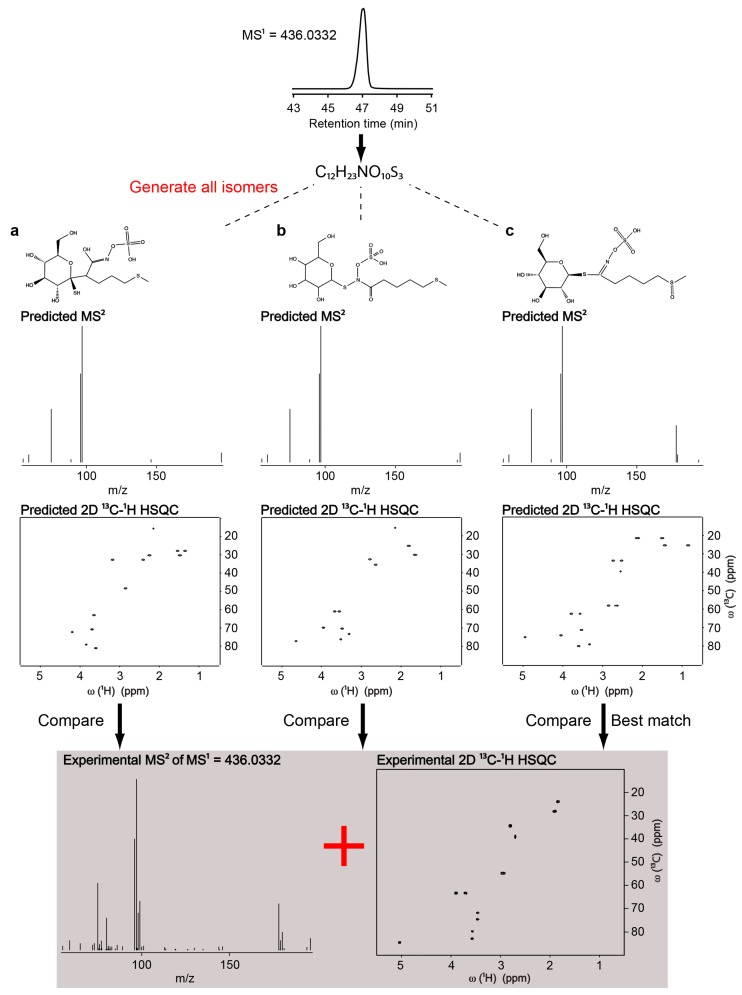
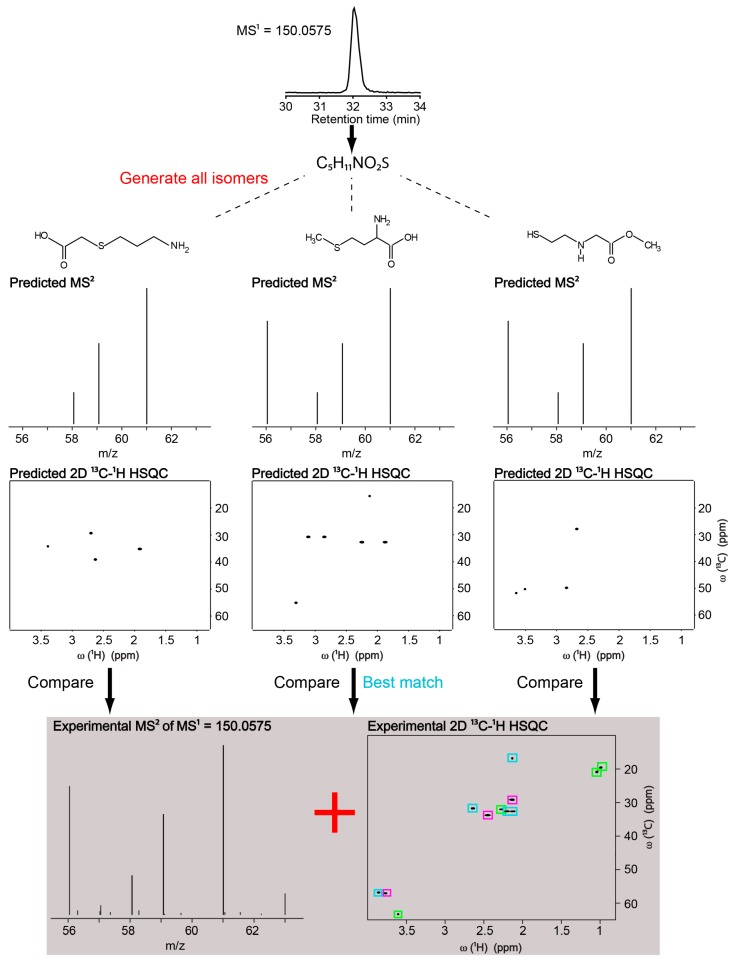
We introduce a cheminformatics approach that combines highly selective and orthogonal structure elucidation parameters; accurate mass, MS/MS (MS²), and NMR into a single analysis platform to accurately identify unknown metabolites in untargeted studies. The approach starts with an unknown LC-MS feature, and then combines the experimental MS/MS and NMR information of the unknown to effectively filter out the false positive candidate structures based on their predicted MS/MS and NMR spectra. We demonstrate the approach on a model mixture, and then we identify an uncatalogued secondary metabolite in . The NMR/MS² approach is well suited to the discovery of new metabolites in plant extracts, microbes, soils, dissolved organic matter, food extracts, biofuels, and biomedical samples, facilitating the identification of metabolites that are not present in experimental NMR and MS metabolomics databases.
我们介绍了一种化学信息学方法,该方法将高选择性和正交结构解析参数(精确质量、串联质谱(MS²)和核磁共振)整合到一个单一的分析平台中,以便在非靶向研究中准确鉴定未知代谢物。该方法从一个未知的液相色谱-质谱特征开始,然后结合未知物的实验串联质谱和核磁共振信息,根据预测的串联质谱和核磁共振光谱有效地滤除假阳性候选结构。我们在一个模型混合物上演示了该方法,然后在[具体对象]中鉴定出一种未编目的次生代谢物。核磁共振/串联质谱方法非常适合在植物提取物、微生物、土壤、溶解有机物、食品提取物、生物燃料和生物医学样品中发现新的代谢物,有助于鉴定实验核磁共振和质谱代谢组学数据库中不存在的代谢物。