Dantas Katia Cristina, Freitas Roseli Santos de, da Silva Marcos Vinicius, Criado Paulo Ricardo, Luiz Olinda do Carmo, Vicentini Adriana Pardini
Department of Pathology, Sao Paulo University Medical School, Sao Paulo, Brazil.
Medical Mycology Laboratory-LIM 53/HCFMUSP and Institute of Tropical Medicine, University of Sao Paulo, Sao Paulo, Brazil.
PLoS One. 2018 Jan 17;13(1):e0190408. doi: 10.1371/journal.pone.0190408. eCollection 2018.
Although early and rapid detection of histoplasmosis is essential to prevent morbidity and mortality, few diagnostic tools are available in resource-limited areas, especially where it is endemic and HIV/AIDS is also epidemic. Thus, we compared conventional and molecular methods to detect Histoplasma capsulatum in sera and blood from HIV/AIDS patients.
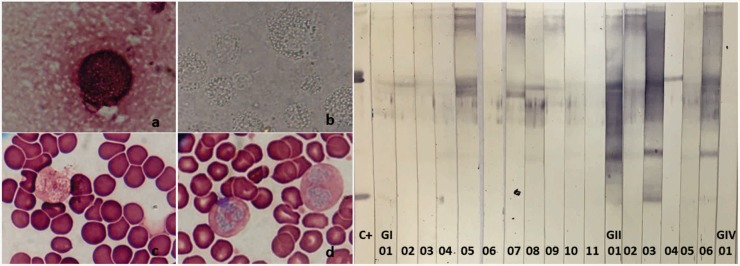
We collected a total of 40 samples from control volunteers and patients suspected of histoplasmosis, some of whom were also infected with other pathogens. Samples were then analyzed by mycological, serological, and molecular methods, and stratified as histoplasmostic with (group I) or without AIDS (group II), uninfected (group III), and infected with HIV and other pathogens only (group IV). All patients were receiving treatment for histoplasmosis and other infections at the time of sample collection.
Comparison of conventional methods with nested PCR using primers against H. capsulatum 18S rRNA (HC18S), 5.8S rRNA ITS (HC5.8S-ITS), and a 100 kDa protein (HC100) revealed that sensitivity against sera was highest for PCR with HC5.8S-ITS, followed by immunoblotting, double immunodiffusion, PCR with HC18S, and PCR with HC100. Specificity was equally high for double immunodiffusion, immunoblotting and PCR with HC100, followed for PCR with HC18S and HC5.8-ITS. Against blood, sensitivity was highest for PCR with HC5.8S-ITS, followed by PCR with HC18S, Giemsa staining, and PCR with HC100. Specificity was highest for Giemsa staining and PCR with HC100, followed by PCR with HC18S and HC5.8S-ITS. PCR was less efficient in patients with immunodeficiency due to HIV/AIDS and/or related diseases.
Molecular techniques may detect histoplasmosis even in cases with negative serology and mycology, potentially enabling early diagnosis.
尽管组织胞浆菌病的早期快速检测对于预防发病和死亡至关重要,但在资源有限的地区,尤其是该病流行且艾滋病也泛滥的地区,可用的诊断工具很少。因此,我们比较了传统方法和分子方法在检测艾滋病患者血清和血液中荚膜组织胞浆菌方面的效果。
我们从对照志愿者和疑似组织胞浆菌病的患者中总共收集了40份样本,其中一些患者还感染了其他病原体。然后通过真菌学、血清学和分子方法对样本进行分析,并分为患有艾滋病的组织胞浆菌病患者(第一组)、不患有艾滋病的组织胞浆菌病患者(第二组)、未感染患者(第三组)以及仅感染艾滋病毒和其他病原体的患者(第四组)。所有患者在样本采集时均正在接受组织胞浆菌病和其他感染的治疗。
使用针对荚膜组织胞浆菌18S rRNA(HC18S)、5.8S rRNA ITS(HC5.8S - ITS)和一种100 kDa蛋白(HC100)的引物进行巢式PCR,并与传统方法进行比较,结果显示,对于血清样本,使用HC5.8S - ITS进行PCR的敏感性最高,其次是免疫印迹、双向免疫扩散、使用HC18S进行PCR以及使用HC100进行PCR。双向免疫扩散、免疫印迹和使用HC100进行PCR的特异性同样高,其次是使用HC18S和HC5.8 - ITS进行PCR。对于血液样本,使用HC5.8S - ITS进行PCR的敏感性最高,其次是使用HC18S进行PCR、吉姆萨染色以及使用HC100进行PCR。吉姆萨染色和使用HC100进行PCR的特异性最高,其次是使用HC18S和HC5.8S - ITS进行PCR。在因艾滋病和/或相关疾病导致免疫缺陷的患者中,PCR的效率较低。
分子技术甚至在血清学和真菌学检测呈阴性的病例中也可能检测出组织胞浆菌病,从而有可能实现早期诊断。