Department of Social Policy and Intervention, University of Oxford, 32 Wellington Square, Oxford, OX1 2ER, UK.
Department of Social Policy, Sociology and Criminology, University of Birmingham, B15 2TT, Birmingham, UK.
Syst Rev. 2018 Jan 22;7(1):13. doi: 10.1186/s13643-018-0681-1.
The third sector is becoming a more common provider of social and health services, but little is known about how third sector organisations (TSOs) evaluate their activities. Past research has reported that the third sector is under increasing pressure to evaluate its impact and performance by government and other commissioning bodies. However, in responding to this increased pressure to undertake evaluation, research suggests that many TSOs struggle to evaluate their activities following the principles of evidence-based practice (EBP). Yet, there has been no systematic effort to investigate why the third sector is struggling to provide good quality evidence of its effects.
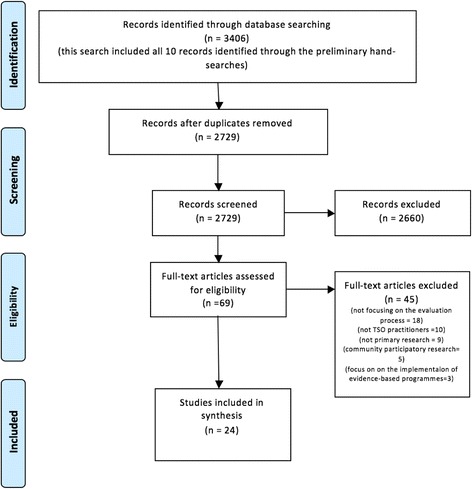
This systematic review is reported following the PRISMA guidelines. Ten interdisciplinary databases were searched using a search string developed following best practice and in consultation with an information systems expert. Included studies were primary research of any research design investigating barriers to and facilitators of the evaluation process of TSOs as identified by practitioners. All studies were quality appraised, and the results were synthesised as a thematic summary.
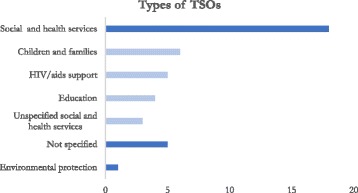
Twenty-four studies were included, which mainly investigated TSOs working within health and social services. The thematic summary identified the main barriers for TSOs to undertake evaluation to be related to the (1) lack of financial resources, (2) lack of technical capability and evaluation literacy and (3) challenges around identifying relevant evaluation systems and outcome indicators. Key facilitating factors involved (1) getting the appropriate support, (2) having an organisational culture that supports evaluation and (3) the motivation to be accountable to stakeholders. These findings were robust to study quality.
This review constitutes the first systematic effort to synthesise existing literature on factors supporting and preventing evaluation by TSOs. The prevalence of factors revolving around the lack of support, resources and clarity on appropriate outcome indicators suggests that many of the identified challenges may be met by applying evidence-based and stakeholder-inclusive strategies to develop shared evaluation requirements. Future efforts should address the application of EBP as part of the commissioning process of TSOs.
第三部门越来越多地成为社会和卫生服务的提供者,但对于第三部门组织(TSO)如何评估其活动知之甚少。过去的研究报告称,第三部门面临越来越大的压力,需要通过政府和其他委托机构评估其影响和绩效。然而,在回应这种增加的评估压力时,研究表明,许多 TSO 在遵循循证实践(EBP)原则评估其活动方面存在困难。然而,尚未系统地研究为什么第三部门难以提供其效果的高质量证据。
本系统评价按照 PRISMA 指南进行报告。使用经过最佳实践和与信息系统专家协商制定的搜索字符串,对十个跨学科数据库进行了搜索。纳入的研究是对任何研究设计的初步研究,这些研究都调查了实践者确定的 TSO 评估过程的障碍和促进因素。所有研究都进行了质量评估,并将结果综合为主题摘要。
共纳入 24 项研究,主要调查了在卫生和社会服务领域工作的 TSO。主题摘要确定了 TSO 进行评估的主要障碍与(1)缺乏财务资源、(2)缺乏技术能力和评估素养以及(3)在确定相关评估系统和结果指标方面的挑战有关。关键促进因素包括(1)获得适当的支持,(2)拥有支持评估的组织文化以及(3)对向利益相关者负责的动机。这些发现对研究质量具有稳健性。
本综述是首次系统地综合现有文献,探讨支持和阻碍 TSO 评估的因素。围绕缺乏支持、资源和明确适当的结果指标的因素普遍存在,这表明许多已确定的挑战可能通过应用循证和利益相关者包容的策略来制定共同的评估要求得到解决。未来的工作应将 EBP 的应用作为 TSO 委托过程的一部分。