Department of Plant Sciences, University of Saskatchewan, Saskatoon, SK, Canada.
United Graduate School of Agricultural Sciences, Iwate University, Morioka, Japan.
J Exp Bot. 2018 Feb 23;69(5):1221-1234. doi: 10.1093/jxb/erx450.
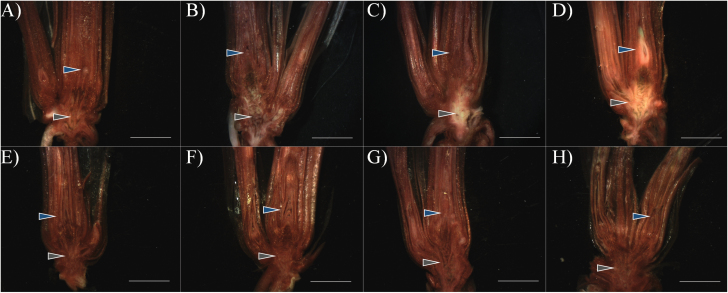
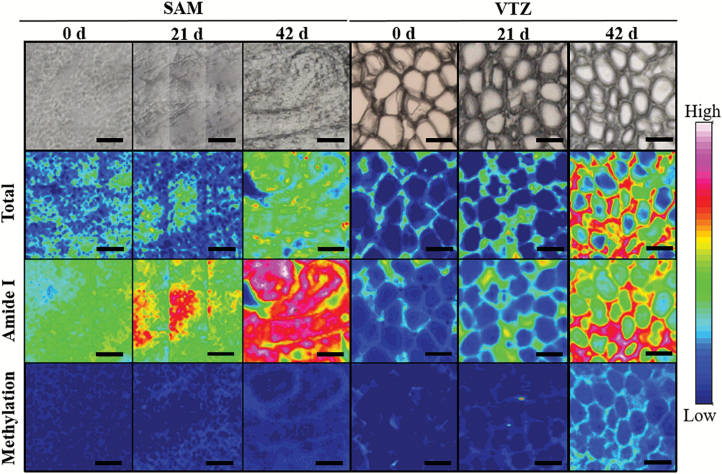
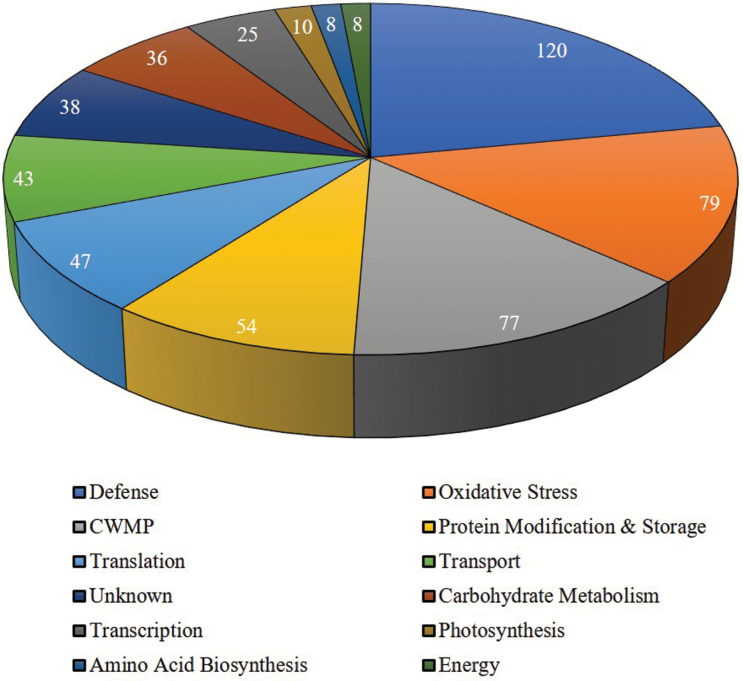
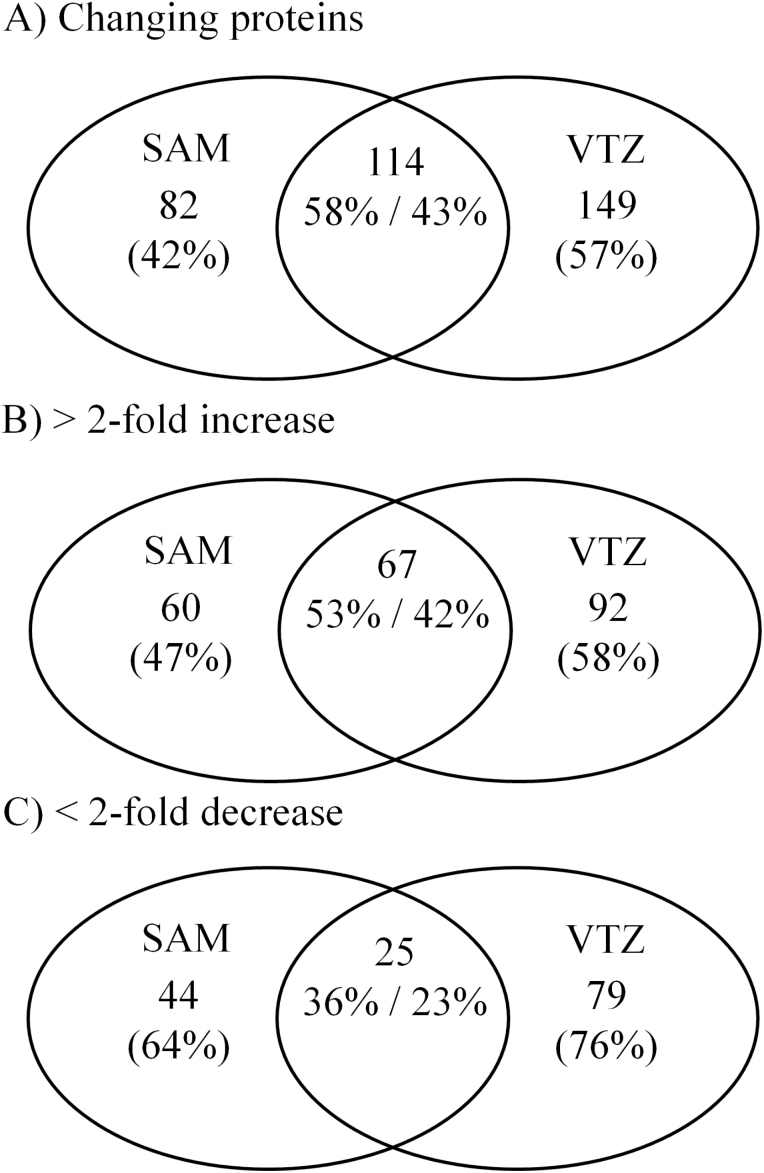
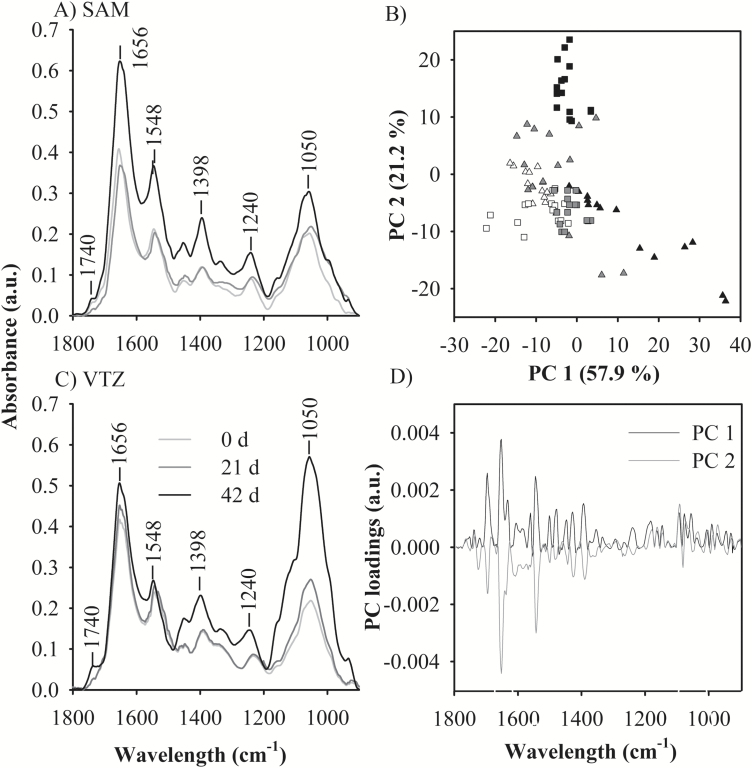
The wheat (Triticum aestivum L.) crown is the critical organ of low temperature stress survival over winter. In cold-acclimated crowns, ice formation in the apoplast causes severe tissue disruption as it grows at the expense of intracellular water. While previous crown studies have shown the vascular transition zone (VTZ) to have a higher freezing sensitivity than the shoot apical meristem (SAM), the mechanism behind the differential freezing response is not fully understood. Cooling cold-acclimated crowns to -10 °C resulted in an absence of VTZ tetrazolium chloride staining, whereas the temperatures at which 50% of the SAM stained positive and 50% of plants recovered (LT50) were similar after cold acclimation for 21 (-16 °C) and 42 d (-20 °C) at 4 °C. Proteomic analysis of the apoplastic fluids identified dehydrins, vernalization-responsive proteins, and cold shock proteins preferentially accumulated in the SAM. In contrast, modifications to the VTZ centered on increases in pathogenesis-related proteins, anti-freeze proteins, and sugar hydrolyzing enzymes. Fourier transform infrared spectroscopy focal plane array analysis identified the biochemical modification of the cell wall to enhance methyl-esterified cross-linking of glucuronoarabinoxylans in the VTZ. These findings indicate that the SAM and VTZ express two distinct tissue-specific apoplastic responses during cold acclimation.
小麦(Triticum aestivum L.)冠层是冬季低温胁迫生存的关键器官。在低温驯化的冠层中,由于冰在细胞外空间生长,以牺牲细胞内水为代价,会导致严重的组织破坏。虽然之前的冠层研究表明血管过渡区(VTZ)比茎尖分生组织(SAM)具有更高的冻结敏感性,但差异冻结反应的机制尚不完全清楚。将低温驯化的冠层冷却至-10°C 会导致 VTZ 氯化四唑染色缺失,而在 4°C 下经过 21 天(-16°C)和 42 天(-20°C)低温驯化后,SAM 出现阳性染色的 50%和 50%植物恢复的温度(LT50)相似。对细胞外液的蛋白质组分析鉴定出脱水素、春化响应蛋白和冷休克蛋白优先在 SAM 中积累。相比之下,VTZ 的中心变化集中在增加与发病相关的蛋白、抗冻蛋白和糖水解酶上。傅里叶变换红外光谱焦平面阵列分析鉴定出细胞壁的生化修饰,以增强 VTZ 中葡醛酸阿拉伯木聚糖的甲基酯化交联。这些发现表明,SAM 和 VTZ 在低温驯化过程中表达两种不同的组织特异性细胞外反应。