Ahmed Wafaa, Mofed Dina, Zekri Abdel-Rahman, El-Sayed Nasr, Rahouma Mohamed, Sabet Salwa
1 Biochemistry and Molecular Biology Unit, Department of Cancer Biology, National Cancer Institute, Cairo University, Cairo, Egypt.
2 Immunity and Virology Unit, Department of Cancer Biology, National Cancer Institute, Cairo University, Cairo, Egypt.
J Int Med Res. 2018 Apr;46(4):1358-1369. doi: 10.1177/0300060517752022. Epub 2018 Feb 2.
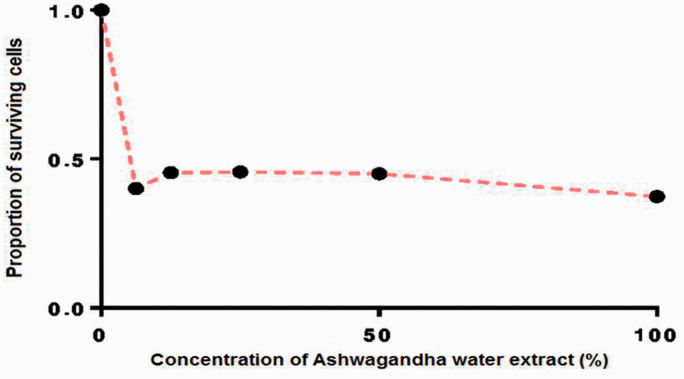
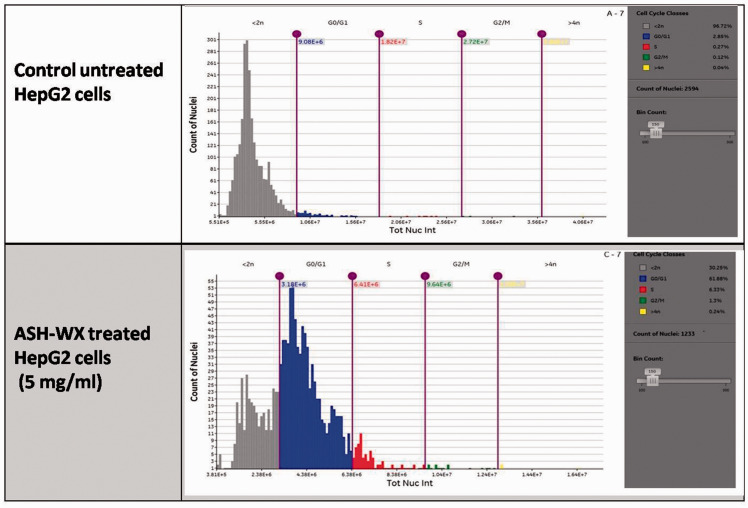
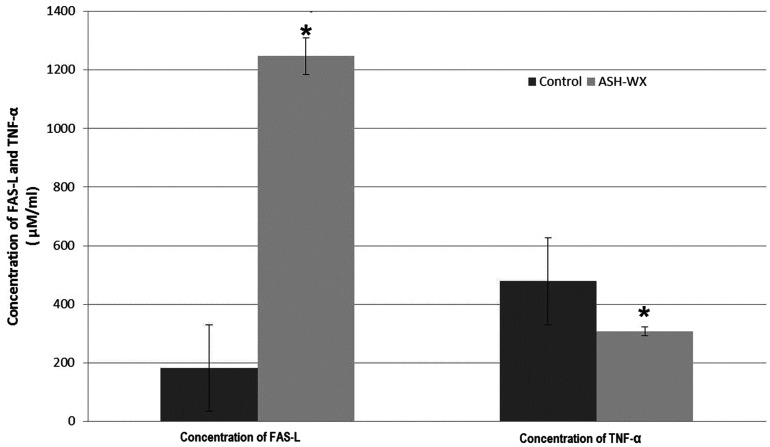
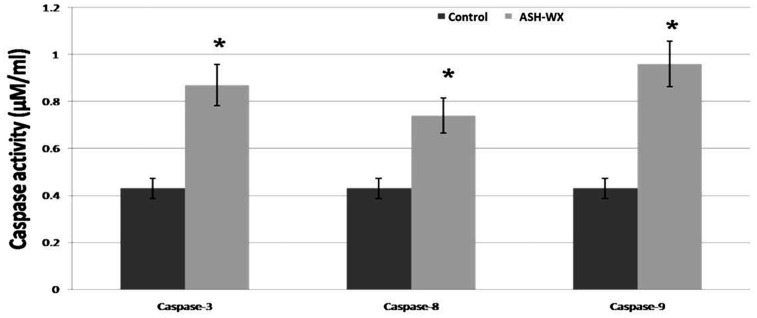
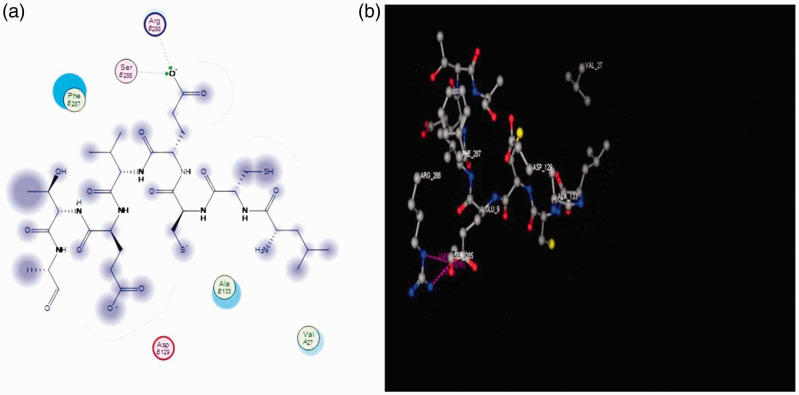
Objective To evaluate the antioxidant and apoptotic inductive effects of Withania somnifera (Ashwagandha) leaf extract against a hepatocellular carcinoma cell line. Methods After treating HepG2cells with Ashwagandha water extract (ASH-WX; 6.25 mg/ml-100 mg/ml), cell proliferation was assessed using a 3-(4,5-dimethylthiazol-2-yl)-2,5-diphenyltetrazolium bromide (MTT) assay. Antioxidant activities (total antioxidant, glutathione S-transferase and glutathione reductase), Fas-ligand level, tumour necrosis factor-α (TNF-α) level and caspase-3, -8, and -9 activities were measured. Molecular modelling assessed the binding-free energies of Ashwagandha in the cyclin D1 receptor. Results The MTT assay demonstrated increased cytotoxicity following treatment of HepG2 cells with ASH-WX compared with control untreated cells and theICwas 5% (approximately 5.0 mg/ml). Antioxidant activities, Fas-ligand levels and caspase-3, -8 and -9 activities significantly increased, while TNF-α level significantly decreased following ASH-WX treatment compared with control untreated cells. Molecular docking analysis revealed a good prediction of binding between cyclin D1 and Ashwagandha. There was significant accumulation of ASH-WX-treated HepG2cells in the G/G and G/M phases compared with the control untreated cells. Conclusion Ashwagandha could be a powerful antioxidant and a promising anticancer agent against HCC.
目的 评估睡茄(印度人参)叶提取物对肝癌细胞系的抗氧化和诱导凋亡作用。方法 用睡茄水提取物(ASH-WX;6.25 mg/ml - 100 mg/ml)处理HepG2细胞后,使用3-(4,5-二甲基噻唑-2-基)-2,5-二苯基四氮唑溴盐(MTT)法评估细胞增殖。测量抗氧化活性(总抗氧化、谷胱甘肽S-转移酶和谷胱甘肽还原酶)、Fas配体水平、肿瘤坏死因子-α(TNF-α)水平以及半胱天冬酶-3、-8和-9的活性。分子建模评估睡茄在细胞周期蛋白D1受体中的结合自由能。结果 MTT试验表明,与未处理的对照细胞相比,ASH-WX处理HepG2细胞后细胞毒性增加,IC为5%(约5.0 mg/ml)。与未处理的对照细胞相比,ASH-WX处理后抗氧化活性、Fas配体水平以及半胱天冬酶-3、-8和-9的活性显著增加,而TNF-α水平显著降低。分子对接分析显示细胞周期蛋白D1与睡茄之间有良好的结合预测。与未处理的对照细胞相比,ASH-WX处理的HepG2细胞在G/G期和G/M期有明显积累。结论 睡茄可能是一种强大的抗氧化剂,也是一种有前景的抗肝癌抗癌剂。