Institute of Burn Injuries, The First Affiliated Hospital of Nanchang University, Nanchang, Jiangxi 330006, P.R. China.
Department of Nursing, Graduate School of Nanchang University, Nanchang, Jiangxi 330006, P.R. China.
Int J Mol Med. 2018 Apr;41(4):1917-1930. doi: 10.3892/ijmm.2018.3430. Epub 2018 Jan 26.
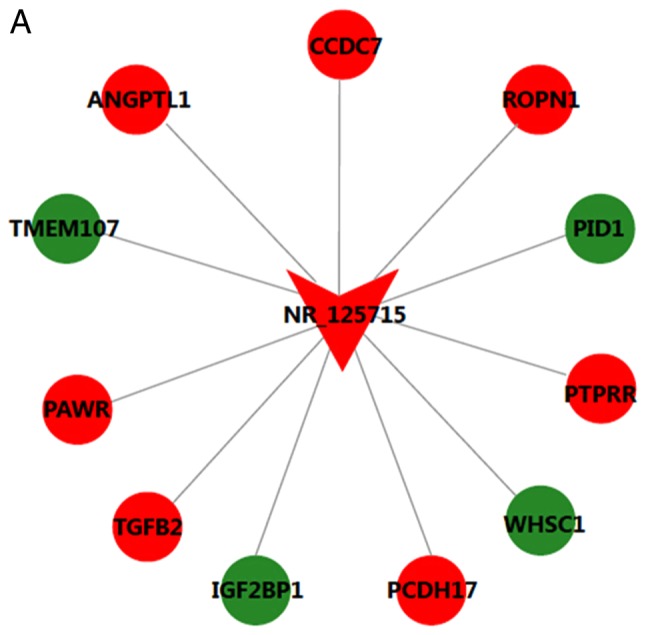
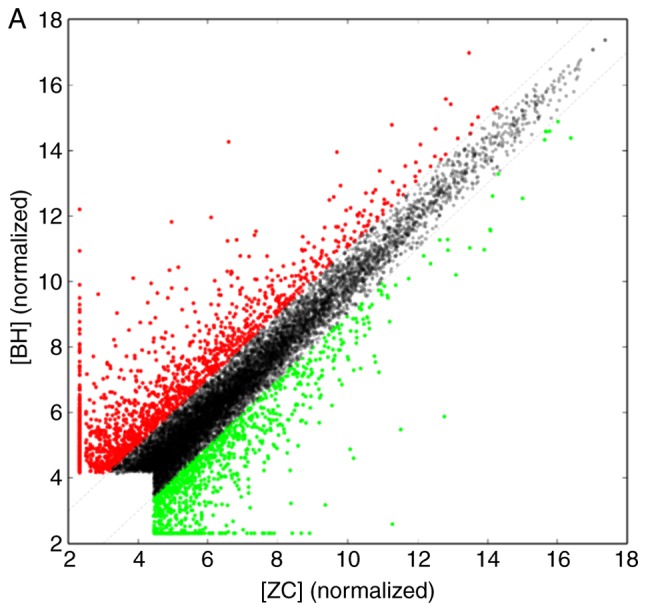
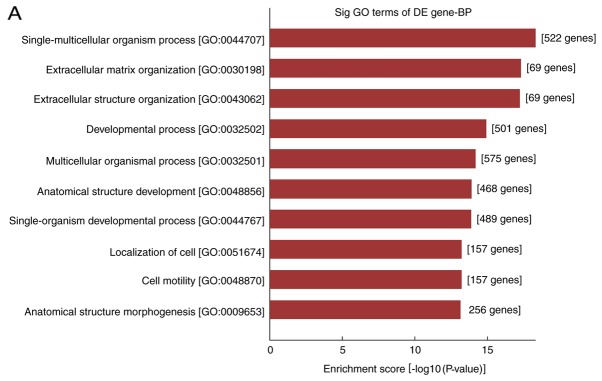
A hypertrophic scar is the result of abnormal repair of the body after trauma. Histopathologically, it is mostly the result of the excessive proliferation of fibroblasts and the accumulation of extracellular matrix. Accumulating evidence has demonstrated that long non‑coding RNAs (lncRNAs) have a critical role in the regulation of gene expression and in the pathogenesis of diseases. However, the roles of lncRNAs in hypertrophic scars have remained elusive. The present study investigated the profiles of differentially expressed lncRNAs between fibroblasts derived from a hypertrophic scar and normal skin, and explored the possible mechanisms underlying the development of hypertrophic scars. Microarray data indicated that 6,104 lncRNAs and 2,952 mRNAs were differentially expressed. A set of differentially expressed transcripts as confirmed by reverse transcription‑quantitative polymerase chain reaction. Gene Ontology and Kyoto Encyclopedia of Genes and Genomes pathway enrichment analyses were performed to determine the principal functions of the significantly deregulated genes. Furthermore, associated expression networks, including subgroup analysis, competing endogenous RNAs (ceRNAs) and coding‑noncoding co‑expression networks were constructed using bioinformatics methods. The homology between differentially expressed lncRNAs and mRNAs was assessed and two exon lncRNA were selected to explore their regulatory mechanisms. The ceRNA network inferred that NR_125715 acted as a competing endogenous RNA, bound to microRNA (miR)‑141‑3p, miR‑200a‑3p and miR‑29 to regulate the expression of the miRs' targets, including transforming growth factor β2 (TGFB2). Similarly, NR_046402 acted as a competing endogenous RNA, which bound to miR‑133a‑3p.1 and miR‑4469 to then regulate the expression of the miRs' targets, including DNA polymerase δ1, catalytic subunit (POLD1). In addition, co‑expression analysis indicated that the expression of lncRNAs NR_125715 and NR_046402 was correlated with that of TGFB2 and POLD1 mRNA. The identification of these differentially expressed lncRNAs in the hypertrophic scar‑derived fibroblasts in the present study, may provide novel insight into the functional interactions of lncRNA, miRNA and mRNA, and lead to novel theories for the pathogenesis and treatment of hypertrophic scars.
增生性瘢痕是创伤后机体异常修复的结果。组织病理学上,它主要是成纤维细胞过度增殖和细胞外基质积累的结果。越来越多的证据表明,长非编码 RNA(lncRNA)在基因表达调控和疾病发病机制中具有关键作用。然而,lncRNA 在增生性瘢痕中的作用仍不清楚。本研究旨在探讨来源于增生性瘢痕的成纤维细胞与正常皮肤之间差异表达的 lncRNA 谱,并探讨增生性瘢痕发生发展的可能机制。微阵列数据分析表明,6104 个 lncRNA 和 2952 个 mRNA 表达存在差异。通过逆转录-定量聚合酶链反应(RT-qPCR)进一步验证了一组差异表达的转录本。通过基因本体论(GO)和京都基因与基因组百科全书(KEGG)通路富集分析,确定显著失调基因的主要功能。此外,还通过生物信息学方法构建了相关表达网络,包括亚组分析、竞争内源性 RNA(ceRNA)和编码-非编码共表达网络。评估了差异表达 lncRNA 与 mRNA 之间的同源性,并选择了两个外显子 lncRNA 来探索它们的调控机制。ceRNA 网络推断,NR_125715 作为竞争内源性 RNA,与 microRNA(miR)-141-3p、miR-200a-3p 和 miR-29 结合,调节这些 miR 靶基因的表达,包括转化生长因子β2(TGFB2)。同样,NR_046402 作为竞争内源性 RNA,与 miR-133a-3p.1 和 miR-4469 结合,进而调节这些 miR 靶基因的表达,包括 DNA 聚合酶δ1,催化亚基(POLD1)。此外,共表达分析表明,lncRNA NR_125715 和 NR_046402 的表达与 TGFB2 和 POLD1 mRNA 的表达相关。本研究中鉴定的这些在增生性瘢痕衍生成纤维细胞中差异表达的 lncRNA,可能为 lncRNA、miRNA 和 mRNA 的功能相互作用提供新的见解,并为增生性瘢痕的发病机制和治疗提供新的理论依据。