Zhou Mi, Hünerberg Martin, Chen Yanhong, Reuter Tim, McAllister Tim A, Evans Franklin, Critchley Alan T, Guan Le Luo
Department of Agricultural, Food and Nutritional Science, University of Alberta, Edmonton, Alberta, Canada.
Lethbridge Research Centre, Agriculture and Agri-Food Canada, Lethbridge, Alberta, Canada.
mSphere. 2018 Jan 31;3(1). doi: 10.1128/mSphere.00017-18. eCollection 2018 Jan-Feb.
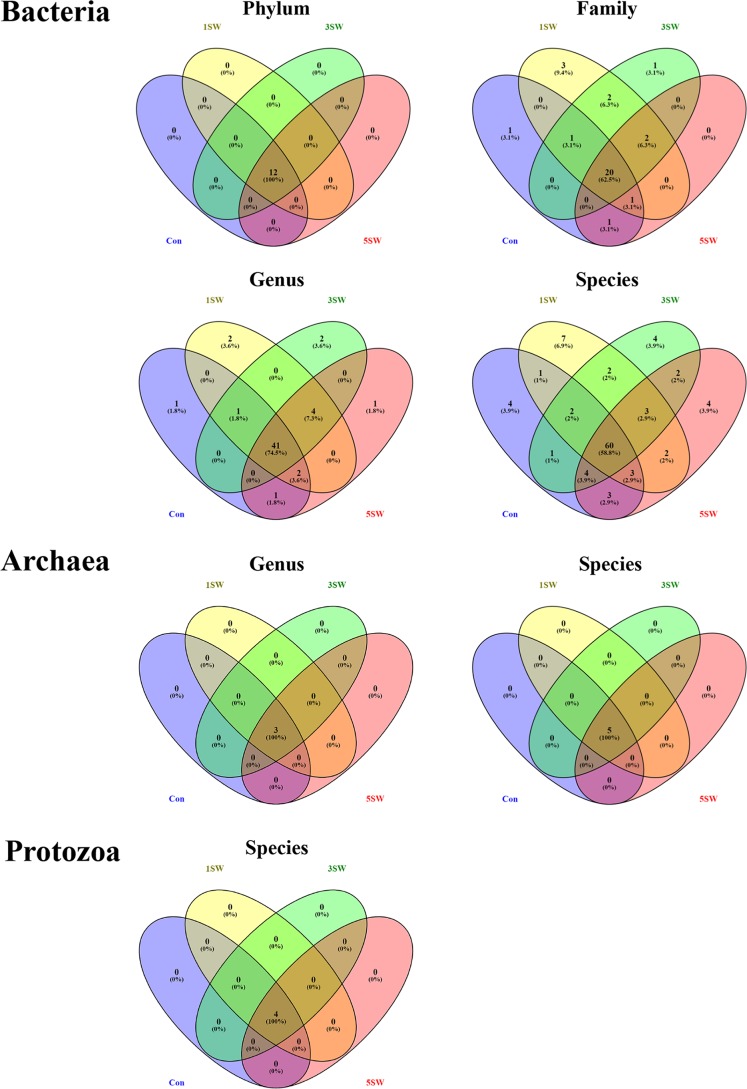
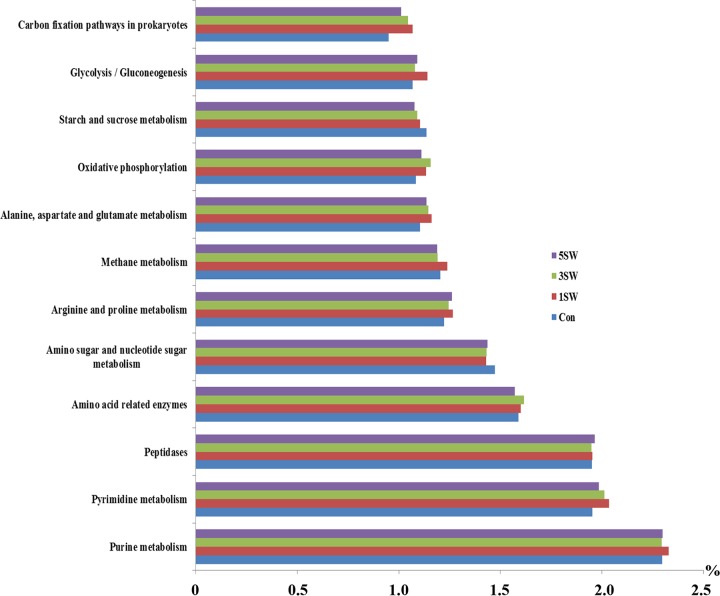
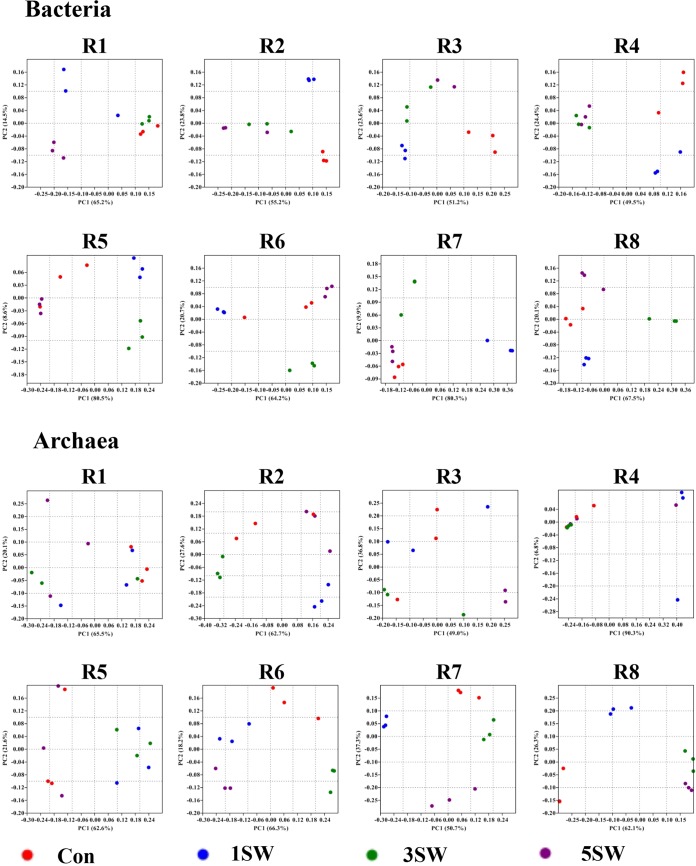
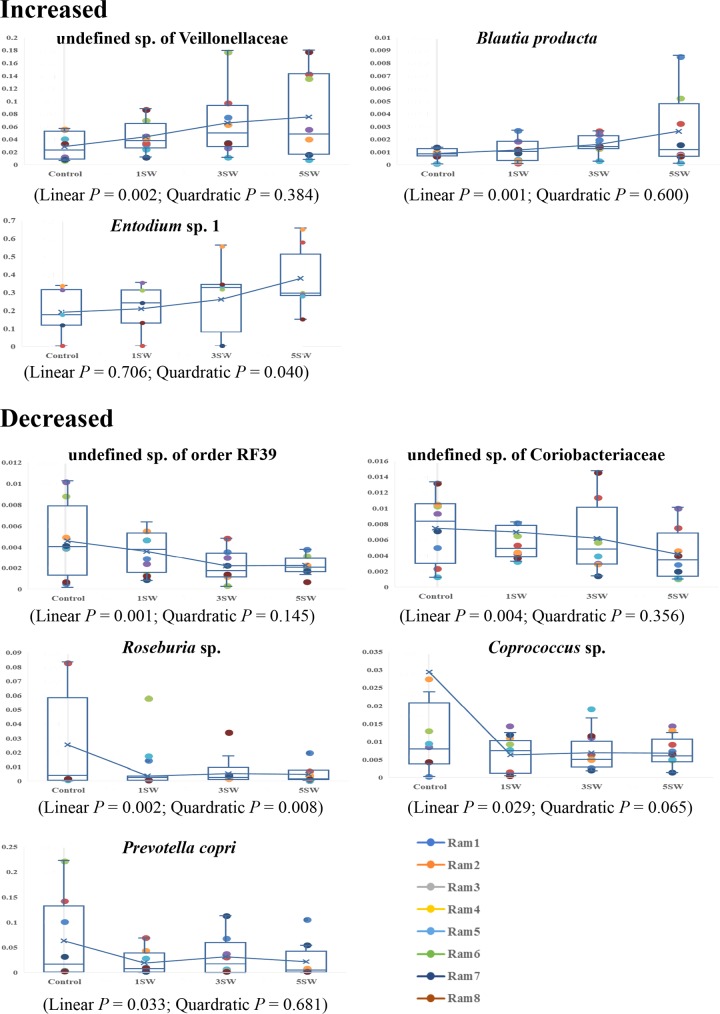
The use of Tasco (air-dried ) as a feed supplement for ruminants has been reported to affect rumen fermentation and reduce O157:H7 shedding in feces, but the mode of action behind this phenomenon is unclear. In this study, the effects of four Tasco levels (0, 1, 3, and 5%) on rumen microbiota and rumen/fecal O serogroups in rams were investigated. Rumen total bacteria and archaea were linearly reduced ( < 0.001) and protozoa were linearly increased ( < 0.001) by increasing levels of Tasco. The relative abundances of seven bacterial species and one protozoal species differed among Tasco levels. With Tasco, 14 predicted metabolic pathways were enriched while only 3 were suppressed. A lower ruminal butyrate concentration is possibly associated with enrichment of the "butanoate metabolism" pathway in Tasco-fed rams. The ruminal total population was linearly reduced ( < 0.001) by Tasco. Supplementation with Tasco only completely eliminated O121 in the rumen and feces, and higher levels of Tasco (3 and 5%) reduced fecal shedding of serogroups O45, O103, and O111 even though these serogroups were present in the rumen. Our results suggest that Tasco effectively reduced pathogenic but had only minimal impacts on rumen fermentation in rams. Maintaining product safety and reducing the carbon footprint of production are two sustainability goals of the livestock industry. The objective of this study was to study the impact of Tasco, a product derived from the brown macroalga , on the rumen microbiome and its function. The inclusion of Tasco altered both rumen and fecal microbiota levels without affecting rumen fermentation. Tasco reduced fecal populations and specifically reduced the prevalence of Shiga toxin-producing O45, O103, O111, and O121 in feces. The findings of this study highlight the application of Tasco as a potential feed additive to reduce pathogen shedding in rams without interfering with ruminal metabolism.
据报道,使用塔斯科(风干)作为反刍动物的饲料添加剂会影响瘤胃发酵,并减少粪便中O157:H7的排泄,但这种现象背后的作用模式尚不清楚。在本研究中,研究了四种塔斯科水平(0%、1%、3%和5%)对公羊瘤胃微生物群和瘤胃/粪便O血清群的影响。随着塔斯科水平的增加,瘤胃总细菌和古菌呈线性减少(P<0.001),原生动物呈线性增加(P<0.001)。七种细菌物种和一种原生动物物种的相对丰度在不同塔斯科水平之间存在差异。添加塔斯科后,14条预测的代谢途径得到富集,而只有3条被抑制。瘤胃丁酸盐浓度较低可能与喂食塔斯科的公羊中“丁酸盐代谢”途径的富集有关。塔斯科使瘤胃总菌数呈线性减少(P<0.001)。添加塔斯科仅完全消除了瘤胃和粪便中的O121,较高水平的塔斯科(3%和5%)减少了血清群O45、O103和O111在粪便中的排泄,尽管这些血清群存在于瘤胃中。我们的结果表明,塔斯科有效地减少了病原体,但对公羊瘤胃发酵的影响最小。维持产品安全和减少生产的碳足迹是畜牧业的两个可持续发展目标。本研究的目的是研究源自棕色大型藻类的产品塔斯科对瘤胃微生物群及其功能的影响。添加塔斯科改变了瘤胃和粪便微生物群水平,而不影响瘤胃发酵。塔斯科减少了粪便菌数,特别是降低了粪便中产生志贺毒素的O45、O103、O111和O121的流行率。本研究结果突出了塔斯科作为一种潜在饲料添加剂的应用,可减少公羊病原体排泄而不干扰瘤胃代谢。