Pandey Bipindra, Thapa Shankar, Kaundinnyayana Atisammodavardhana, Panta Sushil
Department of Pharmacy Madan Bhandari Academy of Health Sciences Hetauda Nepal.
School of Health and Allied Sciences Pokhara University Pokhara Nepal.
Food Sci Nutr. 2024 Jun 18;12(9):6482-6497. doi: 10.1002/fsn3.4288. eCollection 2024 Sep.
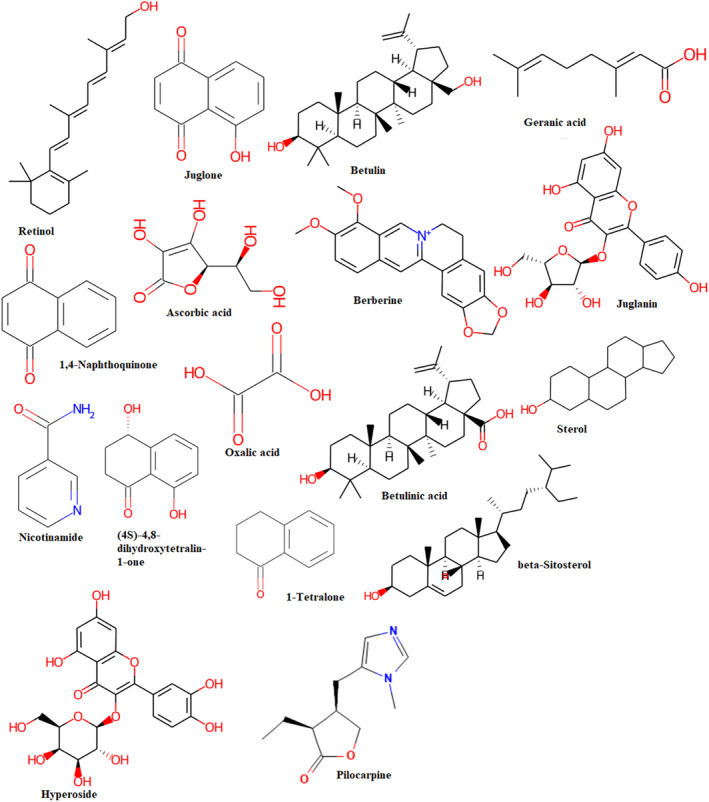
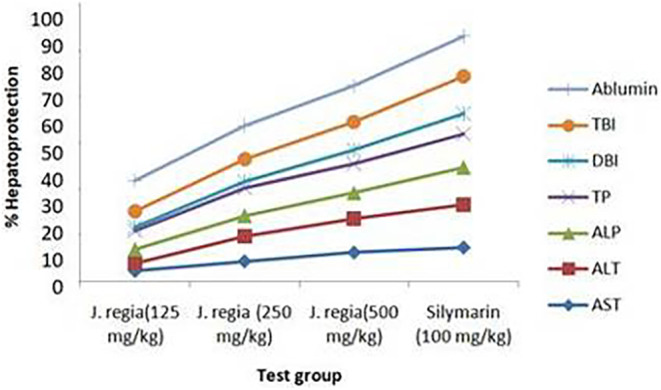
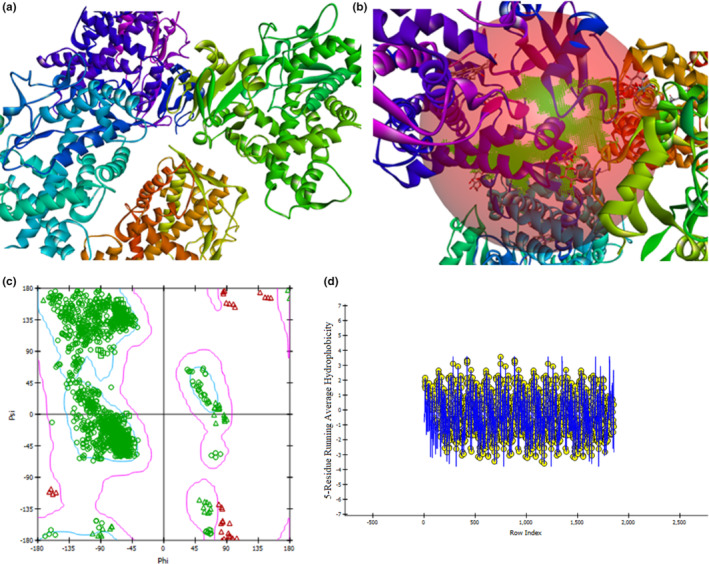
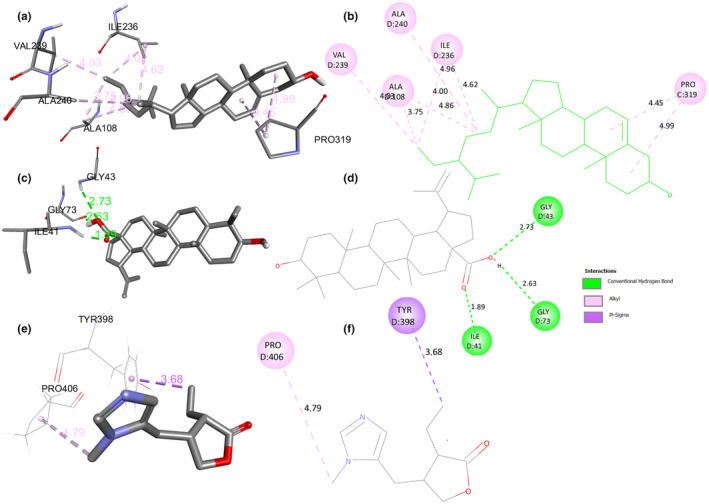
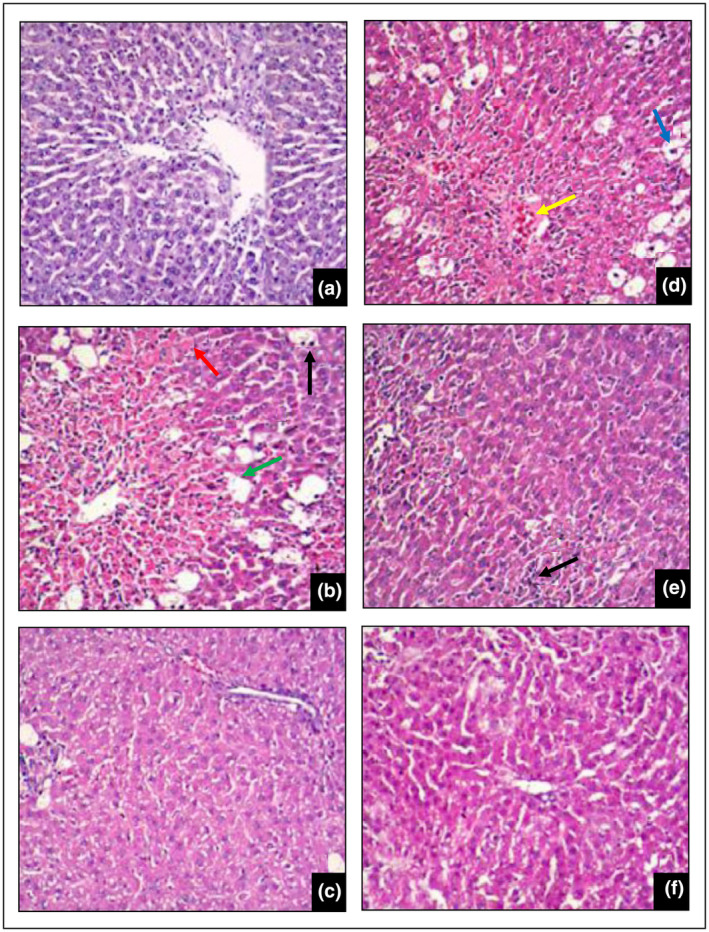
L. is a well-known therapeutic plant in Nepal, employed in traditional medicine for treating liver ailments. This study aimed to evaluate the in vivo and in silico liver-protective effects of extract using a carbon tetrachloride (CCl)-induced hepatic damage rat model. Healthy male rats were randomly divided into six groups: normal control (distilled water 10 mL/kg), toxic control (distilled water 10 mL/kg), standard test (silymarin 100 mg/kg), and three groups receiving oral extracts (125, 250, and 500 mg/kg/day) for seven days. On the eighth day, carbon tetrachloride (CCl) was administered intraperitoneally (i.p.) (1.5 mL/kg in 1:1 olive oil ratio for all groups, except the normal control). Rats were sacrificed on the ninth day, and blood was collected retro-orbitally for liver blood injury tests and histopathological studies. Molecular docking was performed against cytochrome P450 2E1 (CYP450 2E1) enzyme for 16 selected phytoconstituents. , at doses of 125, 250, and 500 mg/kg, significantly reduced liver enzyme levels (alanine aminotransferase, alkaline phosphatase, direct bilirubin, and total bilirubin), while increasing serum albumin. Histological analysis revealed mitigation of carbon tetrachloride (CCl)-induced liver injury, reducing fatty degeneration and necrosis. Molecular docking supported the findings, with Beta-sitosterol and Betulinic acid exhibiting the best binding affinity of -9.2 and -9.1 kcal/mol, respectively. In conclusion, result suggests that showed dose-dependent hepatoprotective activity in CCl-induced hepatotoxicity and it could be utilized as a promising hepatoprotective agent. This study suggests the hepatoprotective potential of bark extracts, emphasizing the need for further clinical validation.
L. 是尼泊尔一种著名的治疗性植物,在传统医学中用于治疗肝脏疾病。本研究旨在使用四氯化碳(CCl)诱导的肝损伤大鼠模型评估提取物的体内和计算机模拟肝保护作用。将健康雄性大鼠随机分为六组:正常对照组(蒸馏水10 mL/kg)、毒性对照组(蒸馏水10 mL/kg)、标准测试组(水飞蓟宾100 mg/kg)以及三组接受口服提取物(125、250和500 mg/kg/天),持续7天。在第8天,除正常对照组外,所有组均腹腔注射(i.p.)四氯化碳(CCl)(1.5 mL/kg,与橄榄油按1:1比例混合)。在第9天处死大鼠,通过眶后采血进行肝损伤检测和组织病理学研究。对16种选定的植物成分针对细胞色素P450 2E1(CYP450 2E1)酶进行分子对接。提取物在125、250和500 mg/kg剂量下,显著降低了肝酶水平(丙氨酸转氨酶、碱性磷酸酶、直接胆红素和总胆红素),同时提高了血清白蛋白水平。组织学分析显示四氯化碳(CCl)诱导的肝损伤得到缓解,脂肪变性和坏死减少。分子对接支持了这些结果,β-谷甾醇和桦木酸分别表现出最佳结合亲和力,为-9.2和-9.1 kcal/mol。总之,结果表明提取物在CCl诱导的肝毒性中表现出剂量依赖性肝保护活性,可作为一种有前景的肝保护剂。本研究表明该植物树皮提取物具有肝保护潜力,强调了进一步临床验证的必要性。