Zhou Hua, Zhou Huan, Wang Liuyang, Liu Yun
Beijing Key Laboratory of Bioprocess, College of Life Science and Technology, Beijing University of Chemical Technology, Beijing, 100029 China.
Biotechnol Biofuels. 2018 Jan 25;11:16. doi: 10.1186/s13068-018-1016-0. eCollection 2018.
Efficient enzymatic conversion of recalcitrant crystalline cellulose is critical for enabling cost-effective industrial conversion of cellulosic biomass to biofuels and chemicals. Fully understanding enzyme digestion mechanism is paving a new way to design efficient process for biomass conversion. Accordingly, a continuing drive is inspiring to discover new routes to promote crystalline cellulose disruption.
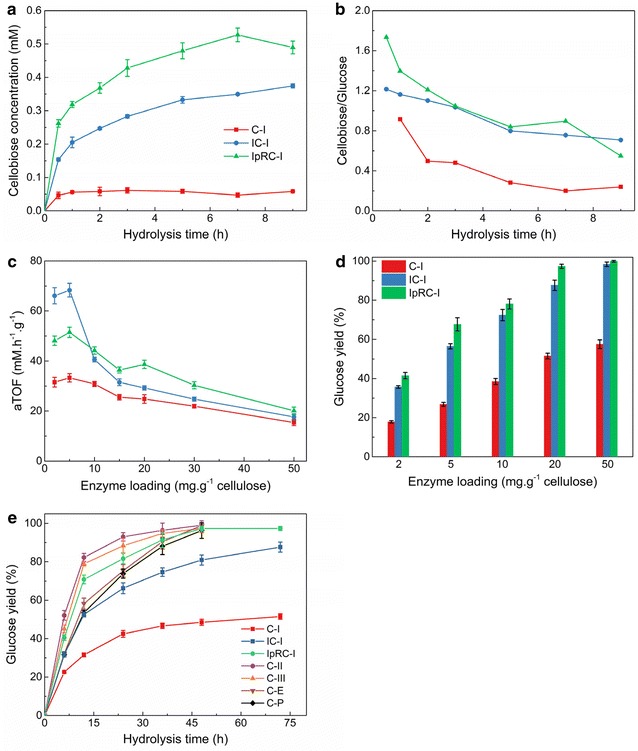
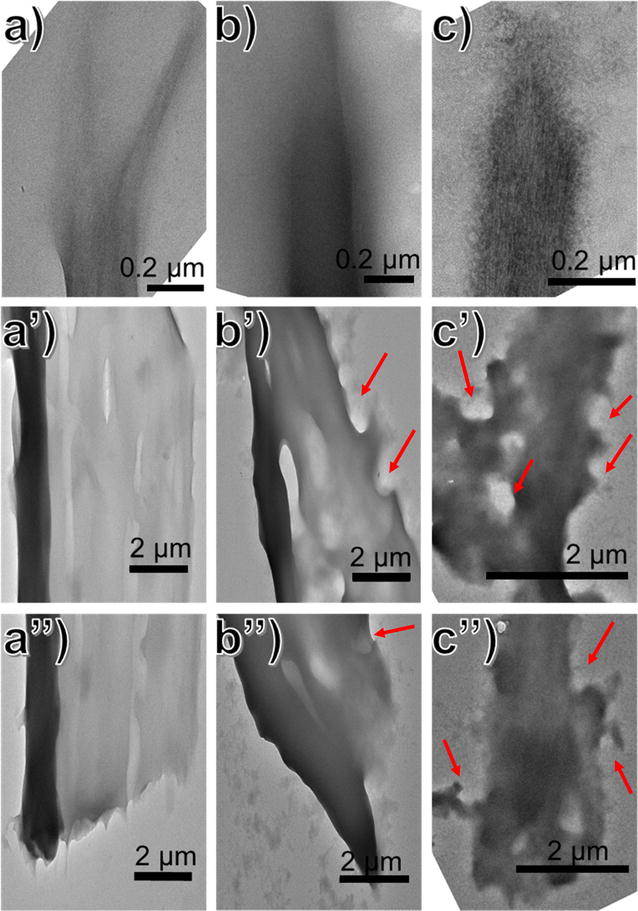
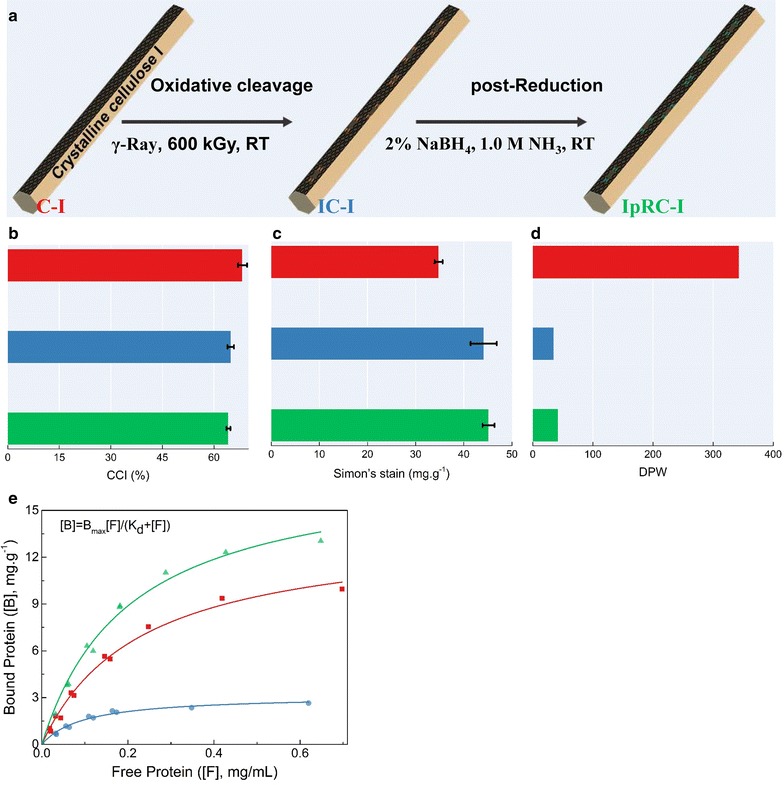
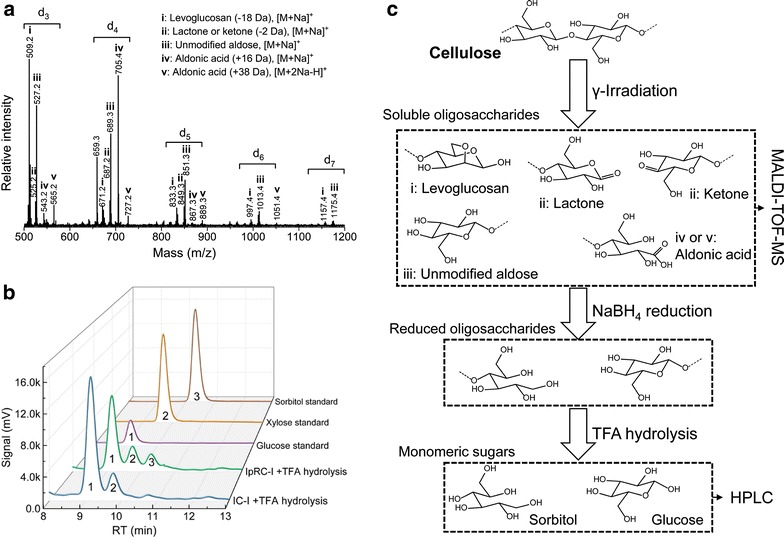
Herein, a physico-chemical oxidative cleavage strategy of irradiation oxidation/post-reduction (IOPR) was employed to treat crystalline cellulose I to cleave glycosidic bonds association with some new oxidized and reduced chain ends, thus boosting downstream degradation by cellulases from . The hydrolysis performance of treated crystalline cellulose was conducted with either Cel7A (TrCel7A) alone, or a cellulase enzyme mixture (90% Celluclast 1.5 L, 10% β-glucosidase). 81.6 and/or 97% of conversion efficiency have been reached for 24-h and 48-h cellulase hydrolysis, respectively. The high efficient conversion of crystalline cellulose after IOPR is mainly attributed to generating some new chain ends, which are identified by MAIDI-TOF-MS and HPLC. Furthermore, the nanoscale architectures of crystalline cellulose before and after IOPR are systematically investigated by XRD, EPR, ATR- FTIR, GPC, and XPS techniques. Together with TEM images, the results reveal a fascinating digestion mechanism of "peel-off" and "cavity-formation" paradigms toward degrading crystalline cellulose by cellulase mixtures after IOPR treatment.
This encouraging results show that the proposed IOPR approach will become a potential competitive alternative to current biomass pretreatment. It opens a new avenue toward the implementation of pretreatment and the design of enzyme cocktails in lignocellulosic biorefinery.
将顽固的结晶纤维素高效酶促转化对于实现纤维素生物质向生物燃料和化学品的经济高效工业转化至关重要。全面了解酶消化机制正在为设计高效的生物质转化工艺开辟一条新途径。因此,人们不断努力探索促进结晶纤维素分解的新途径。
在此,采用了辐照氧化/后还原(IOPR)的物理化学氧化裂解策略来处理结晶纤维素I,以裂解与一些新的氧化和还原链端相关的糖苷键,从而促进纤维素酶对下游的降解。用单独的Cel7A(TrCel7A)或纤维素酶混合物(90% Celluclast 1.5 L,10% β-葡萄糖苷酶)对处理后的结晶纤维素的水解性能进行了测试。在纤维素酶水解24小时和48小时后,转化效率分别达到了81.6%和/或97%。IOPR后结晶纤维素的高效转化主要归因于产生了一些新的链端,这通过MAIDI-TOF-MS和HPLC得以鉴定。此外,通过XRD、EPR、ATR-FTIR、GPC和XPS技术系统地研究了IOPR前后结晶纤维素的纳米级结构。结合TEM图像,结果揭示了IOPR处理后纤维素酶混合物降解结晶纤维素的“剥离”和“空穴形成”模式的迷人消化机制。
这一令人鼓舞的结果表明,所提出的IOPR方法将成为当前生物质预处理的潜在竞争替代方法。它为木质纤维素生物精炼中预处理的实施和酶混合物的设计开辟了一条新途径。