Ravoux Hortense, Pereira Bruno, Brousse Georges, Dewavrin Samuel, Cornet Thomas, Mermillod Martial, Mondillon Laurie, Vallet Guillaume, Moustafa Farès, Dutheil Frédéric
Service Santé Travail Environnement, Centre Hospitalier Universitaire de Clermont-Ferrand, Clermont-Ferrand, France.
Équipe Stress physiologique et psychosocial, Laboratoire de Psychologie Sociale et Cognitive, Université Clermont Auvergne, Centre National de la Recherche Scientifique, Clermont-Ferrand, France.
JMIR Ment Health. 2018 Feb 13;5(1):e12. doi: 10.2196/mental.8215.
Work addiction is a significant public health problem with a growing prevalence. The Work Addiction Risk Test (WART) is the gold standard questionnaire to detect workaholism.
The main objective of this study was to validate the French version of the WART.
Questionnaires were proposed to voluntary French workers using the WittyFit software. There were no exclusion criteria. The questionnaire was administered anonymously for initial validity testing and readministered one week later for test-retest reliability. We also assessed the workers' sociodemographic characteristics, as well as other measurements for external validity, such as stress, well-being, and coaddictions to tobacco, alcohol, and cannabis. Several psychometric properties of the French-WART were explored: acceptability, reliability (internal consistency [Cronbach alpha coefficient] and reproducibility [Lin concordance coefficient]), construct validity (correlation coefficients and principal component analysis), and external validity (correlation coefficients).
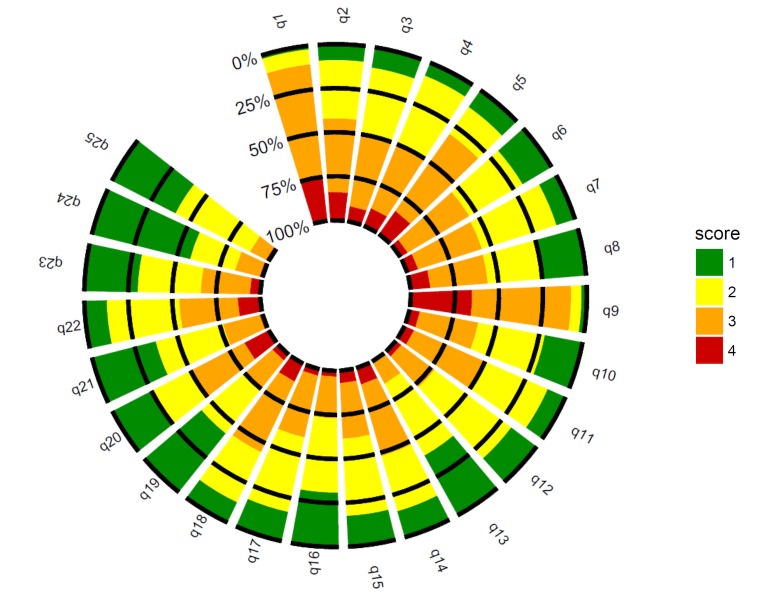
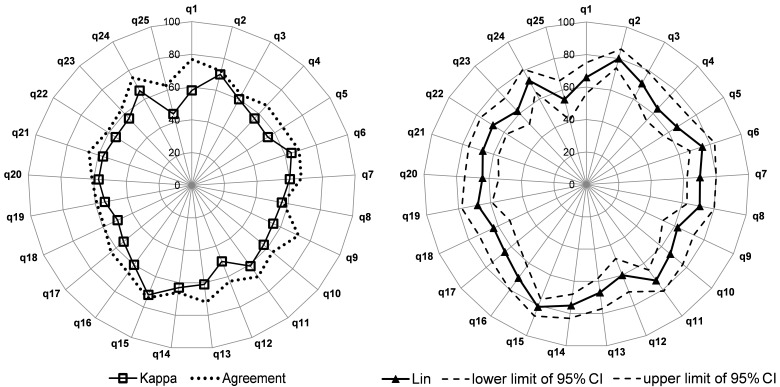
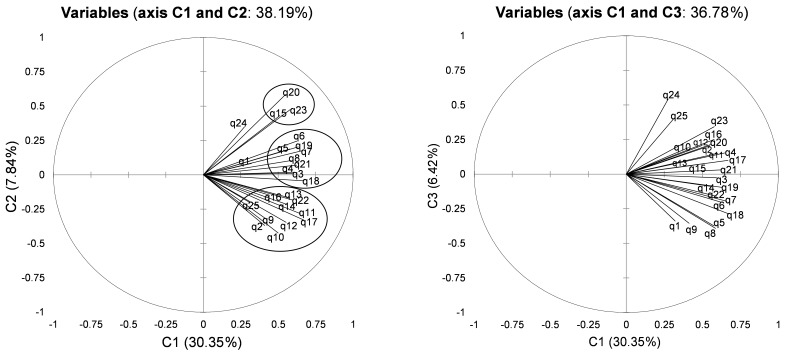
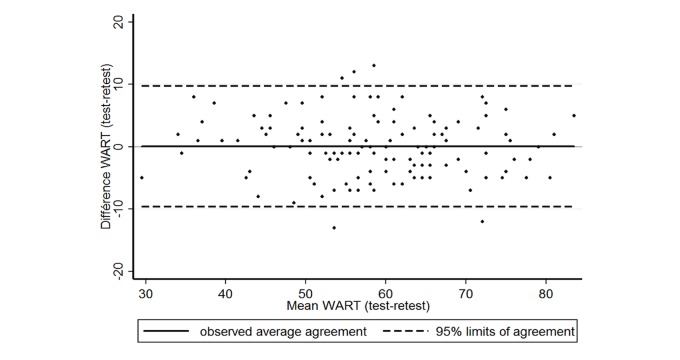
Among the 1580 workers using WittyFit, 187 (11.83%) agreed to complete the WART questionnaire. Of those, 128 completed the test-retest survey (68.4%). Acceptability found that all respondents had fully completed the questionnaire, with few floor or ceiling effects. Reliability was very good with a Cronbach alpha coefficient at .90 (internal consistency) and Lin concordance coefficient at .90 (95% CI .87-.94] with a difference on the retest of .04 (SD 4.9) (95% CI -9.6 to 9.7) (reproducibility). We identified three main dimensions (construct validity). Relationships between WART and stress and well-being confirmed its external validity.
The French version of the WART is a valid and reliable instrument to assess work addiction with satisfactory psychometric properties. Used in occupational medicine, this tool would allow the diagnosis of work addiction and can be easily implemented in current practice.
工作成瘾是一个日益普遍的重大公共卫生问题。工作成瘾风险测试(WART)是检测工作狂的金标准问卷。
本研究的主要目的是验证WART的法语版本。
通过WittyFit软件向法国自愿参与的工人发放问卷。没有排除标准。问卷以匿名方式进行初次有效性测试,并在一周后重新发放以进行重测信度测试。我们还评估了工人的社会人口学特征,以及其他用于外部效度的测量指标,如压力、幸福感以及对烟草、酒精和大麻的共成瘾情况。探讨了法语版WART的几个心理测量特性:可接受性、信度(内部一致性[克朗巴哈α系数]和重测信度[林一致性系数])、结构效度(相关系数和主成分分析)以及外部效度(相关系数)。
在使用WittyFit的1580名工人中,187人(11.83%)同意完成WART问卷。其中,128人完成了重测调查(68.4%)。可接受性方面,所有受访者都完整填写了问卷,几乎没有地板效应或天花板效应。信度非常好,克朗巴哈α系数为0.90(内部一致性),林一致性系数为0.90(95%CI 0.87 - 0.94),重测差异为0.04(标准差4.9)(95%CI -9.6至9.7)(重测信度)。我们确定了三个主要维度(结构效度)。WART与压力和幸福感之间的关系证实了其外部效度。
WART的法语版本是一种有效且可靠的工具,用于评估工作成瘾,具有令人满意的心理测量特性。在职业医学中使用,该工具可用于诊断工作成瘾,并且可以很容易地应用于当前实践。