Sun Tingfang, Liu Man, Yao Sheng, Ji Yanhui, Shi Lei, Tang Kai, Xiong Zekang, Yang Fan, Chen Kaifang, Guo Xiaodong
Department of Orthopedics, Union Hospital, Tongji Medical College, Huazhong University of Science and Technology, Wuhan 430022, China.
Department of Gastroenterology and Hepatology, Taikang Tongji Hospital, Wuhan 430050, China.
Int J Nanomedicine. 2018 Feb 5;13:791-804. doi: 10.2147/IJN.S152698. eCollection 2018.
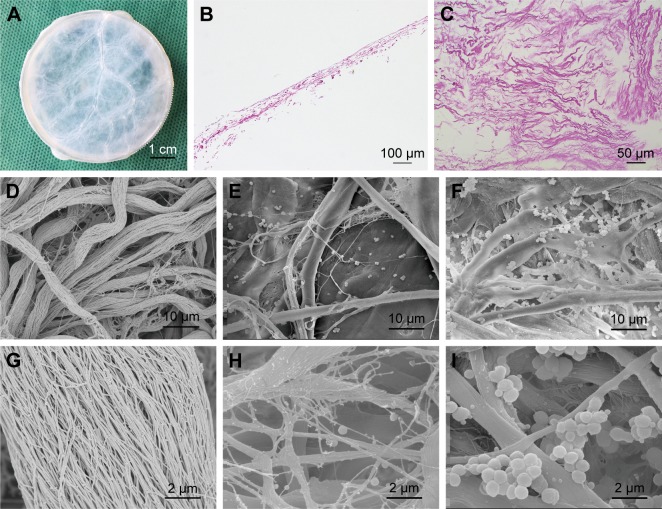
At present, the treatment of osteoporotic defects poses a great challenge to clinicians, owing to the lower regeneration capacity of the osteoporotic bone as compared with the normal bone. The guided bone regeneration (GBR) technology provides a promising strategy to cure osteoporotic defects using bioactive membranes. The decellularized matrix from the small intestinal submucosa (SIS) has gained popularity for its natural microenvironment, which induces cell response.
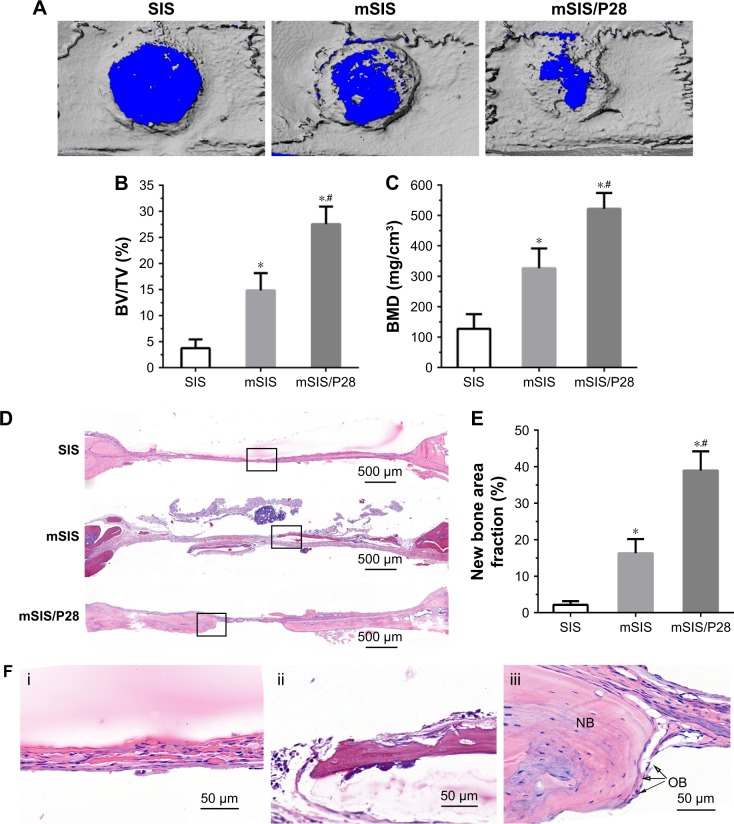
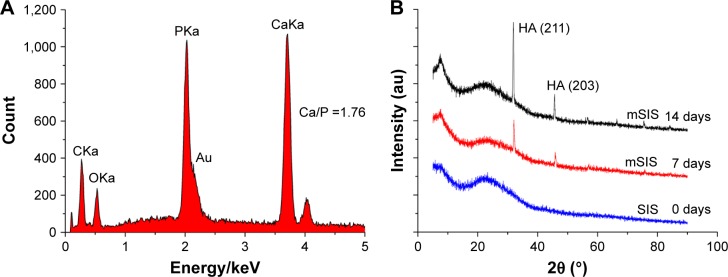
In this study, we developed heparinized mineralized SIS loaded with bone morphogenetic protein 2 (BMP2)-related peptide P28 (mSIS/P28) as a novel GBR membrane for guided osteoporotic bone regeneration. These mSIS/P28 membranes were obtained through the mineralization of SIS (mSIS), followed by P28 loading onto heparinized mSIS. The heparinized mSIS membrane was designed to improve the immobilization efficacy and facilitate controlled release of P28. P28 release from mSIS-heparin-P28 and its effects on the proliferation, viability, and osteogenic differentiation of bone marrow stromal stem cells from ovariectomized rats (rBMSCs-OVX) were investigated in vitro. Furthermore, a critical-sized OVX calvarial defect model was used to assess the bone regeneration capability of mSIS-heparin-P28 in vivo.
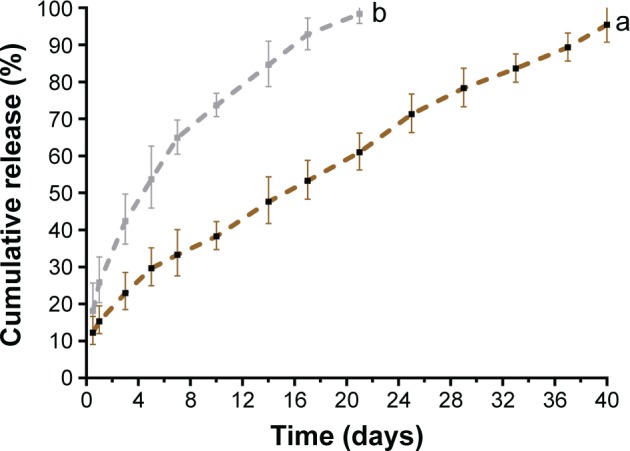
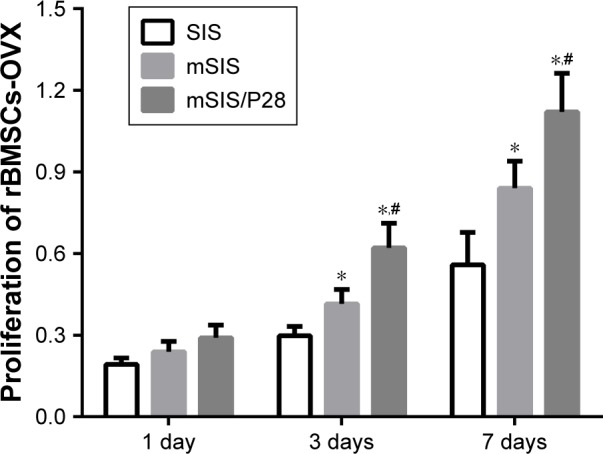
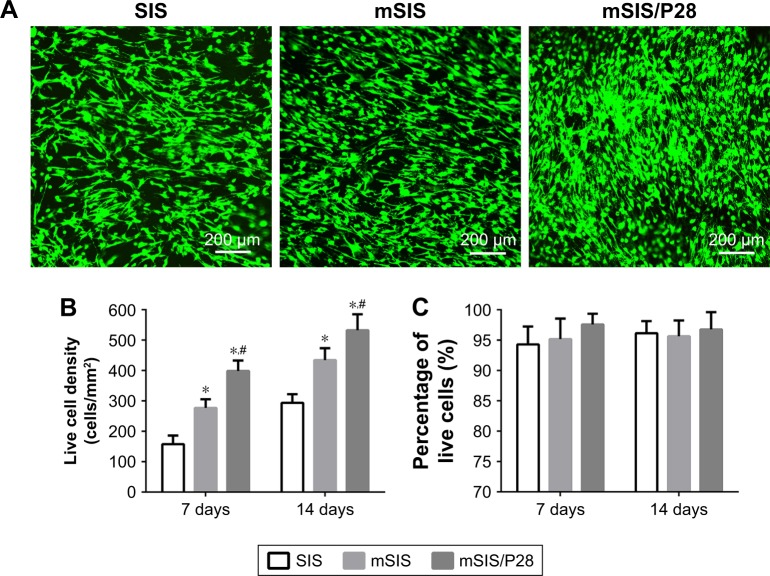
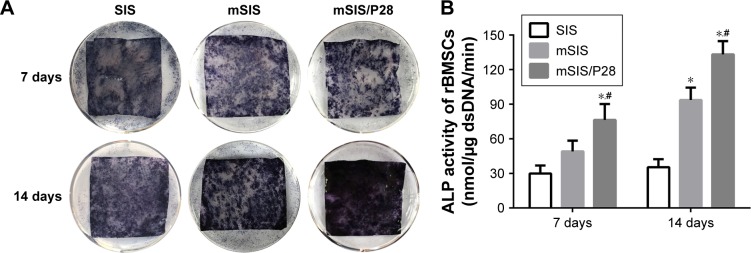
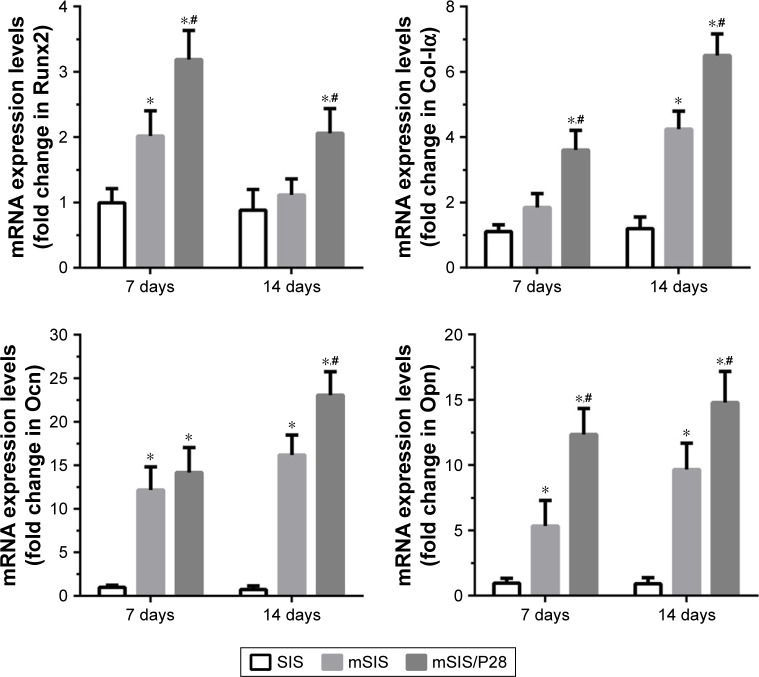
In vitro results showed that P28 release from mSIS-heparin-P28 occurred in a controlled manner, with a long-term release time of 40 days. Moreover, mSIS-heparin-P28 promoted cell proliferation and viability, alkaline phosphatase activity, and mRNA expression of osteogenesis-related genes in rBMSCs-OVX without the addition of extra osteogenic components. In vivo experiments revealed that mSIS-heparin-P28 dramatically stimulated osteoporotic bone regeneration.
The heparinized mSIS loaded with P28 may serve as a potential GBR membrane for repairing osteoporotic defects.
目前,由于骨质疏松性骨的再生能力低于正常骨,骨质疏松性骨缺损的治疗给临床医生带来了巨大挑战。引导骨再生(GBR)技术为使用生物活性膜治疗骨质疏松性骨缺损提供了一种有前景的策略。来自小肠黏膜下层(SIS)的脱细胞基质因其能诱导细胞反应的天然微环境而受到关注。
在本研究中,我们开发了负载骨形态发生蛋白2(BMP2)相关肽P28的肝素化矿化SIS(mSIS/P28),作为一种用于引导骨质疏松性骨再生的新型GBR膜。这些mSIS/P28膜通过SIS矿化(mSIS)获得,随后将P28负载到肝素化的mSIS上。肝素化的mSIS膜旨在提高固定效果并促进P28的控释。体外研究了P28从mSIS-肝素-P28中的释放及其对去卵巢大鼠骨髓间充质干细胞(rBMSCs-OVX)增殖、活力和成骨分化的影响。此外,使用临界大小的去卵巢颅骨缺损模型在体内评估mSIS-肝素-P28的骨再生能力。
体外结果表明,P28从mSIS-肝素-P28中的释放是可控的,长期释放时间为40天。此外,在不添加额外成骨成分的情况下,mSIS-肝素-P28促进了rBMSCs-OVX中的细胞增殖、活力、碱性磷酸酶活性以及成骨相关基因的mRNA表达。体内实验表明,mSIS-肝素-P28显著刺激了骨质疏松性骨再生。
负载P28的肝素化mSIS可能作为修复骨质疏松性骨缺损的潜在GBR膜。