Zhao Xiaofeng, Zhang Xiaoyu, Chen Zhenshi, Wang Zhen, Lu Yongyue, Cheng Daifeng
Department of Entomology, South China Agricultural University, Guangzhou, China.
Grouped Microorganism Research Center, South China Agricultural University, Guangzhou, China.
Front Microbiol. 2018 Feb 1;9:114. doi: 10.3389/fmicb.2018.00114. eCollection 2018.
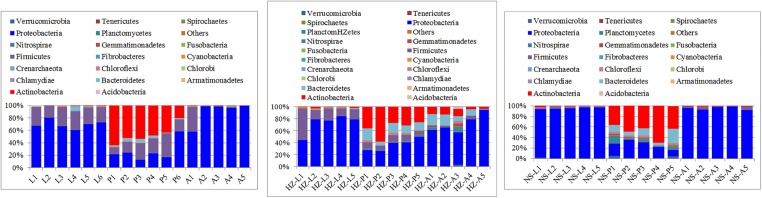
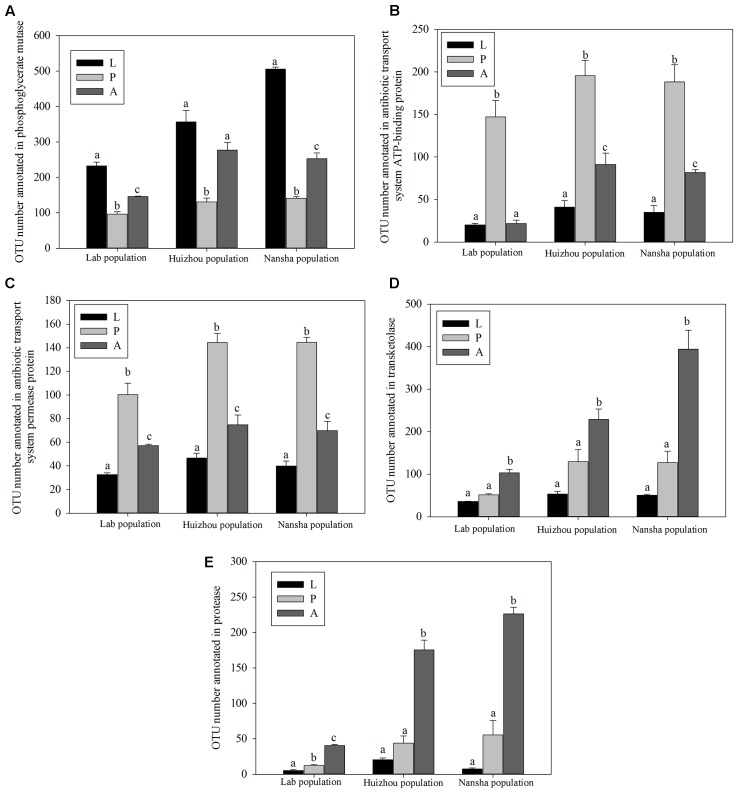
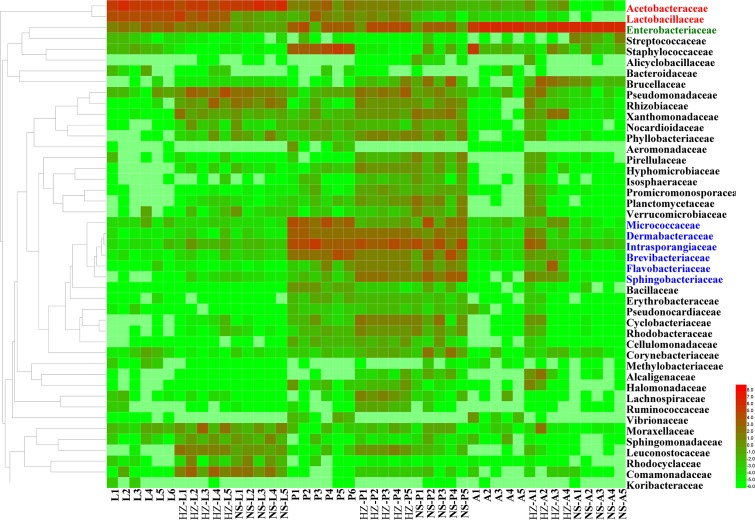
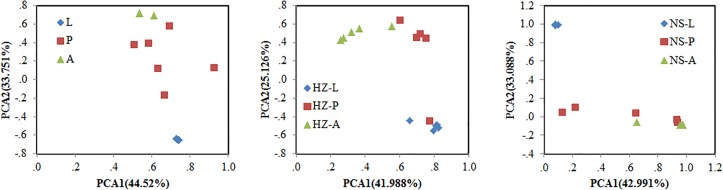
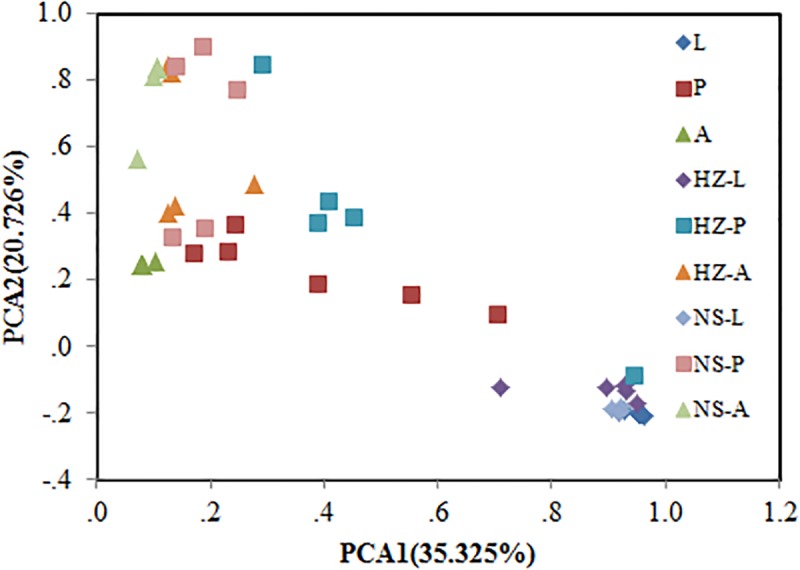
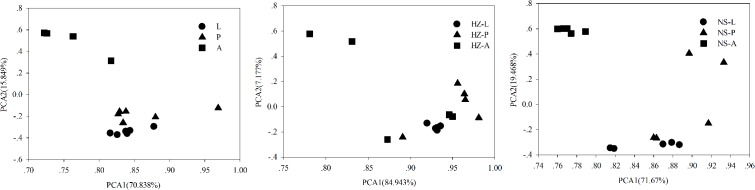
Eco-evolutionary dynamics of microbiotas at the macroscale level are largely driven by ecological variables. The diet and living environment of the oriental fruit fly, , diversify during development, providing a natural system to explore convergence, divergence, and repeatability in patterns of microbiota dynamics as a function of the host diet, phylogeny, and environment. Here, we characterized the microbiotas of 47 individuals from three distinct populations by 16S rRNA amplicon sequencing. A significant deviation was found within the larvae, pupae, and adults of each population. Pupae were characterized by an increased bacterial taxonomic and functional diversity. Principal components analysis showed that the microbiotas of larvae, pupae, and adults clearly separated into three clusters. , and were the predominant families in larval and adult samples, and PICRUSt analysis indicated that phosphoglycerate mutases and transketolases were significantly enriched in larvae, while phosphoglycerate mutases, transketolases, and proteases were significantly enriched in adults, which may support the digestive function of the microbiotas in larvae and adults. The abundances of (mainly ) and (mainly ) were significantly higher in pupae, and the antibiotic transport system ATP-binding protein and antibiotic transport system permease protein pathways were significantly enriched there as well, indicating the defensive function of microbiotas in pupae. Overall, differences in the microbiotas of the larvae, pupae, and adults are likely to contribute to differences in nutrient assimilation and living environments.
宏观尺度下微生物群的生态进化动态在很大程度上受生态变量驱动。东方果实蝇的饮食和生活环境在发育过程中会发生变化,这为探索微生物群动态模式的趋同、分化和可重复性提供了一个自然系统,这些模式是宿主饮食、系统发育和环境的函数。在这里,我们通过16S rRNA扩增子测序对来自三个不同种群的47个个体的微生物群进行了表征。在每个种群的幼虫、蛹和成虫中发现了显著差异。蛹的特点是细菌分类和功能多样性增加。主成分分析表明,幼虫、蛹和成虫的微生物群明显分为三个簇。在幼虫和成虫样本中,肠杆菌科和莫拉菌科是主要的科,PICRUSt分析表明,磷酸甘油酸变位酶和转酮醇酶在幼虫中显著富集,而磷酸甘油酸变位酶、转酮醇酶和蛋白酶在成虫中显著富集,这可能支持微生物群在幼虫和成虫中的消化功能。蛹中不动杆菌属(主要是鲍曼不动杆菌)和假单胞菌属(主要是铜绿假单胞菌)的丰度显著更高,抗生素转运系统ATP结合蛋白和抗生素转运系统通透酶蛋白途径在蛹中也显著富集,表明微生物群在蛹中的防御功能。总体而言,幼虫、蛹和成虫微生物群的差异可能导致营养同化和生活环境的差异。