Faraji Mojdeh, Fonseca Luis L, Escamilla-Treviño Luis, Barros-Rios Jaime, Engle Nancy, Yang Zamin K, Tschaplinski Timothy J, Dixon Richard A, Voit Eberhard O
1The Wallace H. Coulter, Department of Biomedical Engineering, Georgia Institute of Technology and Emory University, 313, Ferst Drive, Atlanta, GA 30332 USA.
2BioEnergy Sciences Center (BESC), Oak Ridge National Lab, Oak Ridge, TN USA.
Biotechnol Biofuels. 2018 Feb 9;11:34. doi: 10.1186/s13068-018-1028-9. eCollection 2018.
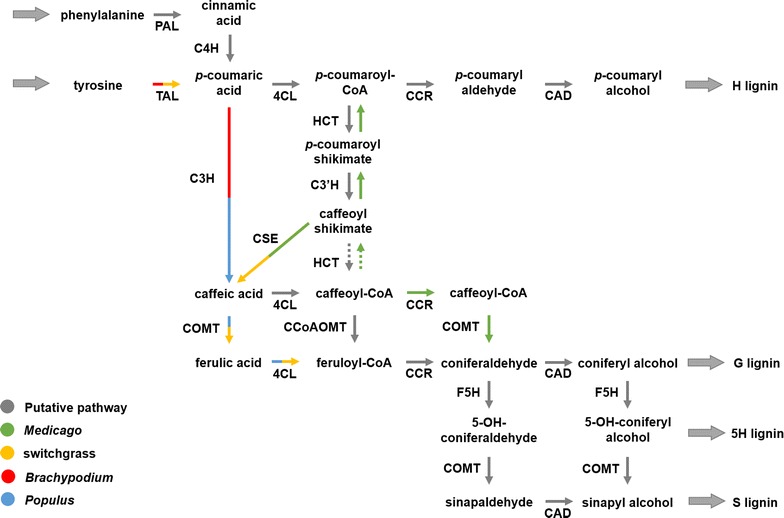
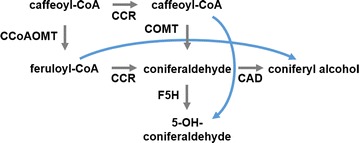
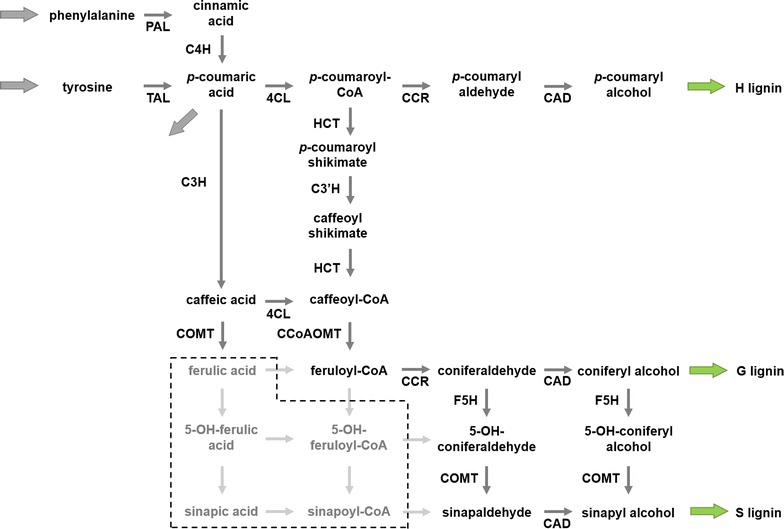
Lignin is a natural polymer that is interwoven with cellulose and hemicellulose within plant cell walls. Due to this molecular arrangement, lignin is a major contributor to the recalcitrance of plant materials with respect to the extraction of sugars and their fermentation into ethanol, butanol, and other potential bioenergy crops. The lignin biosynthetic pathway is similar, but not identical in different plant species. It is in each case comprised of a moderate number of enzymatic steps, but its responses to manipulations, such as gene knock-downs, are complicated by the fact that several of the key enzymes are involved in several reaction steps. This feature poses a challenge to bioenergy production, as it renders it difficult to select the most promising combinations of genetic manipulations for the optimization of lignin composition and amount.
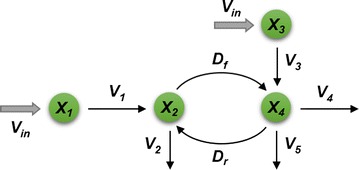
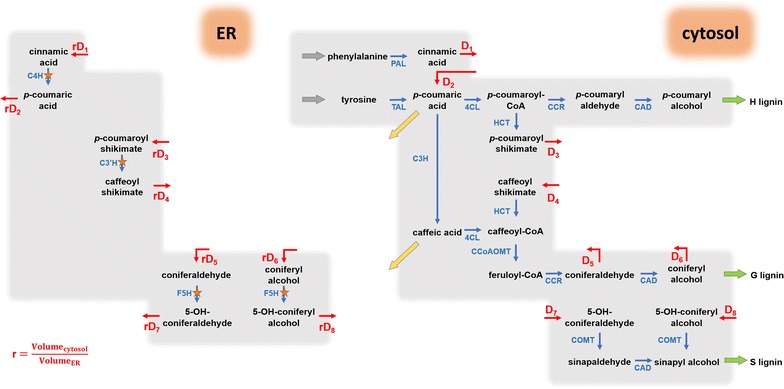
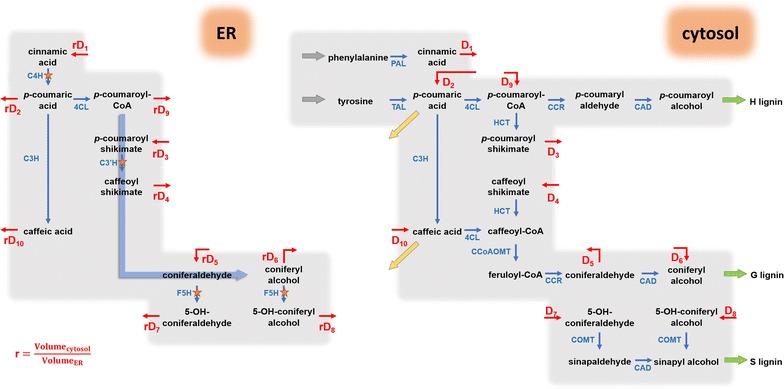
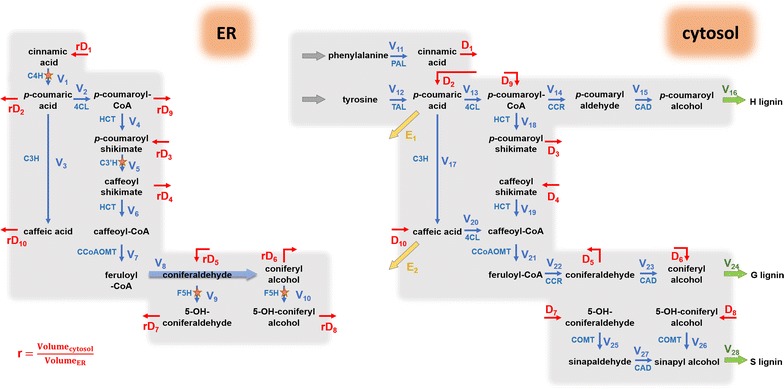
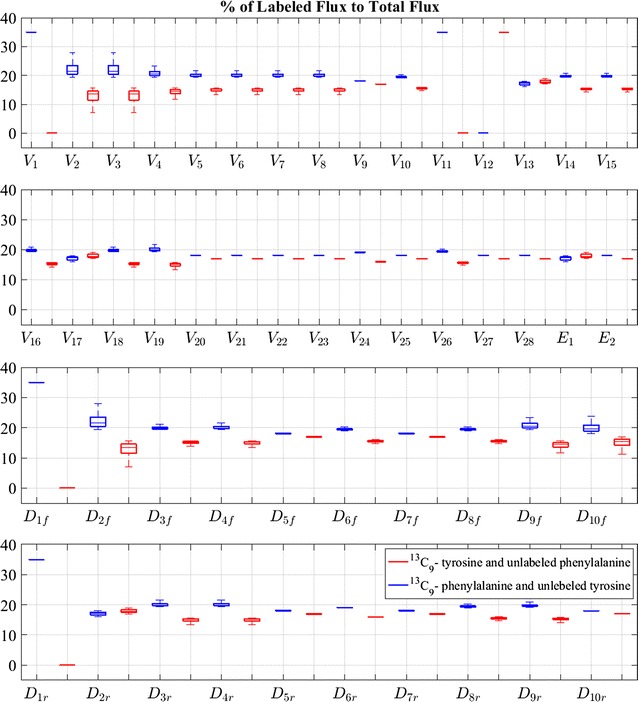
Here, we present several computational models than can aid in the analysis of data characterizing lignin biosynthesis. While minimizing technical details, we focus on the questions of what types of data are particularly useful for modeling and what genuine benefits the biofuel researcher may gain from the resulting models. We demonstrate our analysis with mathematical models for black cottonwood (), alfalfa (), switchgrass () and the grass .
Despite commonality in pathway structure, different plant species show different regulatory features and distinct spatial and topological characteristics. The putative lignin biosynthes pathway is not able to explain the plant specific laboratory data, and the necessity of plant specific modeling should be heeded.
木质素是一种天然聚合物,在植物细胞壁内与纤维素和半纤维素相互交织。由于这种分子排列,木质素是植物材料在糖提取及其发酵成乙醇、丁醇和其他潜在生物能源作物方面顽固性的主要因素。木质素生物合成途径在不同植物物种中相似但不完全相同。在每种情况下,它都由适度数量的酶促步骤组成,但其对诸如基因敲除等操作的反应因几个关键酶参与几个反应步骤这一事实而变得复杂。这一特性对生物能源生产构成了挑战,因为它使得难以选择最有前景的基因操作组合来优化木质素的组成和含量。
在此,我们提出了几个计算模型,可有助于分析表征木质素生物合成的数据。在尽量减少技术细节的同时,我们关注哪些类型的数据对建模特别有用以及生物燃料研究人员可能从所得模型中获得哪些真正的益处。我们用黑杨()、苜蓿()、柳枝稷()和禾本科植物的数学模型展示了我们的分析。
尽管途径结构具有共性,但不同植物物种表现出不同的调控特征以及独特的空间和拓扑特征。推测的木质素生物合成途径无法解释植物特定的实验室数据,因此应注意植物特定建模的必要性。