Department of Hand, Plastic and Reconstructive Surgery, Burn Center, Department of Plastic and Hand Surgery, University of Heidelberg, BG Trauma Hospital Ludwigshafen, Ludwigshafen, Germany.
Sci Rep. 2018 Feb 16;8(1):3168. doi: 10.1038/s41598-018-21540-5.
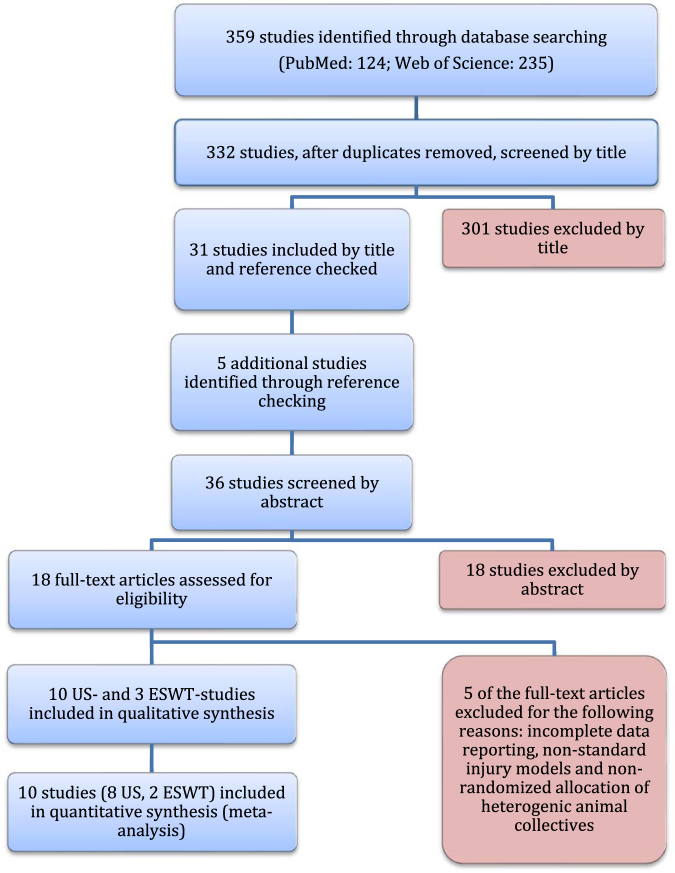
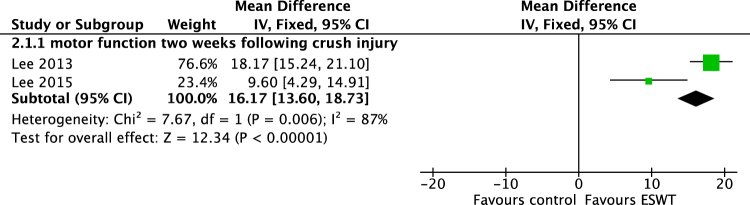
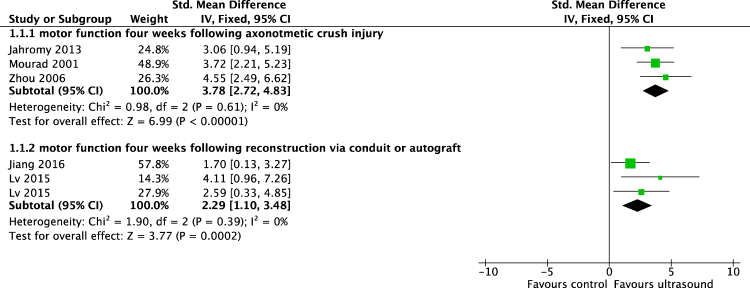
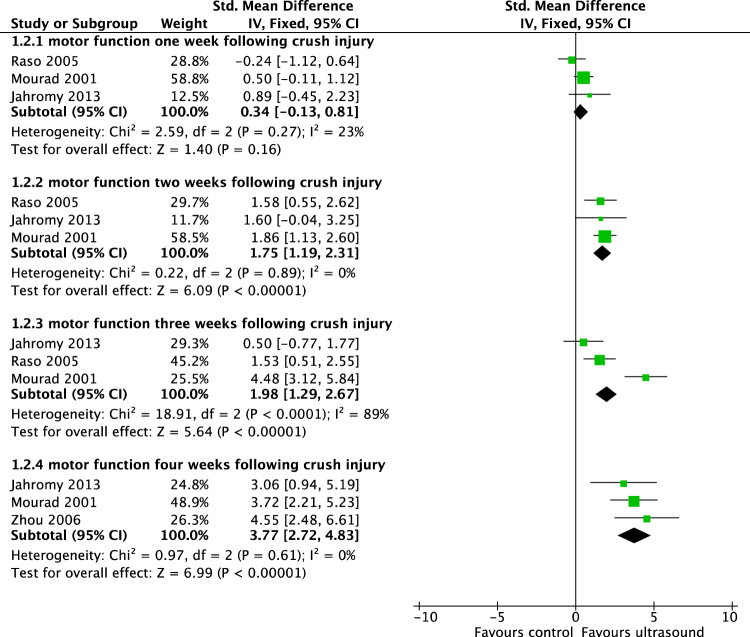
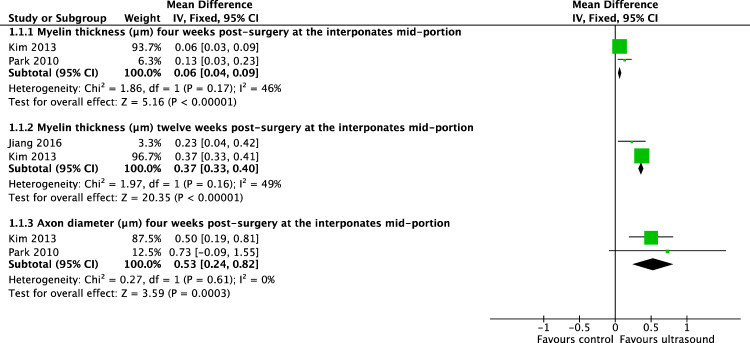
Limited regeneration after nerve injury often leads to delayed or incomplete reinnervation and consequently insufficient muscle function. Following nerve surgery, application of low-intensity ultrasound or extracorporeal shock waves may promote nerve regeneration and improve functional outcomes. Because currently clinical data is unavailable, we performed a meta-analysis following the PRISMA-guidelines to investigate the therapeutic effect of ultrasound and shock wave therapies on motor nerve regeneration. Ten ultrasound-studies (N = 445 rats) and three shock-wave studies (N = 110 rats) were identified from multiple databases. We calculated the difference in means or standardized mean difference with 95% confidence intervals for motor function, nerve conduction velocity and histomorphological parameters of treated versus sham or non-treated animals. Ultrasound treatment showed significantly faster nerve conduction, increased axonal regeneration with thicker myelin and improved motor function on sciatic functional index scale (week two: DM[95%CI]: 19,03[13,2 to 25,6], 71 animals; week four: 7,4[5,4 to 9,5], 47 animals). Shock wave induced recovery improvements were temporarily significant. In conclusion, there is significant evidence for low-intensity ultrasound but not for extracorporeal shock wave treatment to improve nerve regeneration. Prospective clinical trials should therefore investigate available FDA-approved ultrasound devices as adjunct postoperative treatment following nerve surgery.
神经损伤后的再生能力有限,常导致神经再支配延迟或不完全,从而导致肌肉功能不足。神经手术后,应用低强度超声或体外冲击波可能促进神经再生并改善功能预后。由于目前缺乏临床数据,我们按照 PRISMA 指南进行了荟萃分析,以调查超声和冲击波疗法对运动神经再生的治疗效果。从多个数据库中确定了 10 项超声研究(N = 445 只大鼠)和 3 项冲击波研究(N = 110 只大鼠)。我们计算了治疗组与假手术或未治疗组动物的运动功能、神经传导速度和组织形态学参数的均值差异或标准化均数差值,置信区间为 95%。超声治疗可显著加快神经传导速度,增加轴突再生,使髓鞘增厚,并改善坐骨神经功能指数(第 2 周:DM[95%CI]:19,03[13,2 至 25,6],71 只动物;第 4 周:7,4[5,4 至 9,5],47 只动物)上的运动功能。冲击波诱导的恢复改善是暂时显著的。总之,低强度超声有显著证据可改善神经再生,但体外冲击波治疗则不然。因此,应进行前瞻性临床试验,以调查神经手术后可使用的经 FDA 批准的超声设备作为辅助术后治疗。