Tumor Cell Biology, University Hospital of Surgery, University of Heidelberg, Heidelberg, Germany.
Front Immunol. 2018 Feb 2;9:137. doi: 10.3389/fimmu.2018.00137. eCollection 2018.
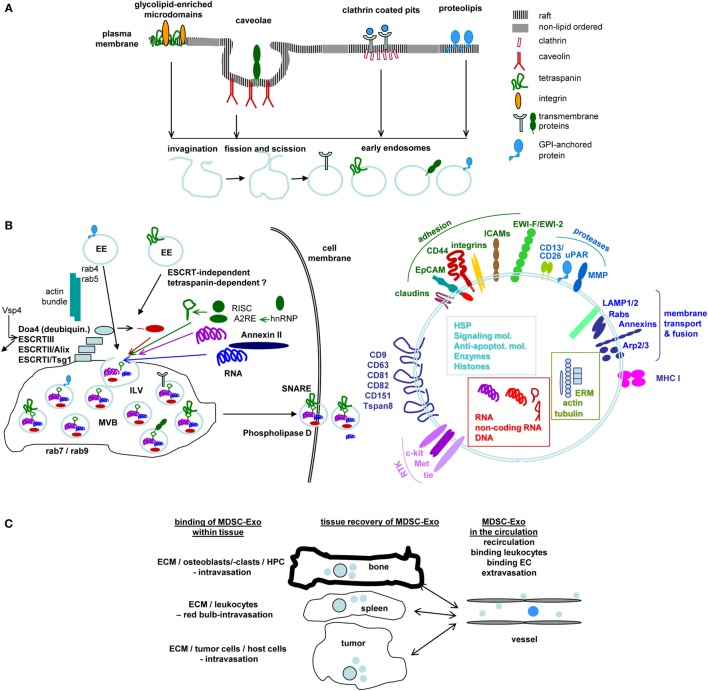
Myeloid-derived suppressor cells (MDSCs) are a heterogeneous population of immature myeloid cells originally described to hamper immune responses in chronic infections. Meanwhile, they are known to be a major obstacle in cancer immunotherapy. On the other hand, MDSC can interfere with allogeneic transplant rejection and may dampen autoreactive T cell activity. Whether MDSC-Exosomes (Exo) can cope with the dangerous and potentially therapeutic activities of MDSC is not yet fully explored. After introducing MDSC and Exo, it will be discussed, whether a blockade of MDSC-Exo could foster the efficacy of immunotherapy in cancer and mitigate tumor progression supporting activities of MDSC. It also will be outlined, whether application of native or tailored MDSC-Exo might prohibit autoimmune disease progression. These considerations are based on the steadily increasing knowledge on Exo composition, their capacity to distribute throughout the organism combined with selectivity of targeting, and the ease to tailor Exo and includes open questions that answers will facilitate optimizing protocols for a MDSC-Exo blockade in cancer as well as for strengthening their therapeutic efficacy in autoimmune disease.
髓系来源的抑制细胞(MDSC)是一种异质性的未成熟髓系细胞群体,最初被描述为抑制慢性感染中的免疫反应。同时,它们也被认为是癌症免疫治疗的主要障碍。另一方面,MDSC 可以干扰同种异体移植排斥反应,并可能抑制自身反应性 T 细胞的活性。MDSC-外泌体(Exo)是否能够应对 MDSC 的危险和潜在治疗活动尚未得到充分探索。在介绍 MDSC 和 Exo 之后,将讨论阻断 MDSC-Exo 是否可以促进癌症免疫治疗的疗效,并减轻 MDSC 支持肿瘤进展的作用。还将概述应用天然或定制的 MDSC-Exo 是否可以阻止自身免疫性疾病的进展。这些考虑是基于对外泌体组成、它们在体内分布的能力以及靶向选择性的不断增加的认识,以及定制外泌体的容易程度,并包括需要回答的问题,这些问题将有助于优化癌症中 MDSC-Exo 阻断的方案以及增强它们在自身免疫性疾病中的治疗效果。