Diabetes and Beta Cell Biology Center, Division of Endocrinology, Diabetes & Metabolism, Department of Medicine, University of Pittsburgh, 200 Lothrop, BST-1058W, Pittsburgh, PA 15261, United States.
Diabetes and Metabolism Research Institute, City of Hope, Duarte, CA, United States.
Free Radic Biol Med. 2018 May 1;119:69-74. doi: 10.1016/j.freeradbiomed.2018.02.022. Epub 2018 Feb 16.
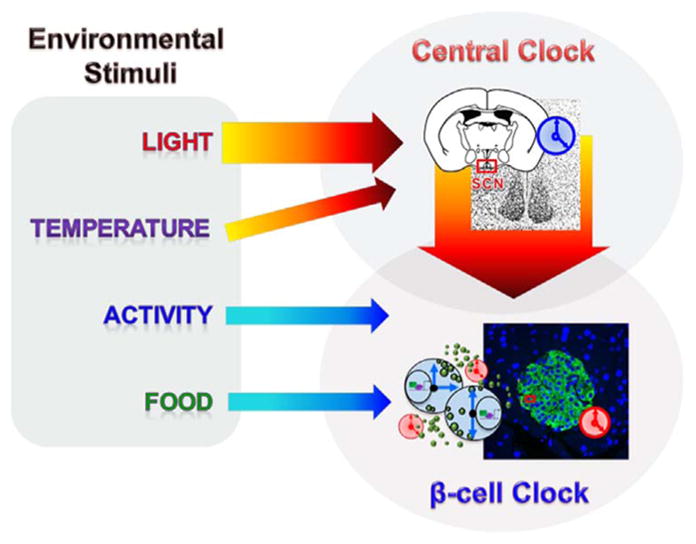
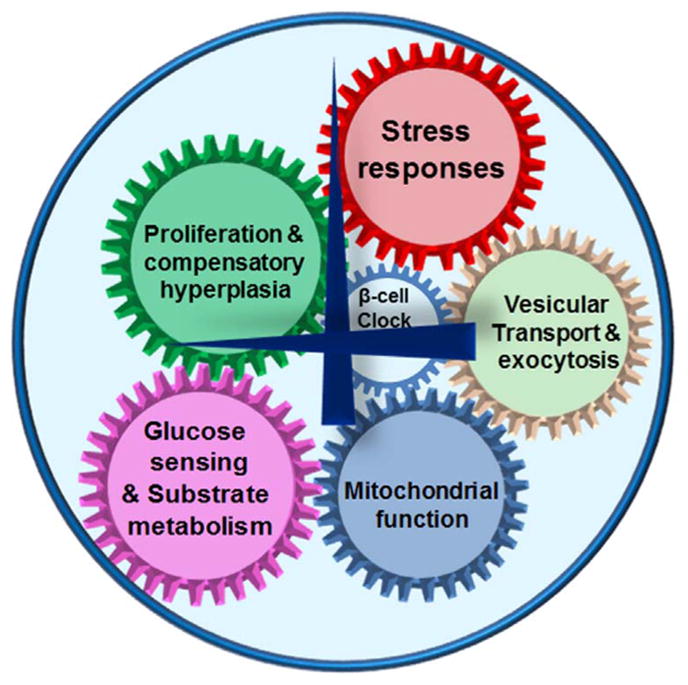
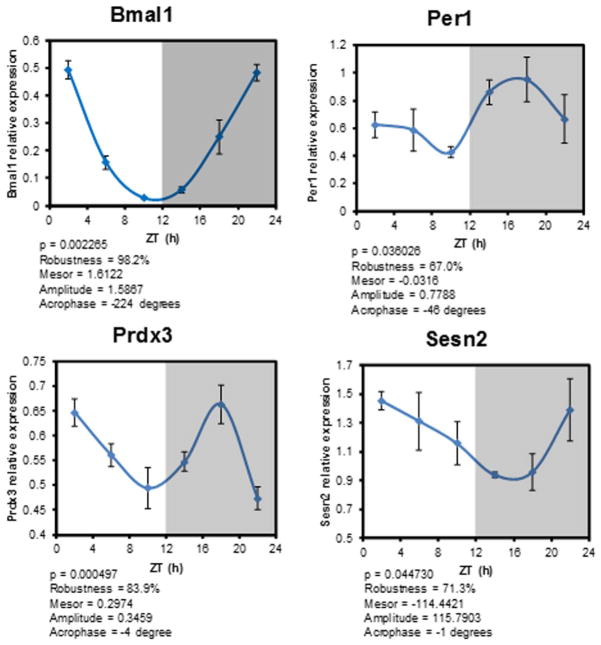
Diabetes results from a loss of β-cell function. With the number of people with diabetes reaching epidemic proportions globally, understanding mechanisms that are contributing to this increasing prevalence is critical. One such factor has been circadian disruption, with shift-work, light pollution, jet-lag, increased screen time, all acting as potential contributory factors. Though circadian disruption has been epidemiologically associated with diabetes and other metabolic disorders for many decades, it is only recently that there has been a better understanding of the underlying molecular mechanisms. Experimental circadian disruption, via manipulation of environmental or genetic factors using gene-deletion mouse models, has demonstrated the importance of circadian rhythms in whole body metabolism. Genetic disruption of core clock genes, specifically in the β-cells in mice, have, now demonstrated the importance of the intrinsic β-cell clock in regulating function. Recent work has also shown the interaction of the circadian clock and enhancers in β-cells, indicating a highly integrated regulation of transcription and cellular function by the circadian clock. Disruption of either the whole body or only the β-cell clock leads to significant impairment of mitochondrial function, uncoupling, impaired vesicular transport, oxidative stress in β-cells and finally impaired glucose-stimulated insulin secretion and diabetes. In this review, we explore the role of the circadian clock in mitigating oxidative stress and preserving β-cell function.
糖尿病是由于β细胞功能丧失引起的。随着全球糖尿病患者人数达到流行程度,了解导致这种患病率不断增加的机制至关重要。其中一个因素是昼夜节律紊乱,轮班工作、光污染、时差、屏幕时间增加,都可能是促成因素。尽管几十年来,昼夜节律紊乱与糖尿病和其他代谢紊乱在流行病学上已经相关,但直到最近,人们才更好地理解了潜在的分子机制。通过使用基因缺失小鼠模型来操纵环境或遗传因素,进行实验性的昼夜节律紊乱,已经证明了昼夜节律对全身代谢的重要性。对核心时钟基因(特别是在小鼠的β细胞中)进行遗传破坏,现在已经证明了内在β细胞时钟在调节功能方面的重要性。最近的研究还表明了昼夜节律钟和β细胞中增强子的相互作用,表明昼夜节律钟对转录和细胞功能进行了高度整合的调节。无论是整个身体还是仅β细胞时钟的破坏,都会导致线粒体功能显著受损、解偶联、囊泡运输受损、β细胞中的氧化应激,最终导致葡萄糖刺激的胰岛素分泌受损和糖尿病。在这篇综述中,我们探讨了昼夜节律钟在减轻氧化应激和保护β细胞功能方面的作用。