Tea Research Institute, Zhejiang University, Hangzhou 310058, China.
Liupao Tea Academy, Wuzhou 543003, Guangxi, China.
Molecules. 2018 Feb 17;23(2):445. doi: 10.3390/molecules23020445.
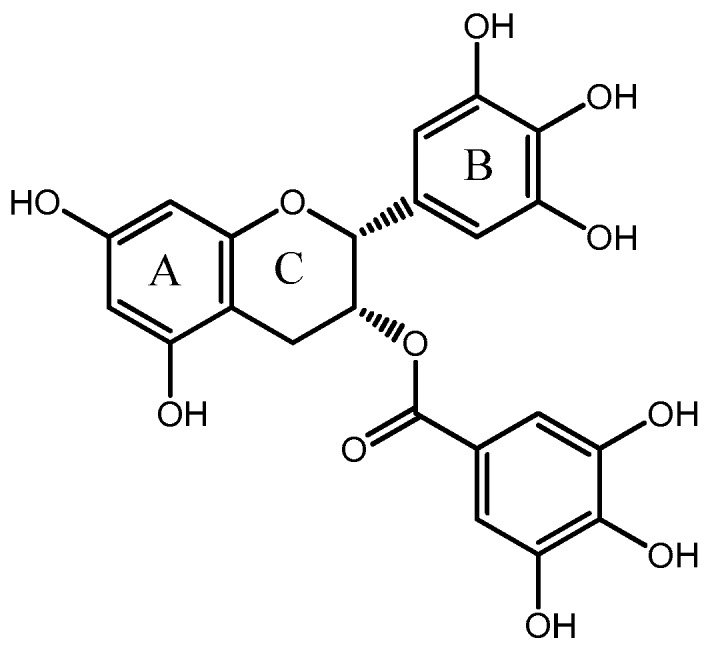
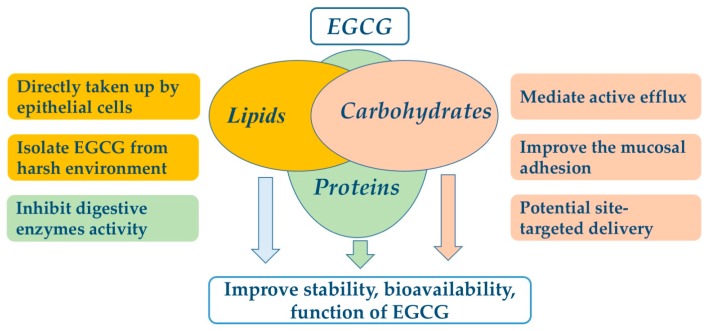
(-)-Epigallocatechin gallate (EGCG) has attracted significant research interest due to its health-promoting effects such as antioxidation, anti-inflammation and anti-cancer activities. However, its instability and poor bioavailability have largely limited its efficacy and application. Food-grade materials such as proteins, carbohydrates and lipids show biodegradability, biocompatibility and biofunctionality properties. Food-grade encapsulation systems are usually used to improve the bioavailability of EGCG. In the present paper, we provide an overview of materials and techniques used in encapsulating EGCG, in which the adsorption mechanisms of food-grade systems during in vitro digestion are reviewed. Moreover, the potential challenges and future work using food-grade encapsulates for delivering EGCG are also discussed.
(-)-表没食子儿茶素没食子酸酯(EGCG)因其具有抗氧化、抗炎和抗癌等促进健康的作用而引起了极大的研究兴趣。然而,其不稳定性和较差的生物利用度在很大程度上限制了其功效和应用。食品级材料如蛋白质、碳水化合物和脂质具有可生物降解性、生物相容性和生物功能性。食品级封装系统通常用于提高 EGCG 的生物利用度。在本文中,我们综述了用于封装 EGCG 的材料和技术,其中综述了食品级体系在体外消化过程中的吸附机制。此外,还讨论了使用食品级封装剂递送 EGCG 所面临的潜在挑战和未来工作。