Regmi Kabindra, Kaphle Dinesh, Timilsina Sabina, Tuha Nik Annie Afiqah
Faculty of Health Science, PAPRSB Institute of Health Science, University Brunei Darussalam, Gadong, BE1410, Brunei Darussalam.
Centre for Innovative Research in Public Health, Pokhara, Nepal.
Pharmacoecon Open. 2018 Mar;2(1):5-17. doi: 10.1007/s41669-017-0025-4.
Economic evidence relating to tobacco control is generally derived from the cost effectiveness of smoking-cessation programs or the economic impact of tobacco-induced disease, based on revealed-preference data. However, empirical estimates from stated-preference data on tobacco users' preferences, smoking behaviour and smoking cessation aids using analytical techniques such as discrete-choice experiments (DCEs) could be important for policy decision making in tobacco control.
Our objective was to review the practice and utility of DCE methodology across nicotine- and tobacco-related issues, particularly smoking and smoking-cessation behaviour, anti-smoking policies and preferences for smoking-cessation aids.
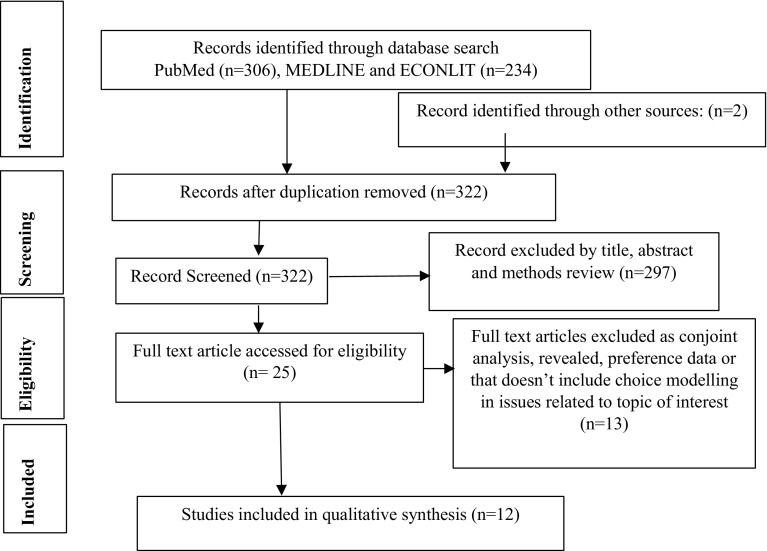
We searched the PubMed, MEDLINE and ECONLIT databases for full-text original research articles on tobacco-related issues published between January 2000 and April 2016 that used a DCE method. We summarised the evidence and methodological characteristics of DCEs according to Lancsar and Louviere, 2008.
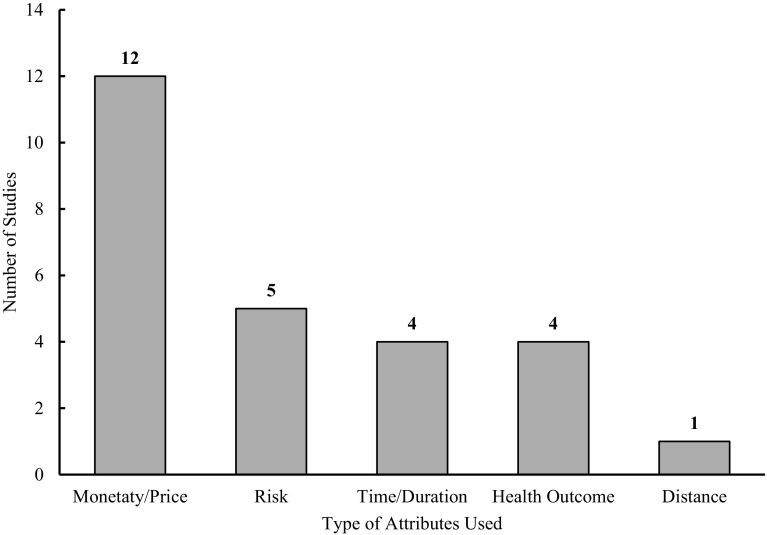
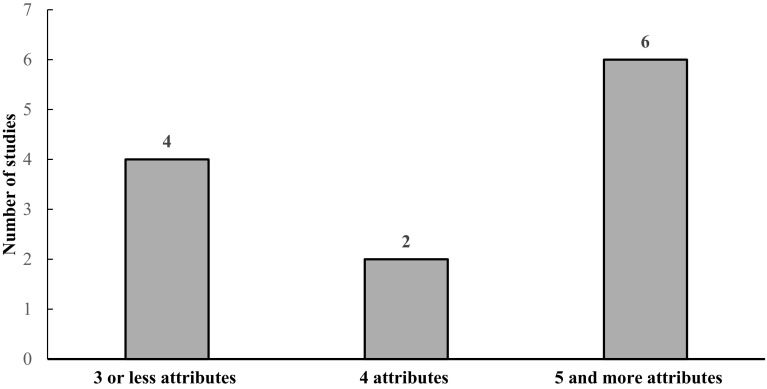
Our review of the 12 eligible studies showed that DCE methodology was used to elicit smoker preferences and to evaluate tobacco-control policies. The majority of the studies were published in the last 5 years. The areas of application were smoking cessation, smoking behaviour, electronic cigarette use, water-pipe smoking and tobacco packaging. Monetary attributes were the most influential attributes in all studies. The design of the DCEs varied.
DCE studies of tobacco-related issues were methodologically consistent with guidelines proposed for conducting health-related DCEs.
与烟草控制相关的经济证据通常来自戒烟项目的成本效益或烟草所致疾病的经济影响,基于显示性偏好数据。然而,运用离散选择实验(DCE)等分析技术,从陈述性偏好数据得出的关于烟草使用者偏好、吸烟行为及戒烟辅助手段的实证估计,对于烟草控制政策决策可能很重要。
我们的目的是回顾DCE方法在尼古丁和烟草相关问题中的应用及效用,特别是吸烟与戒烟行为、反吸烟政策以及对戒烟辅助手段的偏好。
我们在PubMed、MEDLINE和ECONLIT数据库中检索了2000年1月至2016年4月间发表的关于烟草相关问题的全文原始研究文章,这些文章使用了DCE方法。我们根据Lancsar和Louviere(2008年)总结了DCE的证据及方法学特征。
我们对12项符合条件的研究的回顾表明,DCE方法被用于引出吸烟者的偏好并评估烟草控制政策。大多数研究是在过去5年发表的。应用领域包括戒烟、吸烟行为、电子烟使用、水烟吸食和烟草包装。货币属性在所有研究中都是最具影响力的属性。DCE的设计各不相同。
关于烟草相关问题的DCE研究在方法学上与为开展与健康相关的DCE所提出的指南一致。