Kidd Andrew C, McGettrick Michael, Tsim Selina, Halligan Daniel L, Bylesjo Max, Blyth Kevin G
Pleural Disease Unit, Queen Elizabeth University Hospital, Glasgow, UK.
Fios Genomics, Edinburgh, UK.
BMJ Open Respir Res. 2018 Jan 30;5(1):e000240. doi: 10.1136/bmjresp-2017-000240. eCollection 2018.
Accurate prognostication is difficult in malignant pleural mesothelioma (MPM). We developed a set of robust computational models to quantify the prognostic value of routinely available clinical data, which form the basis of published MPM prognostic models.
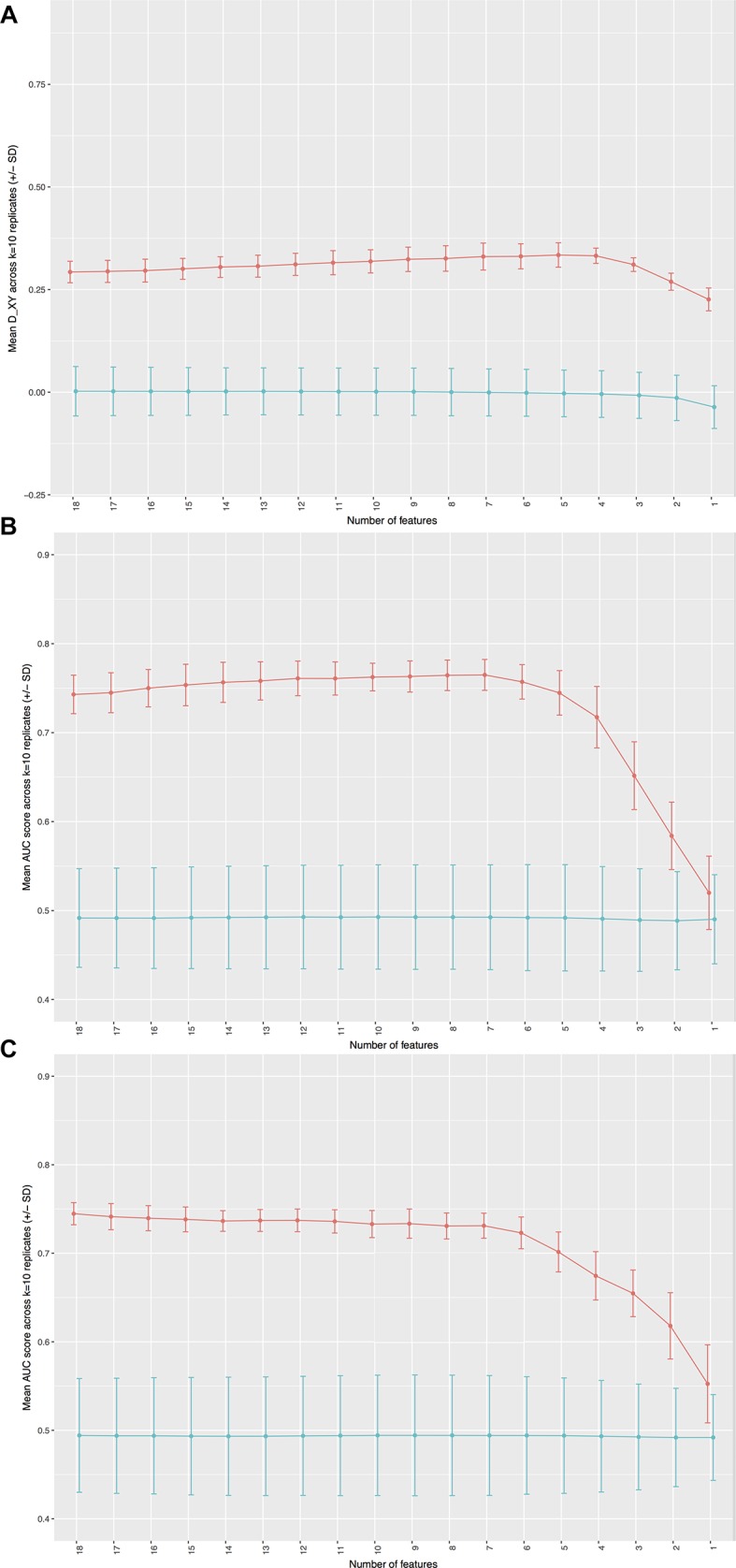
Data regarding 269 patients with MPM were allocated to balanced training (n=169) and validation sets (n=100). Prognostic signatures (minimal length best performing multivariate trained models) were generated by least absolute shrinkage and selection operator regression for overall survival (OS), OS <6 months and OS <12 months. OS prediction was quantified using Somers D statistic, which varies from 0 to 1, with increasing concordance between observed and predicted outcomes. 6-month survival and 12-month survival were described by area under the curve (AUC) scores.
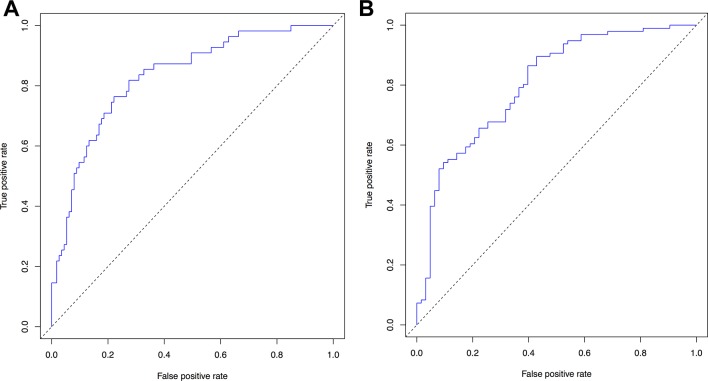
Median OS was 270 (IQR 140-450) days. The primary OS model assigned high weights to four predictors: age, performance status, white cell count and serum albumin, and after cross-validation performed significantly better than would be expected by chance (mean D0.332 (±0.019)). However, validation set D was only 0.221 (0.0935-0.346), equating to a 22% improvement in survival prediction than would be expected by chance. The 6-month and 12-month OS signatures included the same four predictors, in addition to epithelioid histology plus platelets and epithelioid histology plus C-reactive protein (mean AUC 0.758 (±0.022) and 0.737 (±0.012), respectively). The <6-month OS model demonstrated 74% sensitivity and 68% specificity. The <12-month OS model demonstrated 63% sensitivity and 79% specificity. Model content and performance were generally comparable with previous studies.
The prognostic value of the basic clinical information contained in these, and previously published models, is fundamentally of limited value in accurately predicting MPM prognosis. The methods described are suitable for expansion using emerging predictors, including tumour genomics and volumetric staging.
恶性胸膜间皮瘤(MPM)的准确预后评估具有挑战性。我们开发了一组强大的计算模型,以量化常规可用临床数据的预后价值,这些数据构成了已发表的MPM预后模型的基础。
将269例MPM患者的数据分配到平衡的训练集(n = 169)和验证集(n = 100)中。通过最小绝对收缩和选择算子回归生成总生存期(OS)、OS<6个月和OS<12个月的预后特征(最短长度的最佳多变量训练模型)。使用Somers D统计量对OS预测进行量化,该统计量范围从0到1,观察到的和预测的结果之间的一致性增加。6个月生存率和12个月生存率用曲线下面积(AUC)评分来描述。
中位OS为270(IQR 140 - 450)天。主要的OS模型对四个预测因素赋予了高权重:年龄、体能状态、白细胞计数和血清白蛋白,交叉验证后其表现明显优于随机预期(平均D 0.332(±0.019))。然而,验证集的D仅为0.221(0.0935 - 0.346),这意味着生存预测比随机预期提高了22%。6个月和12个月的OS特征除上皮样组织学加血小板以及上皮样组织学加C反应蛋白外,还包括相同的四个预测因素(平均AUC分别为0.758(±0.022)和0.737(±0.012))。<6个月的OS模型显示出74%的敏感性和68%的特异性。<12个月的OS模型显示出63%的敏感性和79%的特异性。模型内容和性能与先前的研究总体相当。
这些模型以及先前发表的模型中包含的基本临床信息的预后价值,在准确预测MPM预后方面从根本上来说是有限的。所描述的方法适用于使用包括肿瘤基因组学和容积分期在内的新兴预测因素进行扩展。