Department of Ophthalmology, Maharaja Agrasen Medical College, Agroha, Hisar, Haryana, India.
Indian J Ophthalmol. 2018 Mar;66(3):394-399. doi: 10.4103/ijo.IJO_726_17.
The purpose of this study was to estimate the prevalence of blood-borne viral infections (triple H: HBV-hepatitis B virus, HCV-hepatitis C virus, and HIV-human immunodeficiency virus) among cataract patients, sought possible risk associations and discuss feasibility of universal preoperative screening.
This prospective, cross-sectional study enrolled consecutive patients of senile cataract. They were screened by immunoassay-based rapid diagnostic card tests for blood-borne viral infections. Positive cases were confirmed with confirmatory ELISA tests. Seropositive patients were enquired about the exposure to possible risk associations for acquiring these infections. Cost of card test per patient was calculated.
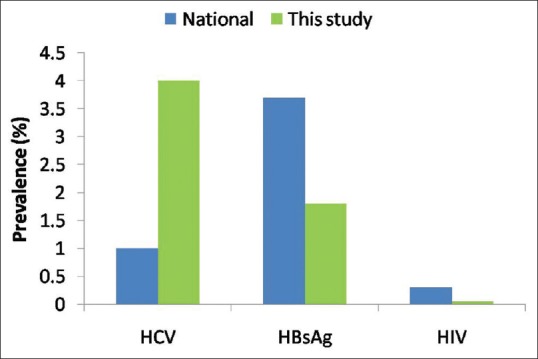
The prevalence of seropositivity for triple H viral infections (HBV, HCV, and HIV) among patients of senile cataract was 5.9% (95% confidence interval [CI]: 5.3-6.6), and HCV was most common viral infection. The dental extraction was most common (54%; 95% CI:48-60) possible risk association. The total cost of primary screening per patient for triple H infections(HBV, HCV, and HIV) was $0.93.
The prevalence of blood-borne viral infection among cataract patients is high in this area. Awareness of the prevalence of blood-borne viral infections in service area, along with knowledge of rate of accidental exposure and risk of transmission would help to understand cost-effectiveness of universal preoperative screening before cataract surgery.
本研究旨在评估白内障患者血液传播病毒感染(三重 H:HBV-乙型肝炎病毒、HCV-丙型肝炎病毒和 HIV-人类免疫缺陷病毒)的流行率,探讨可能的风险关联,并讨论白内障术前普遍筛查的可行性。
这是一项前瞻性、横断面研究,纳入了老年白内障连续患者。他们通过基于免疫测定的快速诊断卡试验筛查血液传播病毒感染。阳性病例通过确认性 ELISA 试验进行确认。对血清阳性患者询问可能导致这些感染的暴露风险关联。计算每位患者的卡试验成本。
老年白内障患者中三重 H 病毒感染(HBV、HCV 和 HIV)的血清阳性率为 5.9%(95%置信区间:5.3-6.6),HCV 是最常见的病毒感染。最常见的可能风险关联是拔牙(54%;95%置信区间:48-60)。每位患者进行三重 H 感染(HBV、HCV 和 HIV)的初步筛查的总费用为 0.93 美元。
该地区白内障患者血液传播病毒感染的流行率较高。了解服务区域内血液传播病毒感染的流行率,以及意外暴露率和传播风险,有助于了解白内障术前普遍筛查的成本效益。