Vector-borne Viral Disease Programme, The Pirbright Institute, Pirbright, Surrey, UK.
National Centre for Vector Entomology, Institute of Parasitology, University of Zürich, Winterthurerstr. 266a, 8057, Zürich, Switzerland.
Parasit Vectors. 2018 Feb 27;11(1):116. doi: 10.1186/s13071-018-2650-x.
Culicoides biting midges (Diptera: Ceratopogonidae) are responsible for the biological transmission of internationally important arboviruses of livestock. In 2011, a novel Orthobunyavirus was discovered in northern Europe causing congenital malformations and abortions in ruminants. From field studies, Culicoides were implicated in the transmission of this virus which was subsequently named Schmallenberg virus (SBV), but to date no assessment of susceptibility to infection of field populations under standardised laboratory conditions has been carried out. We assessed the influence of membrane type (chick skin, collagen, Parafilm M®) when offered in conjunction with an artificial blood-feeding system (Hemotek, UK) on field-collected Culicoides blood-feeding rates. Susceptibility to infection with SBV following blood-feeding on an SBV-blood suspension provided via either (i) the Hemotek system or via (ii) a saturated cotton wool pledglet was then compared. Schmallenberg virus susceptibility was defined by RT-qPCR of RNA extractions of head homogenates and related to Culicoides species and haplotype identifications based on the DNA barcode region of the mitochondrial cytochrome c oxidase 1 (cox1) gene.
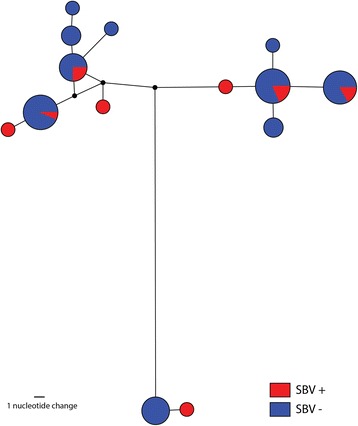
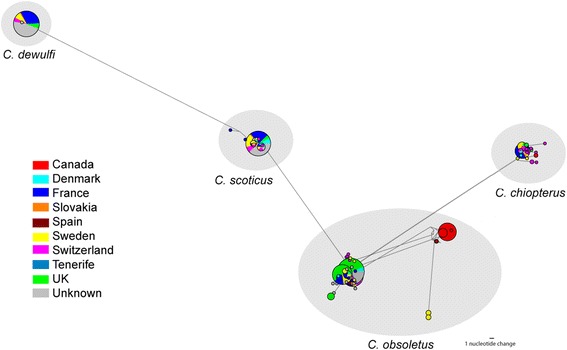
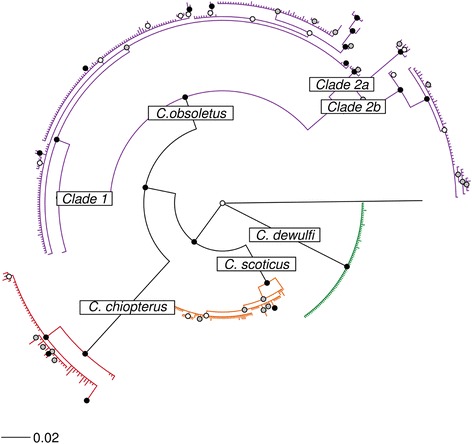
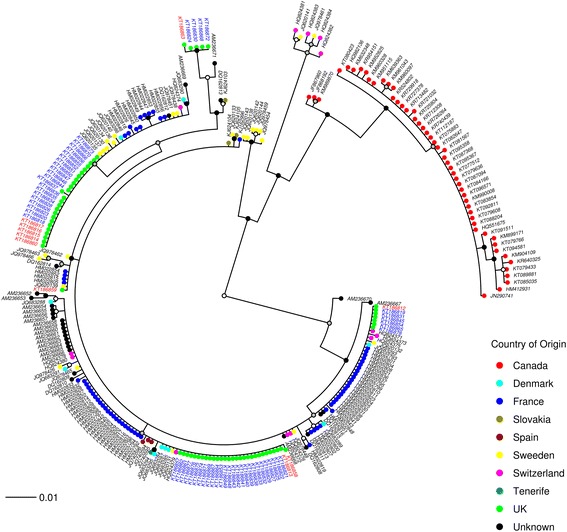
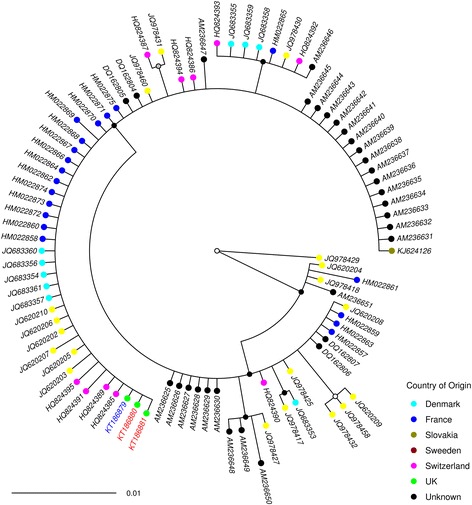
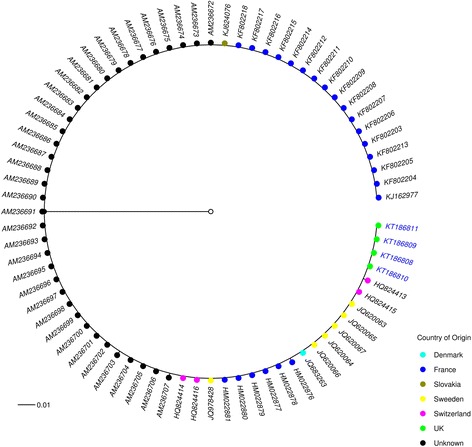
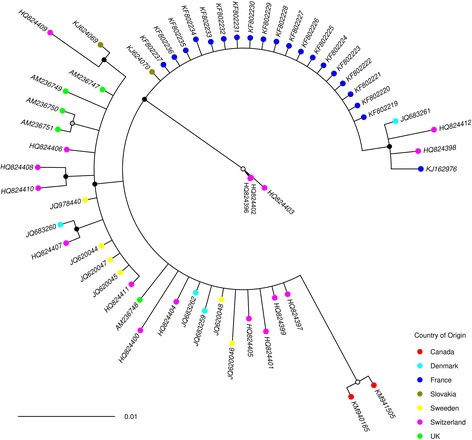
Culicoides blood-feeding rates were low across all membrane types tested (7.5% chick skin, 0.0% for collagen, 4.4% Parafilm M®, with 6029 female Culicoides being offered a blood meal in total). Susceptibility to infection with SBV through membrane blood-feeding (8 of 109 individuals tested) and pledglet blood-feeding (1 of 94 individuals tested) was demonstrated for the Obsoletus complex, with both C. obsoletus (Meigen) and C. scoticus Downes & Kettle susceptible to infection with SBV through oral feeding. Potential evidence of cryptic species within UK populations was found for the Obsoletus complex in phylogenetic analyses of cox1 DNA barcodes of 74 individuals assessed from a single field-site.
Methods described in this study provide the means to blood-feed Palaearctic Culicoides for vector competence studies and colonisation attempts. Susceptibility to SBV infection was 7.3% for membrane-fed members of the subgenus Avaritia and 1.1% for pledglet-fed. Both C. obsoletus and C. scoticus were confirmed as being susceptible to infection with SBV, with potential evidence of cryptic species within UK Obsoletus complex specimens, however the implications of cryptic diversity in the Obsoletus complex on arbovirus transmission remains unknown.
致倦库蚊(双翅目:蠓科)是引起家畜重要虫媒病毒病的生物传播媒介。2011 年,在北欧发现了一种新型布尼亚病毒,可引起反刍动物的先天性畸形和流产。从田间研究来看,库蠓可能参与了这种病毒的传播,随后这种病毒被命名为沙姆布鲁病毒(SBV),但迄今为止,还没有对标准实验室条件下的野外种群的易感性进行评估。我们评估了当与人工吸血系统(Hemotek,英国)一起提供时,膜类型(鸡皮、胶原蛋白、Parafilm M®)对野外采集的库蠓吸血率的影响。然后比较了在 SBV 血悬液上吸血后,通过(i)Hemotek 系统或(ii)饱和棉花纤维垫接受感染 SBV 的易感性。沙姆布鲁病毒的易感性通过 RNA 提取头部匀浆的 RT-qPCR 进行定义,并与线粒体细胞色素 c 氧化酶 1(cox1)基因的 DNA 条码区域基于库蠓物种和单倍型鉴定进行相关联。
在所测试的所有膜类型中,库蠓的吸血率均较低(鸡皮 7.5%,胶原蛋白 0.0%,Parafilm M®4.4%,总共提供了 6029 只雌性库蠓的血液餐)。通过膜吸血(109 人中有 8 人)和棉垫吸血(94 人中有 1 人)证明了 Obsoletus 复合体对 SBV 的易感性,其中 C. obsoletus(Meigen)和 C. scoticus Downes & Kettle 均通过口服感染 SBV。在对来自单个田间地点的 74 只个体的 cox1 DNA 条码进行系统发育分析时,在英国种群中发现了 Obsoletus 复合体中的潜在隐种证据。
本研究中描述的方法为亲代库蠓的吸血能力研究和殖民尝试提供了手段。膜喂养的亚属 Avaritia 成员对 SBV 感染的易感性为 7.3%,棉垫喂养的成员为 1.1%。C. obsoletus 和 C. scoticus 均被证实对 SBV 感染敏感,在英国 Obsoletus 复合体标本中存在潜在的隐种证据,但隐种多样性在 Obsoletus 复合体中的虫媒病毒传播的影响尚不清楚。