Department of Stomatology, Faculty of Medicine and Dentistry, University of Valencia, Valencia, Spain.
Orthodontics Teaching Unit, Department of Stomatology, Faculty of Medicine and Dentistry, University of Valencia, Valencia, Spain.
PLoS One. 2018 Feb 28;13(2):e0193162. doi: 10.1371/journal.pone.0193162. eCollection 2018.
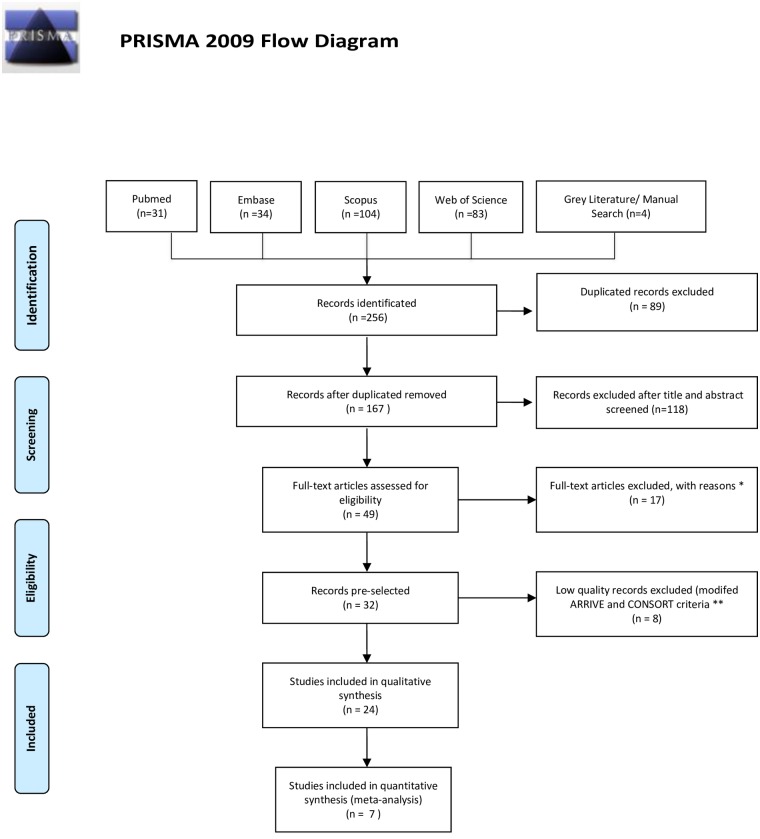
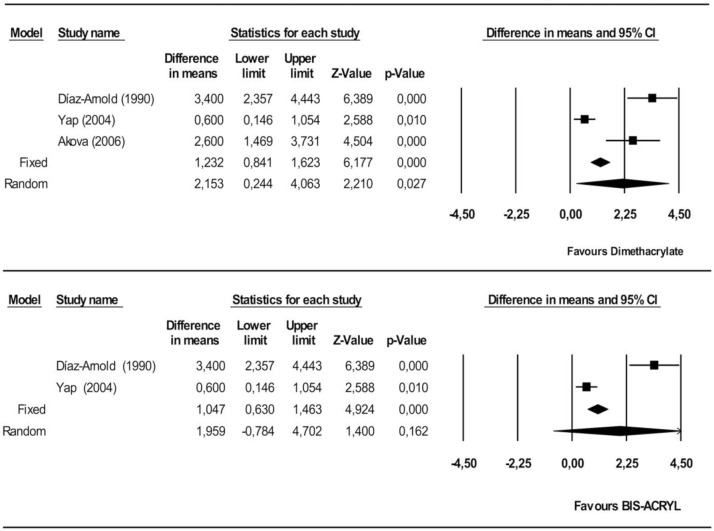
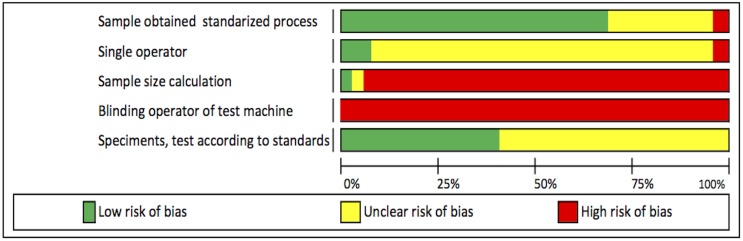
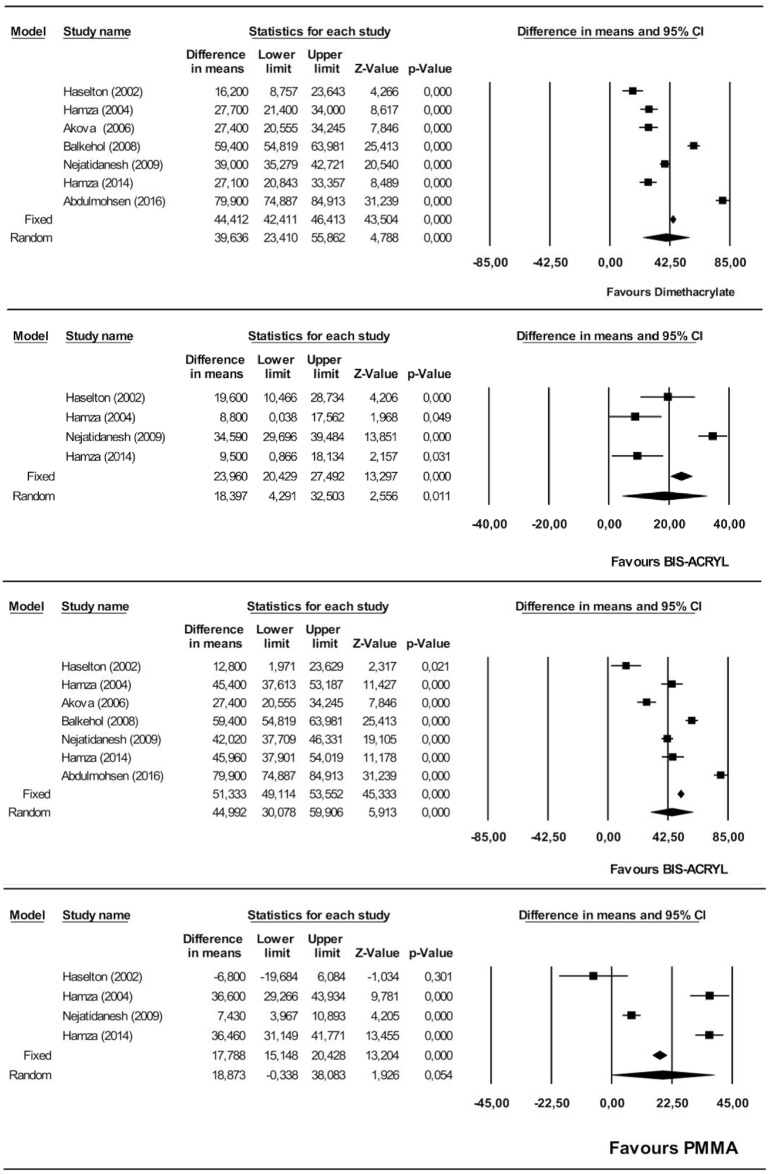
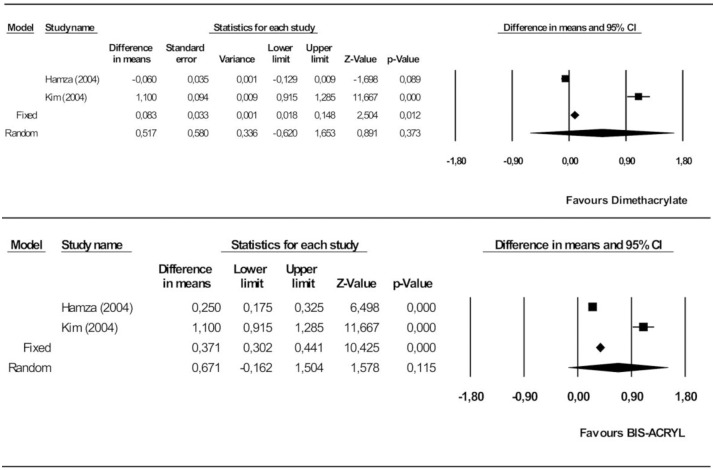
Provisional restorations represent an important phase during the rehabilitation process, knowledge of the mechanical properties of the available materials allows us to predict their clinical performance. At present, there is no systematic review, which supports the clinicians' criteria, in the selection of a specific material over another for a particular clinical situation. The purpose of this systematic review and meta-analysis was to assess and compare the mechanical properties of dimethacrylates and monomethacrylates used in fabricating direct provisional restorations, in terms of flexural strength, fracture toughness and hardness. This review followed the PRISMA guidelines. The searches were conducted in PubMed, Embase, Web of Science, Scopus, the New York Academy of Medicine Grey Literature Report and were complemented by hand-searching, with no limitation of time or language up to January 10, 2017. Studies that assess and compare the mechanical properties of dimethacrylate- and monomethacrylate-based provisional restoration materials were selected. A quality assessment of full-text articles were performed according to modified ARRIVE and CONSORT criteria and modified Cochrane Collaboration's tool for in vitro studies. Initially, 256 articles were identified. After removing the duplicates and applying the selection criteria, 24 articles were included in the qualitative synthesis and 7 were included in the quantitative synthesis (meta-analysis). It may be concluded that dimethacrylate-based provisional restorations presented better mechanical behavior than monomethacrylate-based ones in terms of flexural strength and hardness. Fracture toughness showed no significant differences. Within the monomethacrylate group, polymethylmethacrylate showed greater flexural strength than polyethylmethacrylate.
临时修复体是修复过程中的一个重要阶段,对可用材料机械性能的了解可以帮助我们预测其临床性能。目前,在选择特定临床情况下的特定材料时,没有系统评价来支持临床医生的标准。本系统评价和荟萃分析的目的是评估和比较用于制作直接临时修复体的二甲基丙烯酸酯和甲基丙烯酸酯的机械性能,包括弯曲强度、断裂韧性和硬度。本研究遵循 PRISMA 指南。在 PubMed、Embase、Web of Science、Scopus、纽约医学院灰色文献报告中进行了检索,并通过手工检索进行了补充,没有时间或语言的限制,直到 2017 年 1 月 10 日。选择了评估和比较二甲基丙烯酸酯和甲基丙烯酸酯基临时修复材料机械性能的研究。根据改良的 ARRIVE 和 CONSORT 标准以及改良的 Cochrane 合作体外研究工具对全文文章进行了质量评估。最初,确定了 256 篇文章。在去除重复项并应用选择标准后,24 篇文章被纳入定性综合分析,7 篇文章被纳入定量综合分析(荟萃分析)。可以得出结论,与基于甲基丙烯酸酯的临时修复体相比,基于二甲基丙烯酸酯的临时修复体在弯曲强度和硬度方面表现出更好的机械性能。断裂韧性没有显著差异。在甲基丙烯酸酯组中,聚甲基丙烯酸甲酯的弯曲强度大于聚甲基丙烯酸乙酯。