Yáñez-Sedeño Paloma, Campuzano Susana, Pingarrón José M
Departamento de Química Analítica, Facultad de CC. Químicas, Universidad Complutense de Madrid, E-28040 Madrid, Spain.
Sensors (Basel). 2018 Feb 24;18(2):675. doi: 10.3390/s18020675.
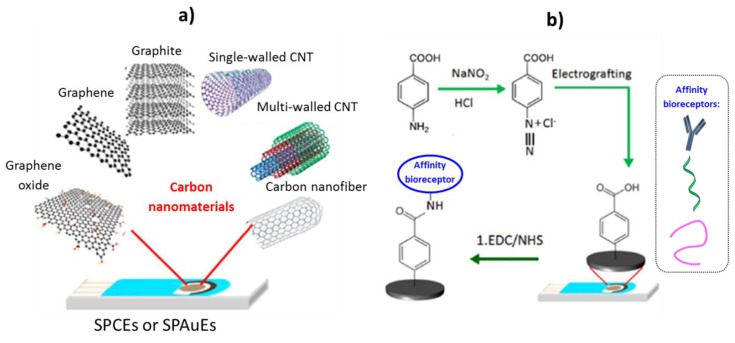
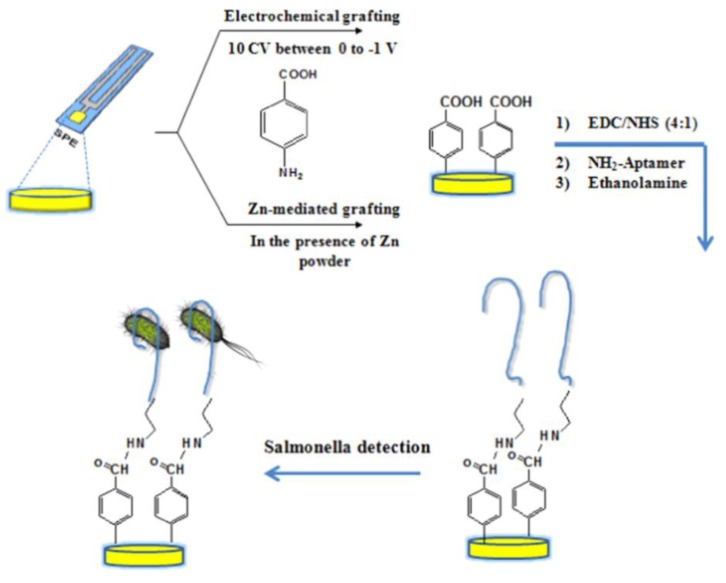
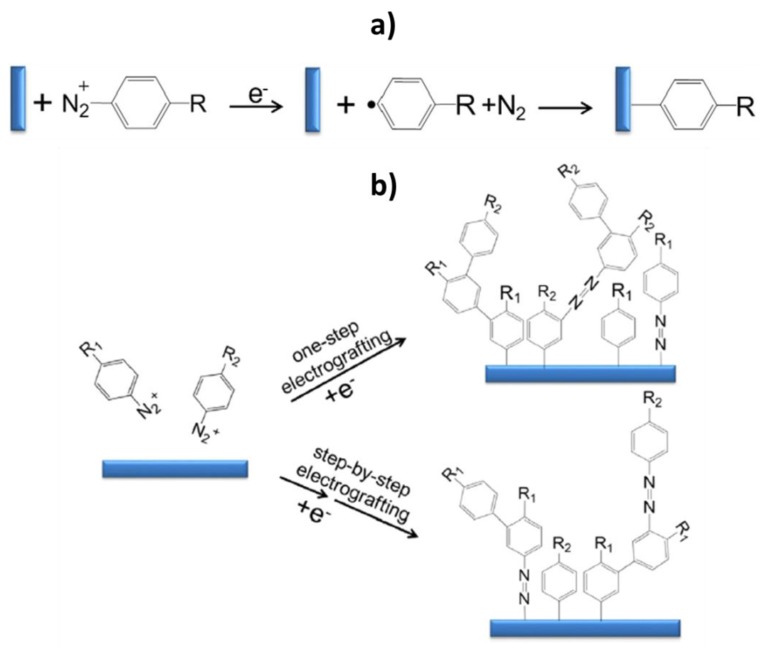
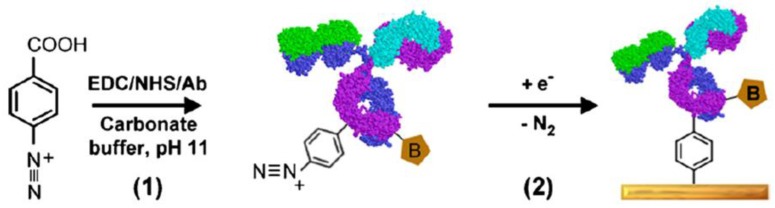
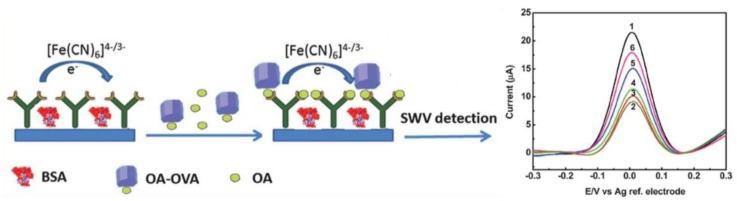
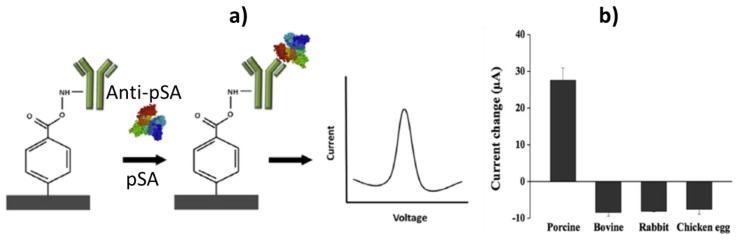
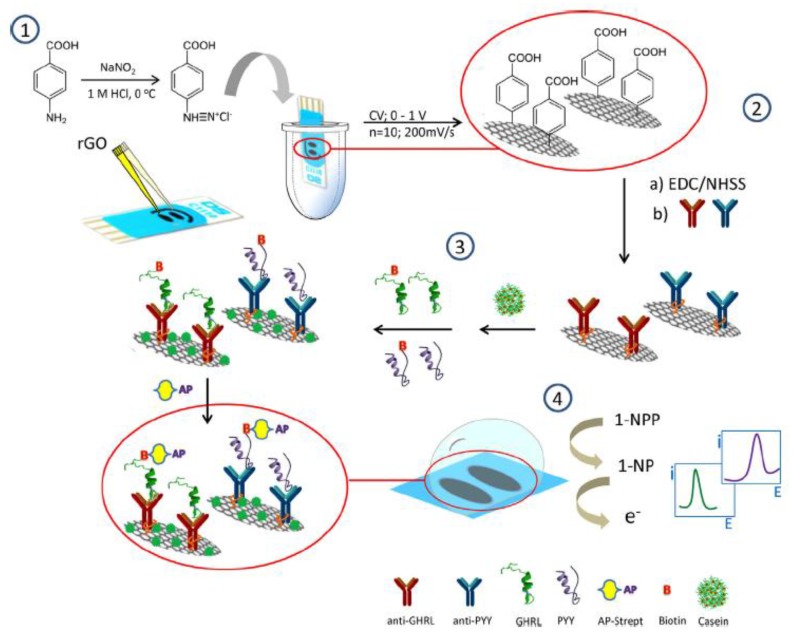
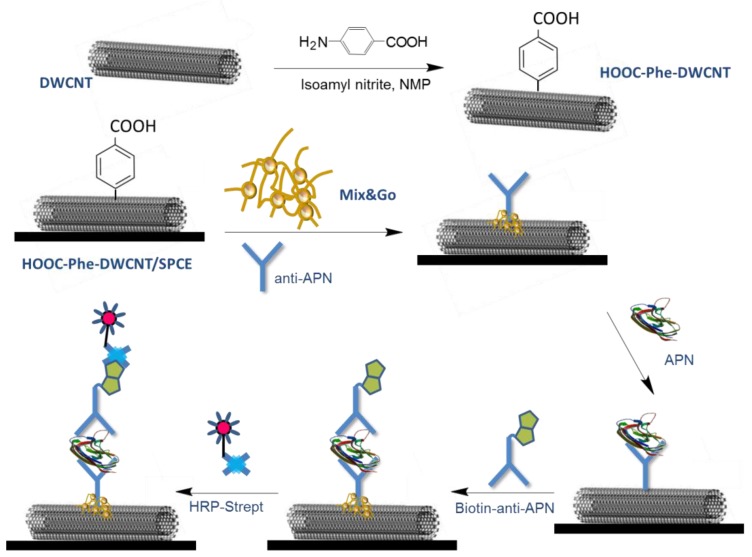
Adequate selection of the electrode surface and the strategies for its modification to enable subsequent immobilization of biomolecules and/or nanomaterials integration play a major role in the performance of electrochemical affinity biosensors. Because of the simplicity, rapidity and versatility, electrografting using diazonium salt reduction is among the most currently used functionalization methods to provide the attachment of an organic layer to a conductive substrate. This particular chemistry has demonstrated to be a powerful tool to covalently immobilize in a stable and reproducible way a wide range of biomolecules or nanomaterials onto different electrode surfaces. Considering the great progress and interesting features arisen in the last years, this paper outlines the potential of diazonium chemistry to prepare single or multianalyte electrochemical affinity biosensors on screen-printed electrodes (SPEs) and points out the existing challenges and future directions in this field.
电极表面的适当选择及其修饰策略,以实现生物分子的后续固定化和/或纳米材料的整合,在电化学亲和生物传感器的性能中起着主要作用。由于其简单性、快速性和多功能性,利用重氮盐还原进行电接枝是目前最常用的功能化方法之一,用于在导电基底上附着有机层。这种特殊的化学方法已被证明是一种强大的工具,能够以稳定且可重复的方式将多种生物分子或纳米材料共价固定在不同的电极表面上。考虑到近年来取得的巨大进展和有趣的特性,本文概述了重氮化学在丝网印刷电极(SPE)上制备单分析物或多分析物电化学亲和生物传感器的潜力,并指出了该领域目前存在的挑战和未来发展方向。