Department of Sociology, University of Chicago, Chicago, IL, USA.
Department of Surgery, Section of Otolaryngology-Head and Neck Surgery, University of Chicago, Chicago, IL, USA.
J Sex Med. 2018 Apr;15(4):502-509. doi: 10.1016/j.jsxm.2018.01.021. Epub 2018 Mar 2.
The sexual experience is shaped by sensory function; with aging, sensory dysfunction may interfere with sexuality and sexual behavior between partners. Specifically, older adults with age-related sensory dysfunction may have less sexual activity than those with better sensory function. In addition, since sexual desire and attraction rests in part upon sensory function, sensory dysfunction may also be associated with less sexual motivation.
To test the association between sexual activity and motivation in older adults and their sensory dysfunction.
Sensory dysfunction was measured both by global sensory impairment (a validated measure of dysfunction shared among the 5 classic senses: olfaction, vision, taste, touch, hearing) and by total sensory burden (cumulative sensory loss). Sexual activity was quantified by frequency and type of sexual behavior. Sexual motivation was measured by the frequency of sexual ideation and the importance of sex to the respondent. We used cross-sectional data from a nationally representative sample of community-dwelling older adults (aged 57-85 years) in the United States (National Social Life, Health, and Aging Project, N = 3,005) in logistic regression analyses.
Sexual activity, sexual motivation, and satisfaction with the sexual relationship were self-reported.
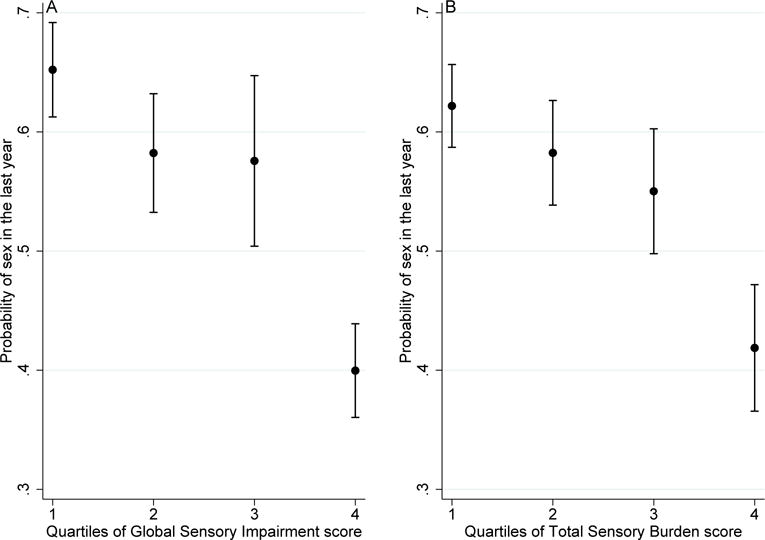
Older adults with sensory dysfunction were less likely to be sexually active-an association that persisted when accounting for other factors that also affected sexual activity (age, gender, partnered status, mental and physical health, and relationship satisfaction). Nonetheless, sensory dysfunction did not impair sexual motivation, nor affect the physical and emotional satisfaction with the sexual relationship. Among currently sexually active older adults, sensory dysfunction did not affect the frequency of sex or the type of sexual activity (foreplay, vaginal intercourse, or oral sex). These results were the same for 2 different measures of sensory dysfunction.
This is the first nationally representative study of sexuality and multisensory dysfunction in community-dwelling older adults. 4 of the 5 classic senses were measured with objective tests, and hearing was rated by interviewers in the context of their conversation. Medical and health care interventions that can reduce the burden of sensory dysfunction may improve older adults' sexual experience.
Sensory dysfunction is associated with sexual inactivity, but not with sexual motivation. Among those who are sexually active, sensory dysfunction did not interfere with sexual expression. Improving the sexual experience of older adults requires a focus on sensory dysfunction as an impediment to sexual activity given that older adults remain sexually motivated. Zhong S, Pinto JM, Wroblewski KE, et al. Sensory Dysfunction and Sexuality in the U.S. Population of Older Adults. J Sex Med 2018;15:502-509.
性体验受感官功能塑造;随着年龄的增长,感官功能障碍可能会干扰伴侣之间的性行为和性表现。具体来说,与感官功能较好的老年人相比,有与年龄相关的感官功能障碍的老年人的性行为可能较少。此外,由于性欲和吸引力部分依赖于感官功能,因此感官功能障碍也可能与较低的性动机有关。
检验老年人的性活动和性动机与感官功能障碍之间的关联。
通过整体感官障碍(一种经过验证的 5 种经典感官(嗅觉、视觉、味觉、触觉、听觉)障碍的综合测量方法)和总感官负担(累积性感觉丧失)来测量感官功能障碍。性活动的量化指标为性行为的频率和类型。性动机通过性思维的频率和性对受访者的重要性来衡量。我们使用了来自美国全国代表性的社区居住老年人样本(年龄在 57-85 岁)的横断面数据(国家社会生活、健康和老龄化项目,N=3005),进行了逻辑回归分析。
性活动、性动机和对性关系的满意度均为自我报告。
感官功能障碍与性行为不活跃有关-这种关联在考虑到其他也会影响性行为的因素(年龄、性别、伴侣状况、心理健康和身体健康以及关系满意度)后仍然存在。尽管如此,感官功能障碍并没有损害性动机,也没有影响性关系的身体和情感满意度。在目前有性行为的老年人中,感官功能障碍并不影响性行为的频率或性活动的类型(前戏、阴道性交或口交)。这些结果对于两种不同的感官功能障碍测量方法都是相同的。
这是第一项针对社区居住的老年人进行的性和多感官功能障碍的全国代表性研究。5 种经典感觉中有 4 种是通过客观测试测量的,听觉是由访谈者在他们的谈话背景下进行评估的。可以减轻感官功能障碍负担的医疗和保健干预措施可能会改善老年人的性体验。
感官功能障碍与性行为不活跃有关,但与性动机无关。在有性行为的老年人中,感官功能障碍并不妨碍性行为。改善老年人的性体验需要关注感官功能障碍,因为老年人仍然有性动机,但感官功能障碍会对性活动造成阻碍。
