Liu Xiaoyan, He Fangping, Chen Zhongqin, Liu Ping, Peng Guoping
Department of Neurology, First Affiliated Hospital, Zhejiang University School of Medicine, Hangzhou, China.
Front Neurol. 2018 Feb 16;9:75. doi: 10.3389/fneur.2018.00075. eCollection 2018.
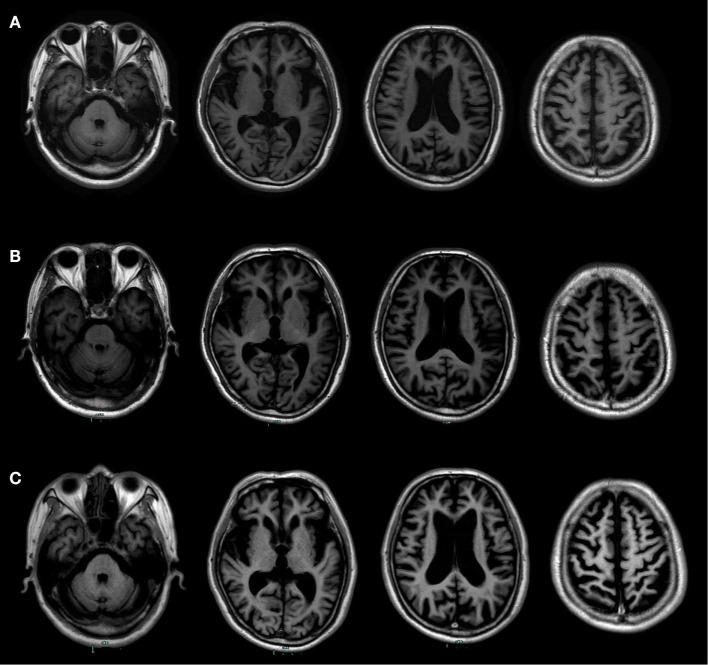
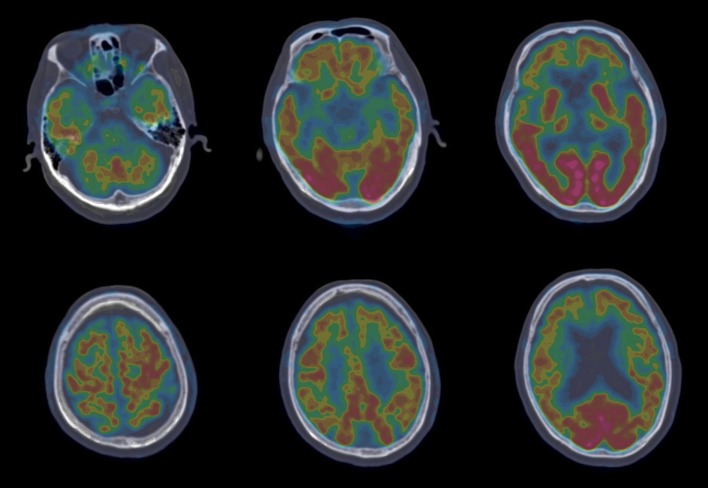
Primary progressive aphasia (PPA) is a neurodegenerative disease characterized by declining language ability. However, the difficulty in defining the central clinical features in its earliest stage and establishing the dynamics of its progression has led to controversy. We report a 71-year-old man with Han language suffering from non-fluent/agrammatic variant of PPA but presenting as typical Alzheimer's disease (AD) and confused with logopenic variant of PPA in its early stage, longitudinally describing his clinical characteristics, neuroanatomical basis, and genetic associations, and exploring the underlying pathology. This case highlights a longitudinal data for reliably discriminating among AD and PPA variants and helps to deepen our understanding of Han language non-fluent/agrammatic variant of PPA.
原发性进行性失语(PPA)是一种以语言能力衰退为特征的神经退行性疾病。然而,在其最早期阶段定义核心临床特征以及确定其进展动态存在困难,这引发了争议。我们报告一名71岁说汉语的男性,患有非流利/语法缺失型PPA,但在早期表现为典型的阿尔茨海默病(AD),并与音韵性失语型PPA相混淆,纵向描述了他的临床特征、神经解剖学基础和基因关联,并探究了潜在的病理学。该病例突出了用于可靠区分AD和PPA各型的纵向数据,并有助于加深我们对汉语非流利/语法缺失型PPA的理解。