Center for Global Health and Translational Sciences, State University of New York (SUNY) Upstate Medical University, Syracuse, New York.
Department of Medicine, State University of New York (SUNY) Upstate Medical University, Syracuse, New York.
Am J Trop Med Hyg. 2018 May;98(5):1444-1459. doi: 10.4269/ajtmh.17-0762. Epub 2018 Mar 1.
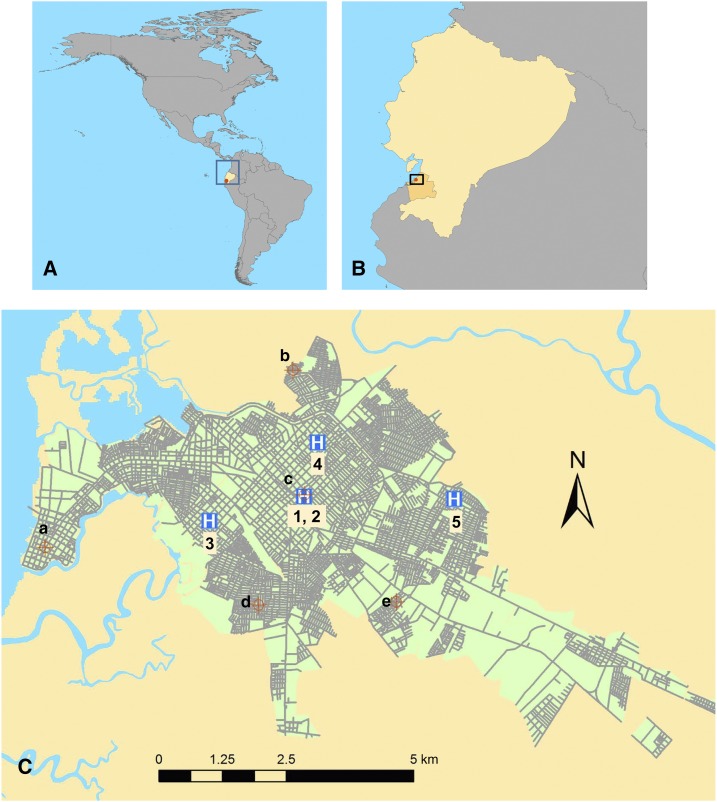
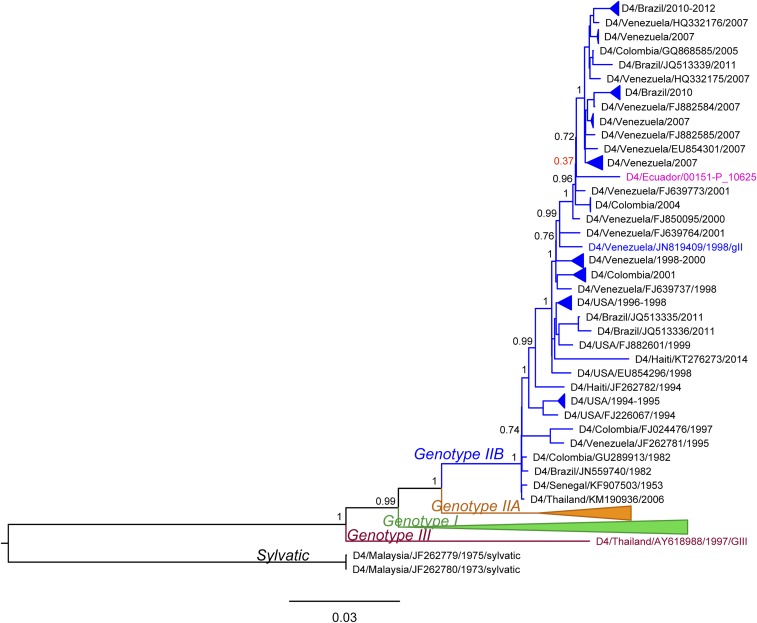
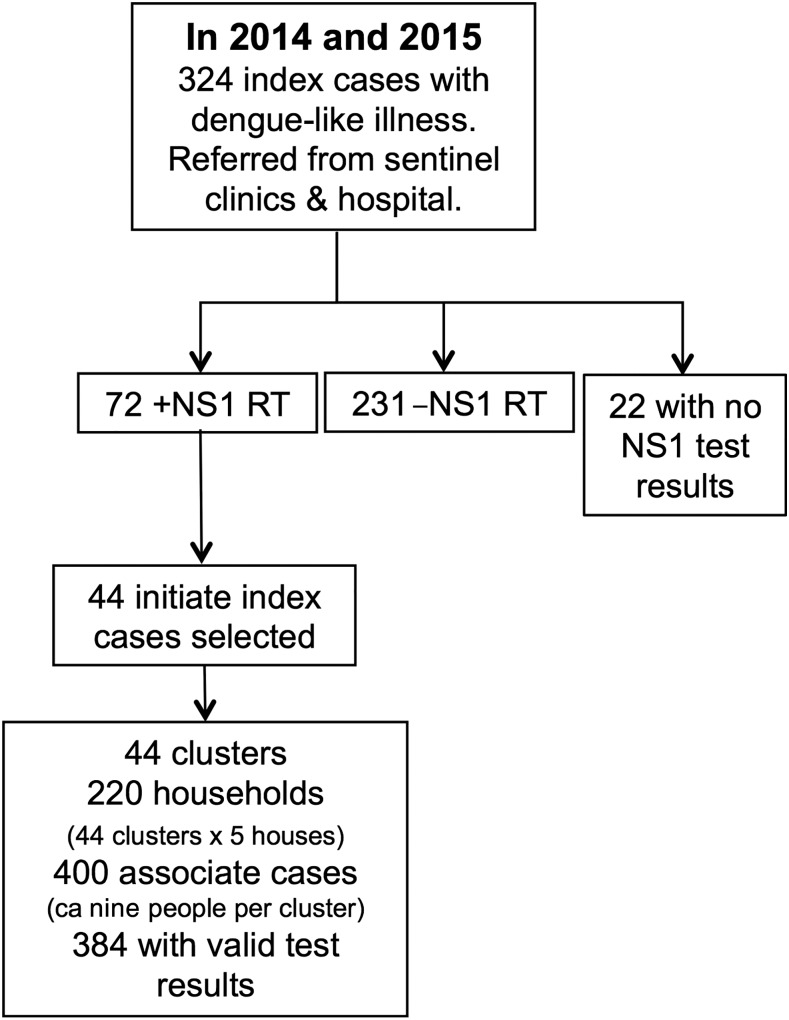
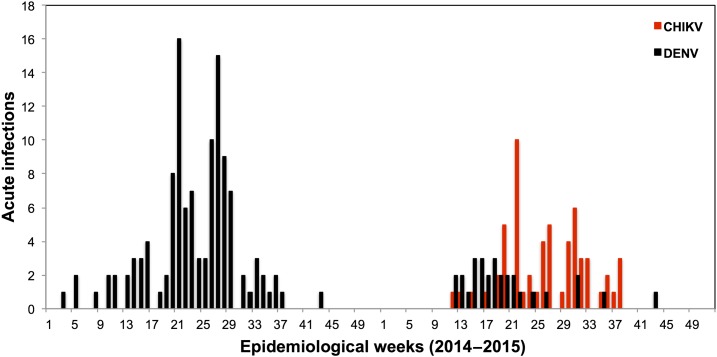
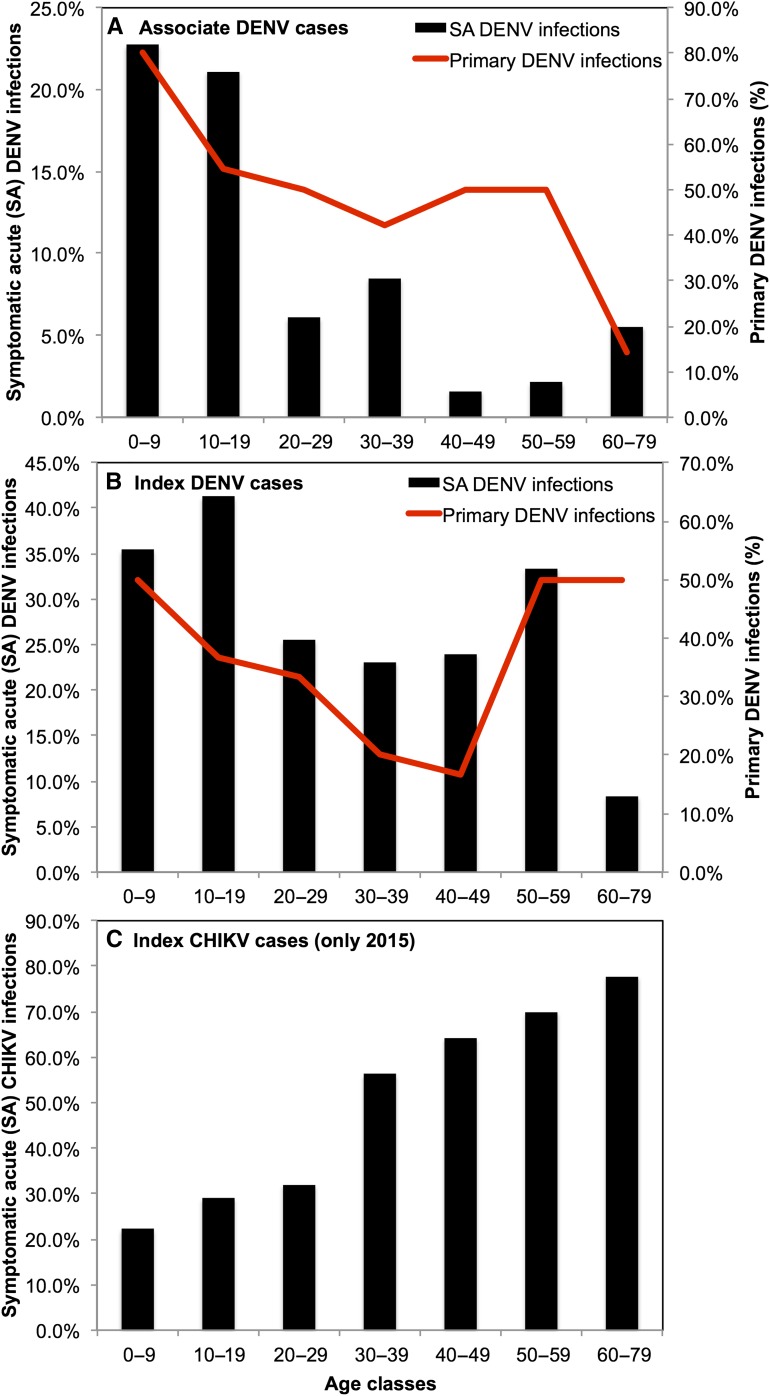
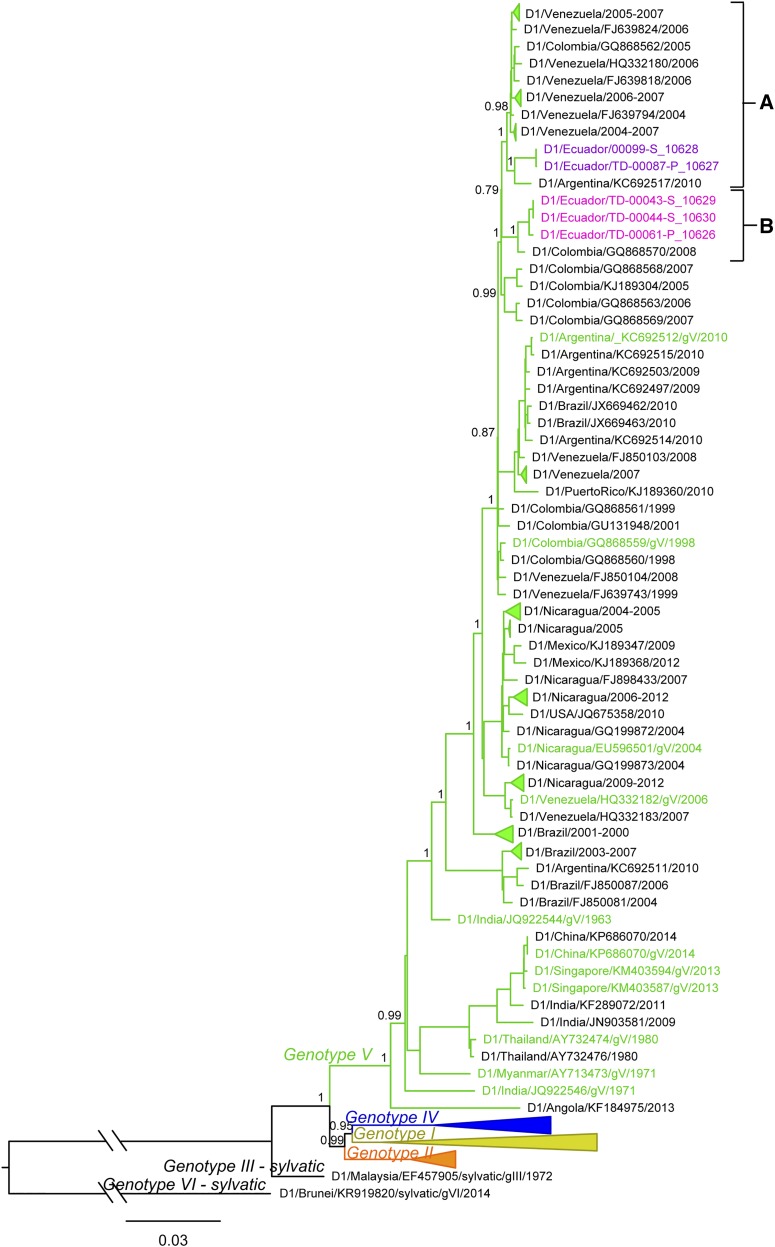
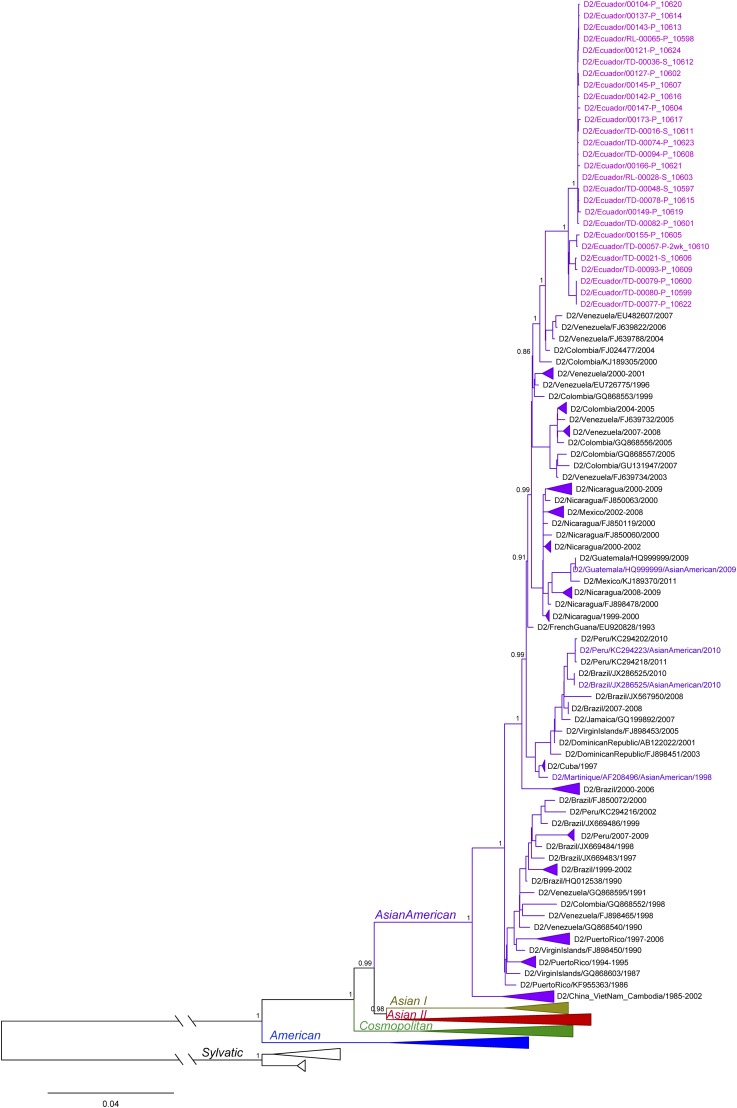
Here, we report the findings from the first 2 years (2014-2015) of an arbovirus surveillance study conducted in Machala, Ecuador, a dengue-endemic region. Patients with suspected dengue virus (DENV) infections (index cases, = 324) were referred from five Ministry of Health clinical sites. A subset of DENV-positive index cases ( = 44) were selected, and individuals from the index household and four neighboring homes within 200 m were recruited ( = 400). Individuals who entered the study, other than the index cases, are referred to as associates. In 2014, 70.9% of index cases and 35.6% of associates had acute or recent DENV infections. In 2015, 28.3% of index cases and 12.8% of associates had acute or recent DENV infections. For every DENV infection captured by passive surveillance, we detected an additional three acute or recent DENV infections in associates. Of associates with acute DENV infections, 68% reported dengue-like symptoms, with the highest prevalence of symptomatic acute infections in children aged less than 10 years. The first chikungunya virus (CHIKV) infections were detected on epidemiological week 12 in 2015; 43.1% of index cases and 3.5% of associates had acute CHIKV infections. No Zika virus infections were detected. Phylogenetic analyses of isolates of DENV from 2014 revealed genetic relatedness and shared ancestry of DENV1, DENV2, and DENV4 genomes from Ecuador with those from Venezuela and Colombia, indicating the presence of viral flow between Ecuador and surrounding countries. Enhanced surveillance studies, such as this, provide high-resolution data on symptomatic and inapparent infections across the population.
在此,我们报告了在厄瓜多尔马查拉进行的虫媒病毒监测研究的头两年(2014-2015 年)的结果。该研究在一个登革热流行地区进行。来自五个卫生部临床站点的疑似登革热病毒(DENV)感染患者(索引病例,=324 例)被转诊。选择了一组 DENV 阳性索引病例(=44 例),并招募了索引家庭及其 200 米内的四个相邻家庭的个体(=400 例)。除索引病例外,进入研究的个体被称为相关者。2014 年,70.9%的索引病例和 35.6%的相关者有急性或近期 DENV 感染。2015 年,28.3%的索引病例和 12.8%的相关者有急性或近期 DENV 感染。通过被动监测捕获的每一例 DENV 感染,我们在相关者中检测到另外三例急性或近期 DENV 感染。在有急性 DENV 感染的相关者中,68%报告有登革热样症状,10 岁以下儿童的急性感染症状发生率最高。2015 年第 12 周首次检测到基孔肯雅病毒(CHIKV)感染;43.1%的索引病例和 3.5%的相关者有急性 CHIKV 感染。未检测到寨卡病毒感染。2014 年 DENV 分离株的系统进化分析显示,厄瓜多尔的 DENV1、DENV2 和 DENV4 基因组与委内瑞拉和哥伦比亚的病毒具有遗传相关性和共同的祖先,表明厄瓜多尔和周边国家之间存在病毒传播。此类增强监测研究为人群中的症状性和无症状感染提供了高分辨率数据。