Infectious Diseases Research Unit, Hospital General O'Horan, Merida, Mexico.
Department of Epidemiology and Biostatistics, Michigan State University, Lansing, USA.
Parasit Vectors. 2018 Jul 3;11(1):378. doi: 10.1186/s13071-018-2942-1.
Co-circulation of dengue virus (DENV) and chikungunya virus (CHIKV) is increasing worldwide but information on the viral dynamics and immune response to DENV-CHIKV co-infection, particularly in young infants, is scant.
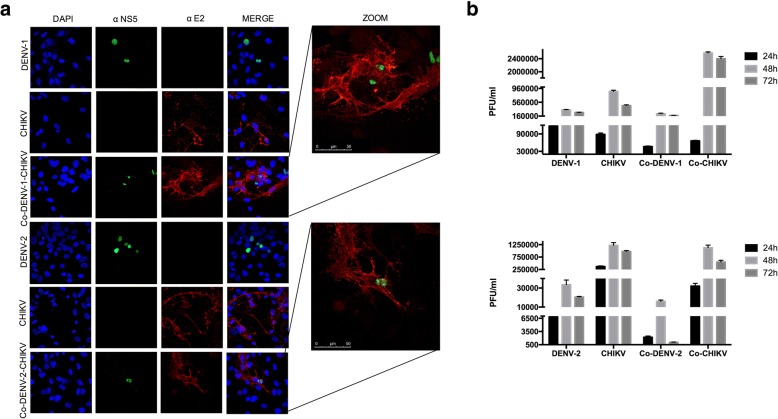
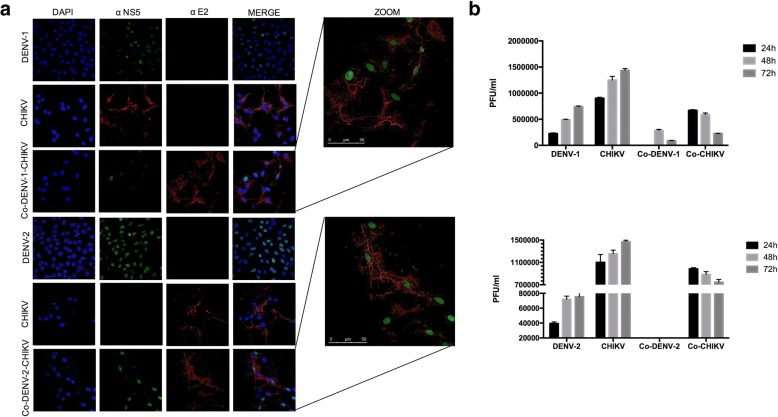
Blood samples were collected from 24 patients, aged 2 months to 82 years, during a CHIKV outbreak in Mexico. DENV and CHIKV were identified by RT-PCR; ELISA was used to detect IgM and IgG antibodies. CHIKV PCR products were cloned, sequenced and subjected to BLAST analysis. To address serological findings, HMEC-1 and Vero cells were inoculated with DENV-1, DENV-2 and CHIKV alone and in combination (DENV-2-CHIKV and DENV-1-CHIKV); viral titers were measured at 24, 48 and 72 h.
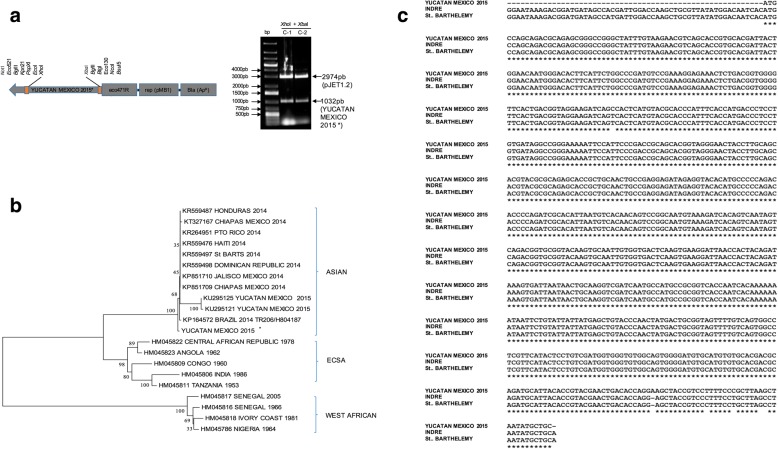
Nine patients (38%) presented co-infection, of who eight were children. None of the patients presented severe illness. Sequence analysis showed that the circulating CHIKV virus belonged to the Asian lineage. Seroconversion to both viruses was only observed in the four patients five years or older, while the five infants under two years of age only seroconverted to CHIKV. Viral titers in the CHIKV mono-infected cells were greater than in the DENV-1 and DENV-2 mono-infected cells. Furthermore, we observed significantly increased CHIKV progeny and reduction of DENV progeny in the co-infected cells.
In our population, DENV-CHIKV co-infection was not associated with increased clinical severity. Our in vitro assay findings strongly suggest that the lack of DENV IgG conversion in the co-infected infants is due to suppression of DENV replication by the Asian lineage CHIKV. The presence of maternal antibody and immature immune responses in the young infants may also play a role.
登革热病毒(DENV)和基孔肯雅热病毒(CHIKV)的共同传播在全球范围内正在增加,但关于 DENV-CHIKV 合并感染的病毒动力学和免疫反应的信息,特别是在年幼婴儿中,仍然很少。
在墨西哥的一次 CHIKV 暴发期间,从 24 名年龄在 2 个月至 82 岁的患者中采集了血液样本。通过 RT-PCR 鉴定 DENV 和 CHIKV;使用 ELISA 检测 IgM 和 IgG 抗体。对 CHIKV PCR 产物进行克隆、测序和 BLAST 分析。为了解血清学发现,将 HMEC-1 和 Vero 细胞单独和联合(DENV-2-CHIKV 和 DENV-1-CHIKV)接种 DENV-1、DENV-2 和 CHIKV;在 24、48 和 72 小时测量病毒滴度。
9 名患者(38%)出现合并感染,其中 8 名是儿童。没有患者出现严重疾病。序列分析显示,循环的 CHIKV 病毒属于亚洲谱系。只有 4 名五岁或以上的患者对两种病毒均发生血清转换,而 5 名两岁以下的婴儿仅对 CHIKV 发生血清转换。CHIKV 单感染细胞中的病毒滴度大于 DENV-1 和 DENV-2 单感染细胞中的病毒滴度。此外,我们观察到在共感染细胞中 CHIKV 后代显著增加和 DENV 后代减少。
在我们的人群中,DENV-CHIKV 合并感染与临床严重程度增加无关。我们的体外检测结果强烈表明,在合并感染的婴儿中缺乏 DENV IgG 转换是由于亚洲谱系 CHIKV 抑制 DENV 复制所致。年幼婴儿中存在母体抗体和不成熟的免疫反应也可能起作用。