Pai Chia-Sheng, Sharma Pranao K, Huang Hsien-Ting, Loganathan Srivaishnavi, Lin Heng, Hsu Yu-Luan, Phasuk Sarayut, Liu Ingrid Y
Department of Molecular Biology and Human Genetics, Tzu Chi University, Hualien, Taiwan.
Institute of Medical Sciences, Tzu Chi University, Hualien, Taiwan.
Front Mol Neurosci. 2018 Feb 20;11:37. doi: 10.3389/fnmol.2018.00037. eCollection 2018.
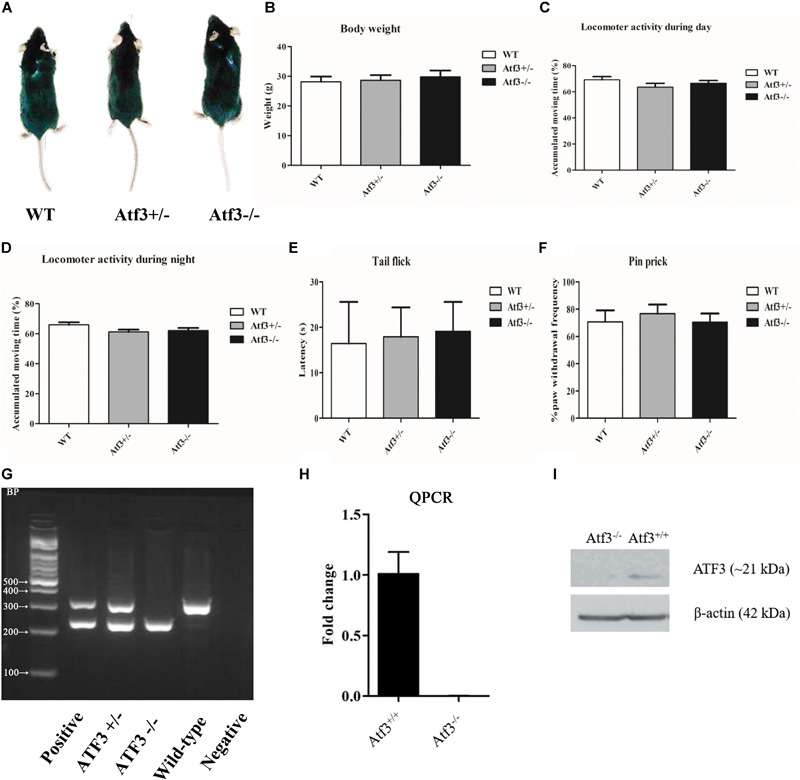
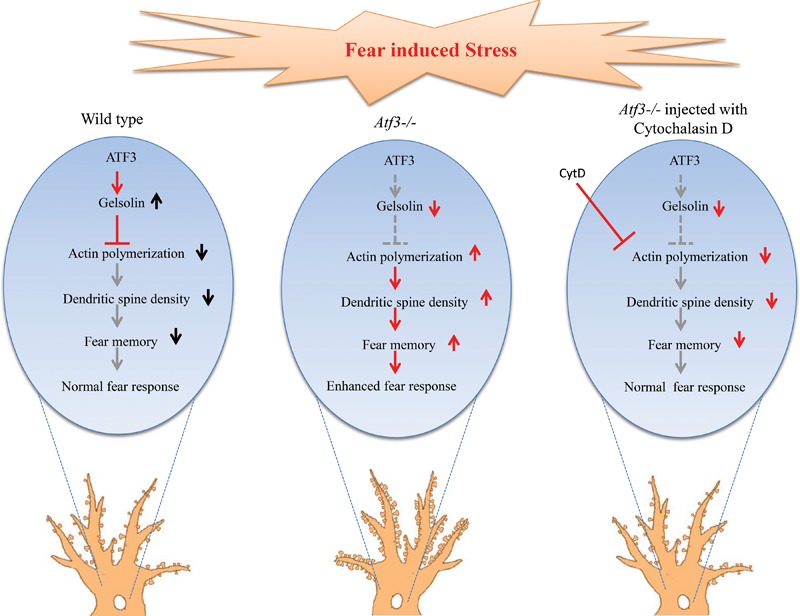
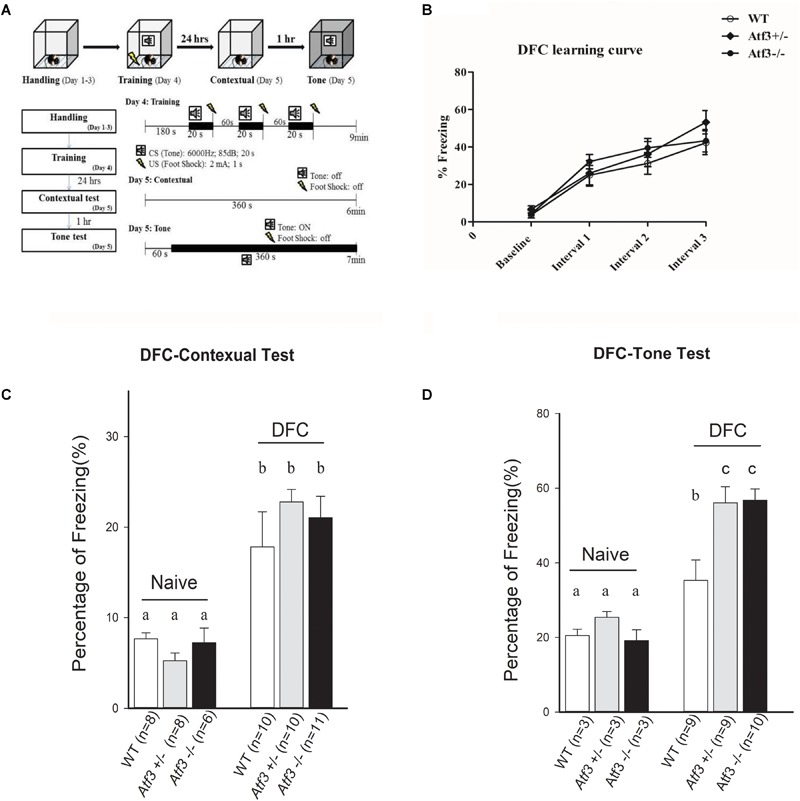
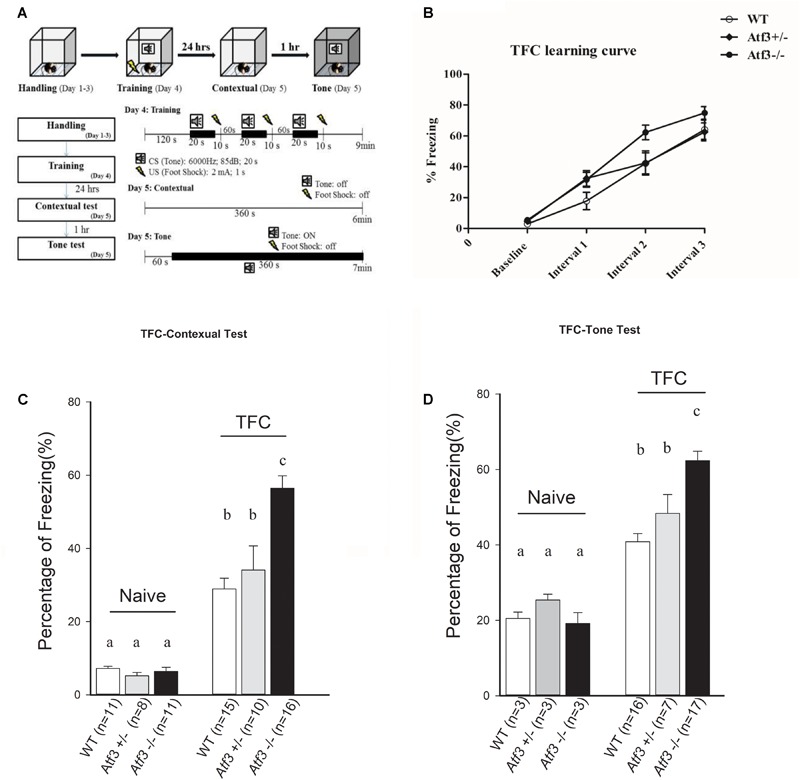
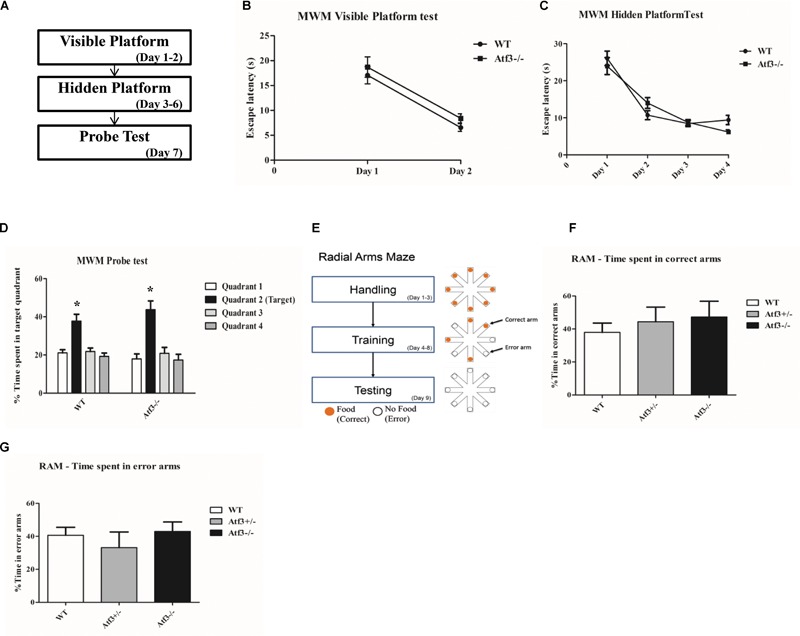
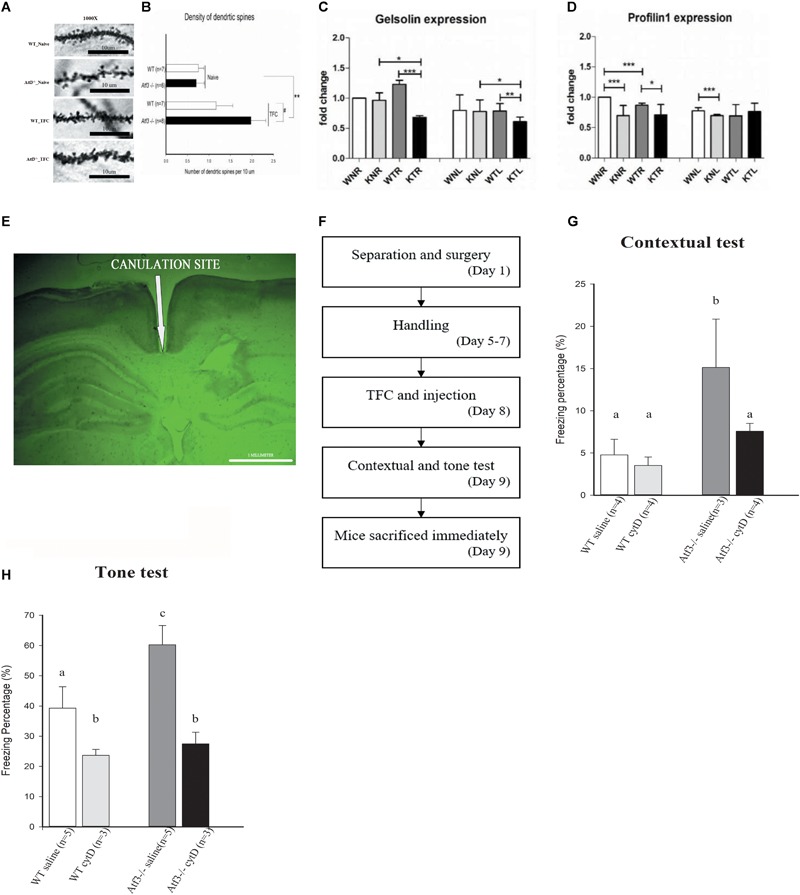
The genetic and molecular basis underlying fear memory formation is a key theme in anxiety disorder research. Because activating transcription factor 3 () is induced under stress conditions and is highly expressed in the hippocampus, we hypothesize that plays a role in fear memory formation. We used fear conditioning and various other paradigms to test knockout mice and study the role of in processing fear memory. The results demonstrated that the lack of specifically enhanced the expression of fear memory, which was indicated by a higher incidence of the freeze response after fear conditioning, whereas the occurrence of spatial memory including Morris Water Maze and radial arm maze remained unchanged. The enhanced freezing behavior and normal spatial memory of the knockout mice resembles the fear response and numbing symptoms often exhibited by patients affected with posttraumatic stress disorder. Additionally, we determined that after fear conditioning, dendritic spine density was increased, and expression of , the gene encoding a severing protein for actin polymerization, was down-regulated in the bilateral hippocampi of the knockout mice. Taken together, our results suggest that may suppress fear memory formation in mice directly or indirectly through mechanisms involving modulation of actin polymerization.
恐惧记忆形成的遗传和分子基础是焦虑症研究中的一个关键主题。由于应激条件下会诱导激活转录因子3(ATF3),且其在海马体中高度表达,我们推测ATF3在恐惧记忆形成中发挥作用。我们采用恐惧条件反射及其他多种范式来测试ATF3基因敲除小鼠,并研究ATF3在处理恐惧记忆中的作用。结果表明,缺乏ATF3会特异性增强恐惧记忆的表达,恐惧条件反射后僵住反应的发生率更高即表明了这一点,而包括莫里斯水迷宫和放射状臂迷宫在内的空间记忆的发生情况保持不变。ATF3基因敲除小鼠增强的僵住行为和正常的空间记忆类似于创伤后应激障碍患者常表现出的恐惧反应和麻木症状。此外,我们还确定,恐惧条件反射后,ATF3基因敲除小鼠双侧海马体中的树突棘密度增加,而编码肌动蛋白聚合切割蛋白的基因Cofilin-1的表达下调。综上所述,我们的结果表明,ATF3可能通过涉及调节肌动蛋白聚合的机制直接或间接抑制小鼠的恐惧记忆形成。