Department of Orthodontics, University of Illinois at Chicago, Chicago, Illinois, United States of America.
Department of Periodontics, University of Illinois at Chicago, Chicago, Illinois, United States of America.
PLoS One. 2018 Mar 8;13(3):e0194238. doi: 10.1371/journal.pone.0194238. eCollection 2018.
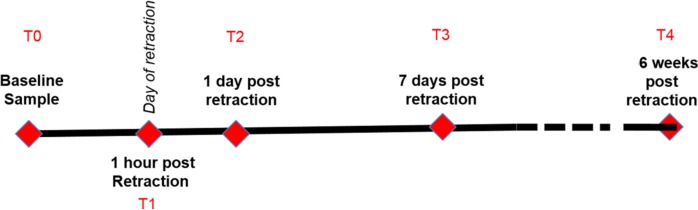
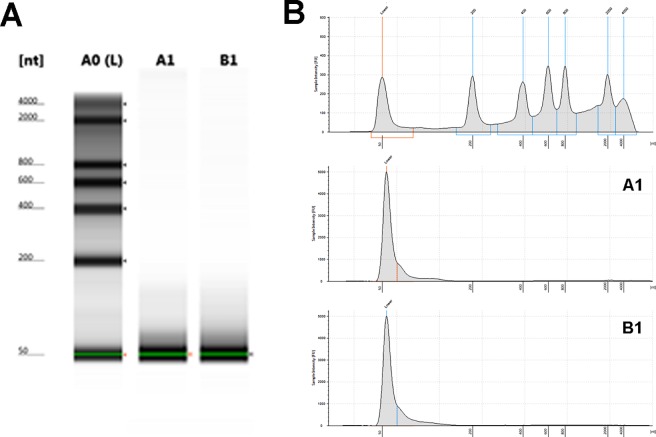
Secretory microRNAs (miRNAs) have been used increasingly as biomarkers for cancers, autoimmune diseases and inflammatory diseases. They are reported as being freely circulated or encapsulated in microvesicles such as exosomes. This study was performed to elucidate the presence of miRNAs with exosomes in human gingival crevicular fluid (GCF), and the expression profile of miRNA-29 during orthodontic tooth movement. Four healthy volunteer and fifteen orthodontic patients were enrolled in the study. Secretory miRNA in GCF was collected and analyzed using a bioanalyzer, realtime PCR and Western blot analysis. The expression profile of secretory miR-29 family in GCF was analyzed during the course of canine retraction for 6 weeks. The results demonstrated the presence of miRNAs in the GCF. After series of ultracentrifugation and RT-PCR array, exosome-depleted fractions and pellets were isolated and we found that secretory miRNAs were detected in both the exosome-associated fraction and the exosome-depleted supernatant fraction; however, the concentration of miRNAs was higher in the exosome-associated fraction than in the exosome-depleted fraction suggesting a close association between the secretory miRNAs and exosomes in GCF. We also demonstrated the increased expression profiles of miR-29 family during six weeks of orthodontic tooth movement in humans. Secretory miRNAs are present in GCF and secretory miRNA-29 family expression profiles increase during the tooth movement in humans. Secretory miRNA-29 in GCF could serve as potential biomarkers for periodontal remodeling.
分泌 microRNAs (miRNAs) 已越来越多地被用作癌症、自身免疫性疾病和炎症性疾病的生物标志物。据报道,它们以游离形式或包裹在微泡(如外泌体)中存在。本研究旨在阐明人牙龈沟液 (GCF) 中存在外泌体 miRNA,以及 miRNA-29 在正畸牙齿移动过程中的表达谱。本研究纳入了 4 名健康志愿者和 15 名正畸患者。使用生物分析仪、实时 PCR 和 Western blot 分析收集和分析 GCF 中的分泌性 miRNA。在 6 周的犬牙回收过程中分析 GCF 中分泌性 miR-29 家族的表达谱。结果表明 GCF 中存在 miRNA。经过一系列超速离心和 RT-PCR 阵列分析,分离出外泌体耗尽部分和沉淀,我们发现分泌性 miRNA 存在于外泌体相关部分和外泌体耗尽上清液部分;然而,外泌体相关部分中的 miRNA 浓度高于外泌体耗尽部分,表明 GCF 中外泌体和分泌性 miRNA 之间存在密切关联。我们还证明了在人类正畸牙齿移动的 6 周期间,miR-29 家族的表达谱增加。分泌性 miRNAs 存在于 GCF 中,并且在人类牙齿移动过程中,miR-29 家族的表达谱增加。GCF 中的分泌性 miRNA-29 可作为牙周重塑的潜在生物标志物。