Kamata Akihito, Kara Yusuf, Patarapichayatham Chalie, Lan Patrick
Department of Psychology, Department of Education Policy and Leadership, Center on Research and Evaluation, Southern Methodist University, Dallas, TX, United States.
Department of Educational Measurement and Evaluation, Anadolu University, Eskisehir, Turkey.
Front Psychol. 2018 Feb 22;9:130. doi: 10.3389/fpsyg.2018.00130. eCollection 2018.
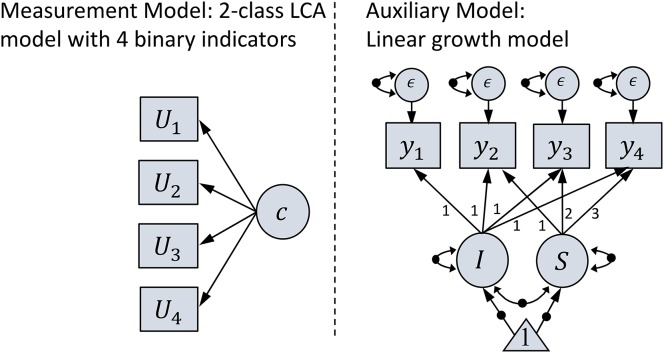
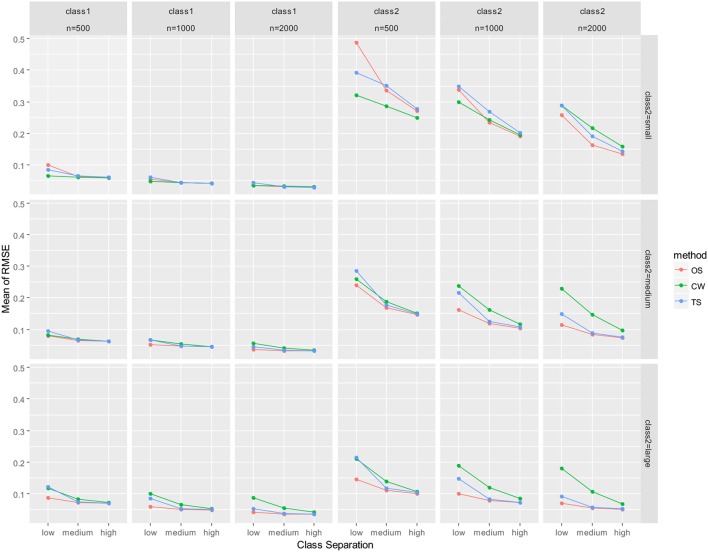
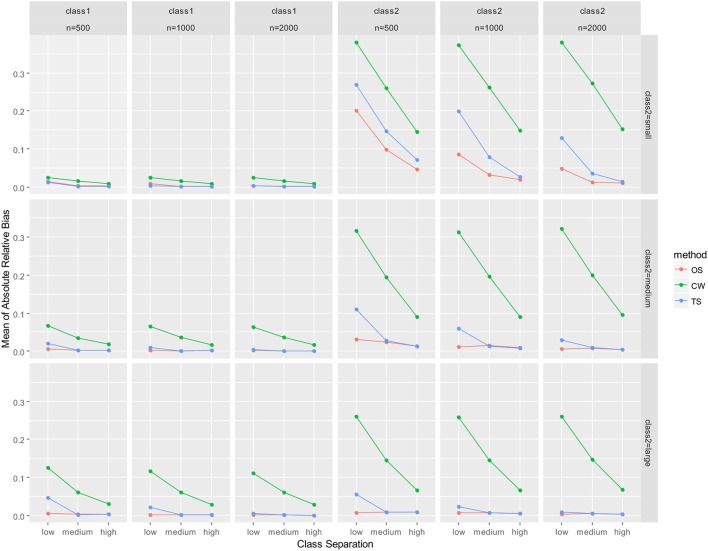
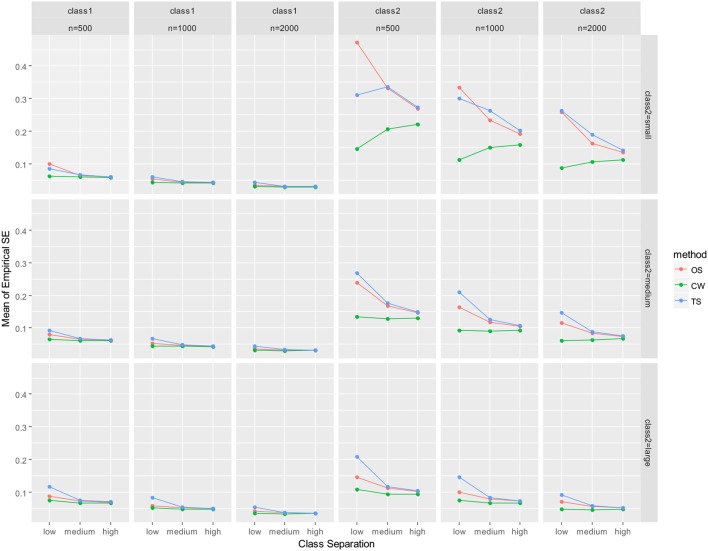
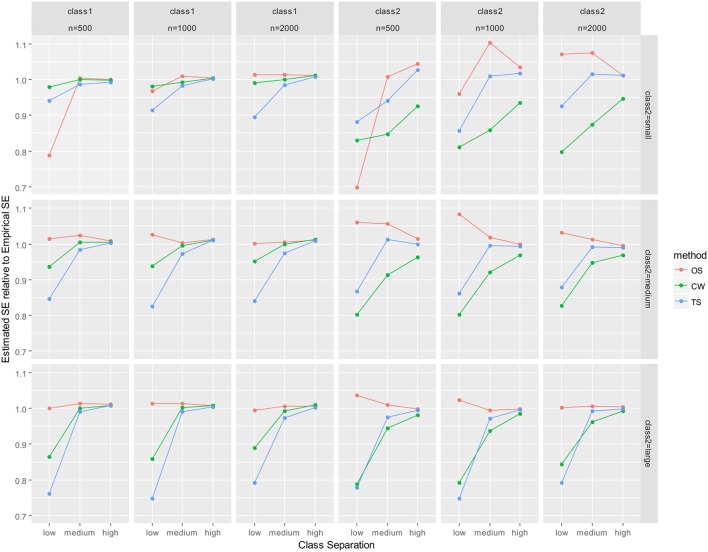
This study investigated the performance of three selected approaches to estimating a two-phase mixture model, where the first phase was a two-class latent class analysis model and the second phase was a linear growth model with four time points. The three evaluated methods were (a) one-step approach, (b) three-step approach, and (c) case-weight approach. As a result, some important results were demonstrated. First, the case-weight and three-step approaches demonstrated higher convergence rate than the one-step approach. Second, it was revealed that case-weight and three-step approaches generally did better in correct model selection than the one-step approach. Third, it was revealed that parameters were similarly recovered well by all three approaches for the larger class. However, parameter recovery for the smaller class differed between the three approaches. For example, the case-weight approach produced constantly lower empirical standard errors. However, the estimated standard errors were substantially underestimated by the case-weight and three-step approaches when class separation was low. Also, bias was substantially higher for the case-weight approach than the other two approaches.
本研究调查了三种选定方法在估计两阶段混合模型方面的表现,其中第一阶段是两类潜在类别分析模型,第二阶段是具有四个时间点的线性增长模型。评估的三种方法分别是:(a) 一步法,(b) 三步法,以及 (c) 案例加权法。结果表明了一些重要发现。首先,案例加权法和三步法的收敛速度高于一步法。其次,研究发现,在正确的模型选择方面,案例加权法和三步法总体上比一步法表现更好。第三,研究发现,对于较大类别,三种方法对参数的恢复情况相似。然而,对于较小类别,三种方法在参数恢复方面存在差异。例如,案例加权法产生的经验标准误差始终较低。然而,当类别分离度较低时,案例加权法和三步法对标准误差的估计存在严重低估。此外,案例加权法的偏差比其他两种方法高得多。