Department of Supramolecular and Biomaterials Chemistry, Leiden Institute of Chemistry , Leiden University , P.O. Box 9502, 2300 RA , Leiden , The Netherlands.
Department of Molecular Cell Biology, Section Electron Microscopy , Leiden University Medical Center , 2300 RC , Leiden , The Netherlands.
Biomacromolecules. 2018 Apr 9;19(4):1091-1099. doi: 10.1021/acs.biomac.7b01614. Epub 2018 Mar 12.
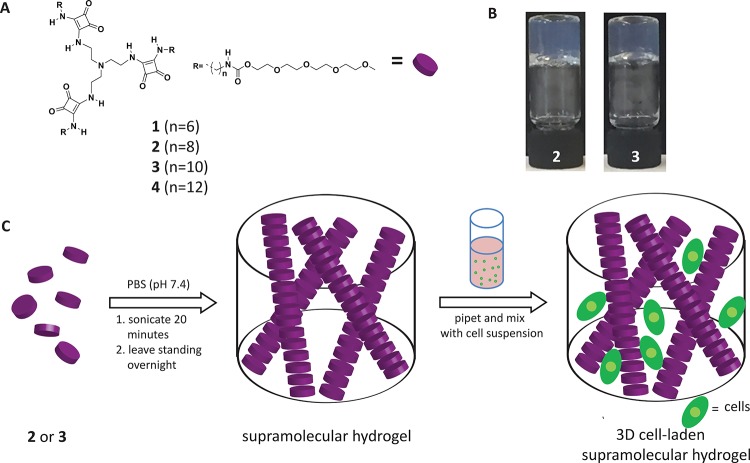
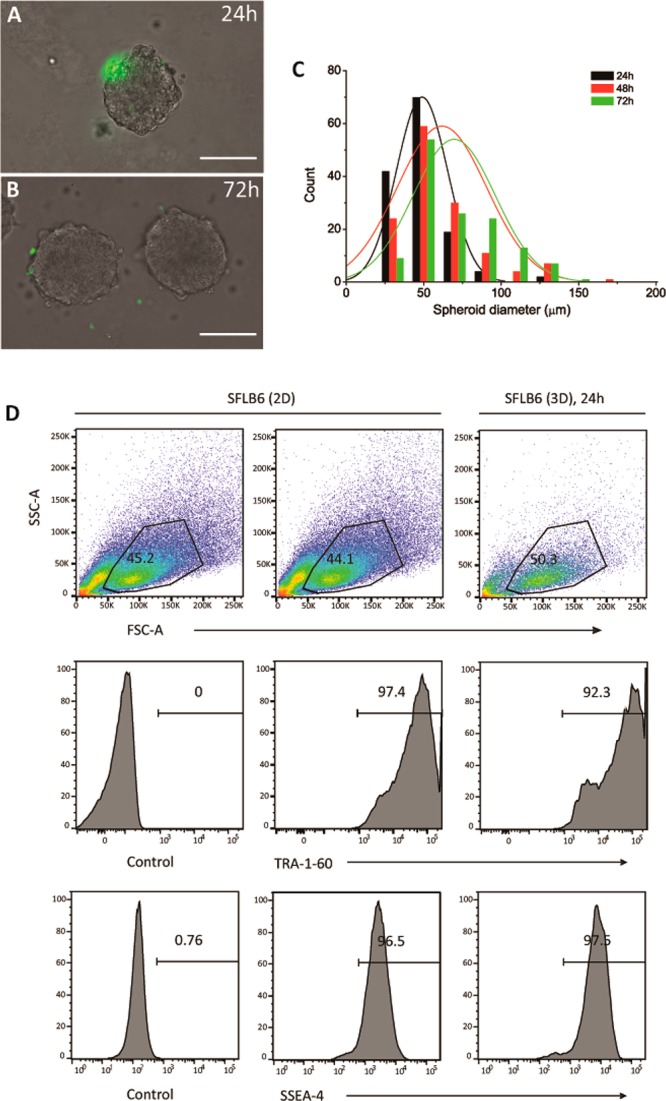
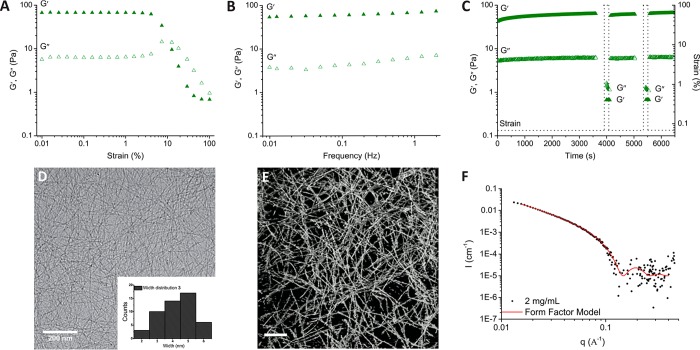
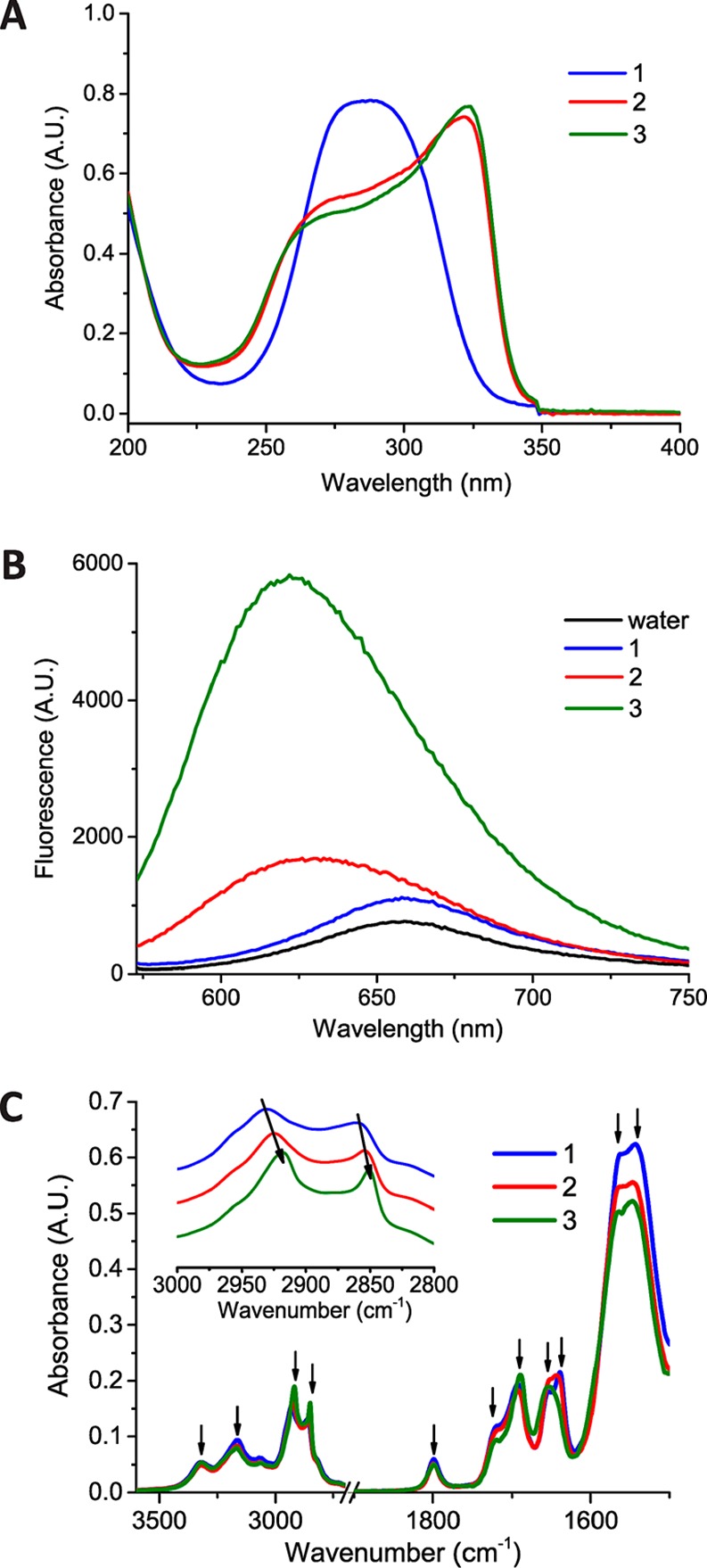
Synthetic hydrogel materials can recapitulate the natural cell microenvironment; however, it is equally necessary that the gels maintain cell viability and phenotype while permitting reisolation without stress, especially for use in the stem cell field. Here, we describe a family of synthetically accessible, squaramide-based tripodal supramolecular monomers consisting of a flexible tris(2-aminoethyl)amine (TREN) core that self-assemble into supramolecular polymers and eventually into self-recovering hydrogels. Spectroscopic measurements revealed that monomer aggregation is mainly driven by a combination of hydrogen bonding and hydrophobicity. The self-recovering hydrogels were used to encapsulate NIH 3T3 fibroblasts as well as human-induced pluripotent stem cells (hiPSCs) and their derivatives in 3D. The materials reported here proved cytocompatible for these cell types with maintenance of hiPSCs in their undifferentiated state essential for their subsequent expansion or differentiation into a given cell type and potential for facile release by dilution due to their supramolecular nature.
合成水凝胶材料可以再现自然细胞微环境;然而,同样重要的是,凝胶在允许无应激重新分离的同时保持细胞活力和表型,特别是在干细胞领域。在这里,我们描述了一系列可合成的、基于 squaramide 的三足超分子单体,它们由柔性三(2-氨基乙基)胺(TREN)核心组成,自组装成超分子聚合物,最终形成自修复水凝胶。光谱测量表明,单体聚集主要是由氢键和疏水性共同驱动的。自修复水凝胶被用于封装 NIH 3T3 成纤维细胞以及人诱导多能干细胞(hiPSCs)及其衍生物的 3D 培养。这里报道的材料被证明对这些细胞类型具有细胞相容性,并且能够维持 hiPSCs 的未分化状态,这对于它们随后的扩增或分化为特定细胞类型以及由于其超分子性质而易于通过稀释释放是必不可少的。