Division of Biology, Kansas State University, Manhattan, KS, United Sates of America.
Department of Agronomy, Kansas State University, Manhattan, KS, United Sates of America.
PLoS Pathog. 2018 Mar 12;14(3):e1006940. doi: 10.1371/journal.ppat.1006940. eCollection 2018 Mar.
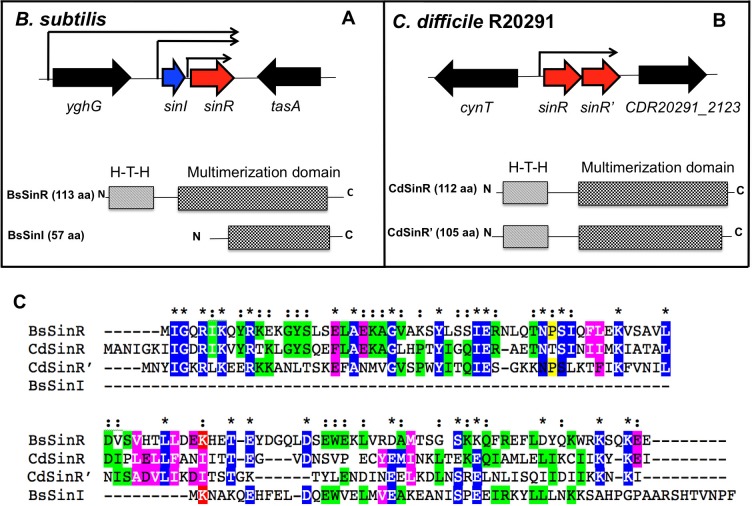
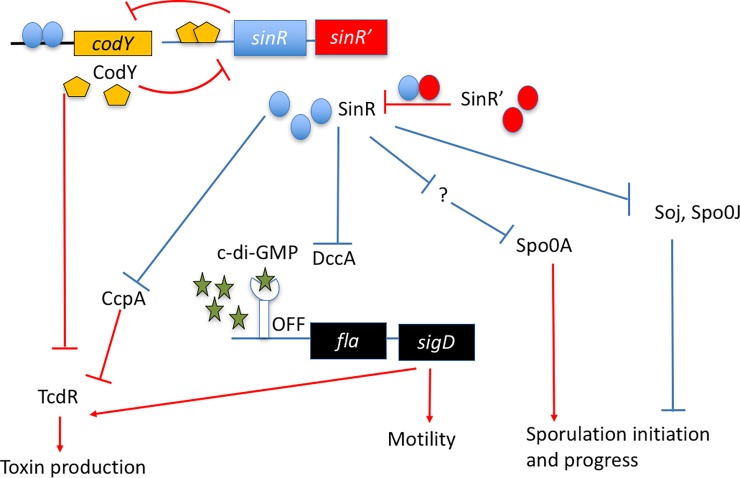
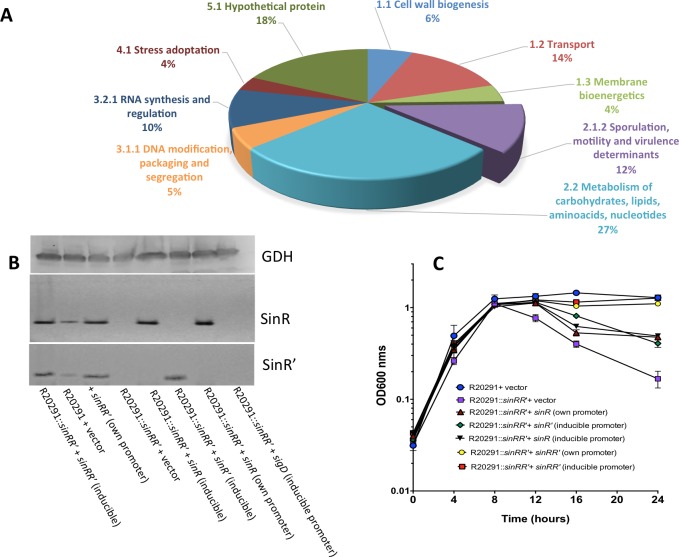
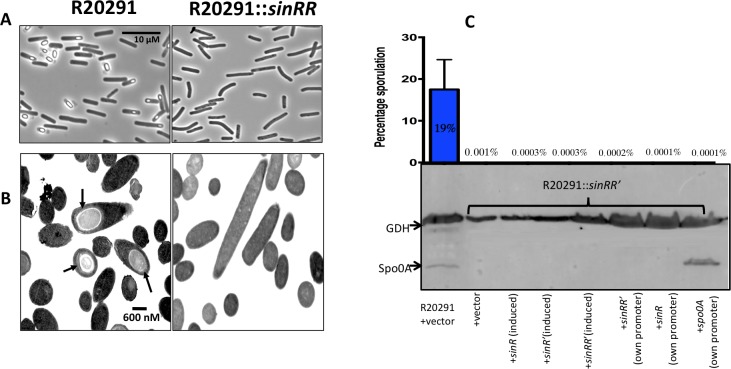
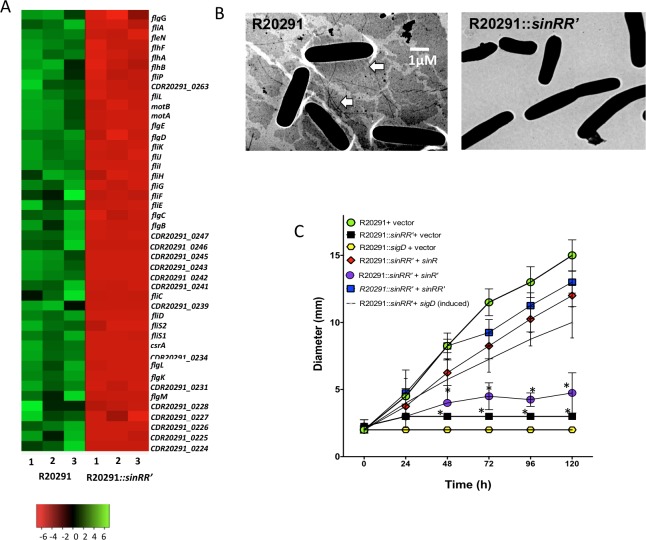
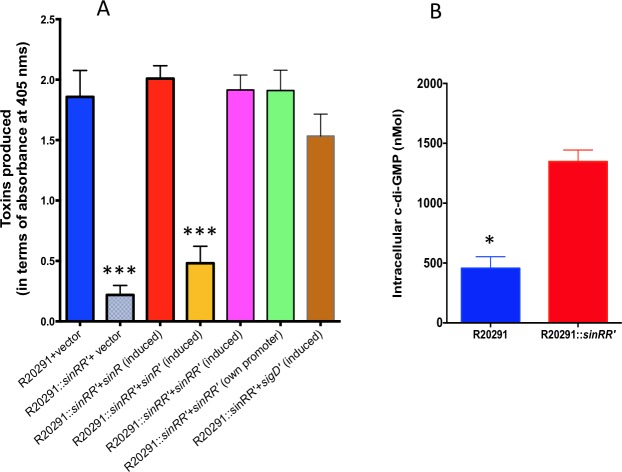
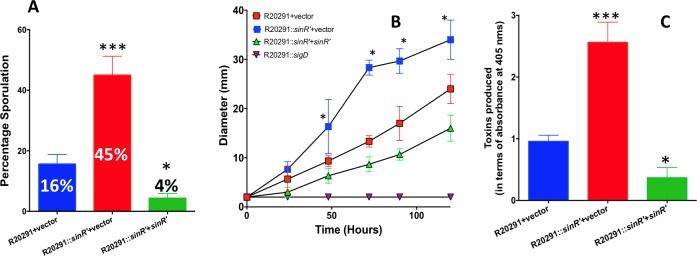
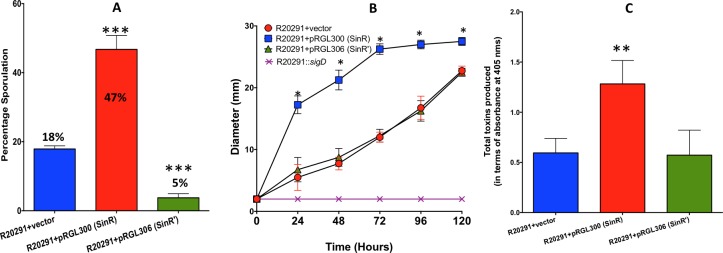
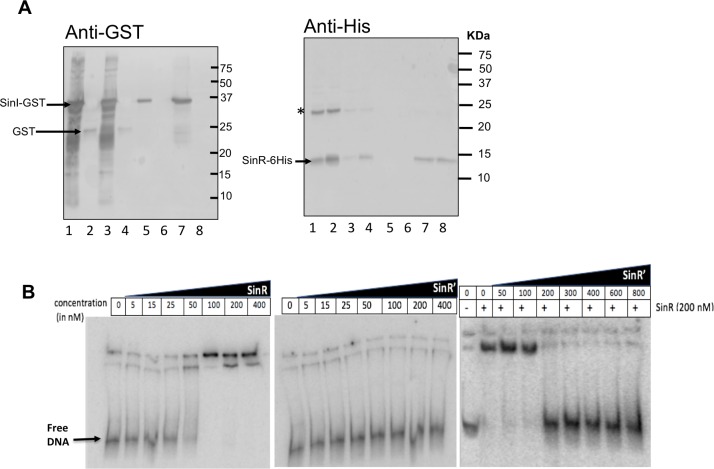
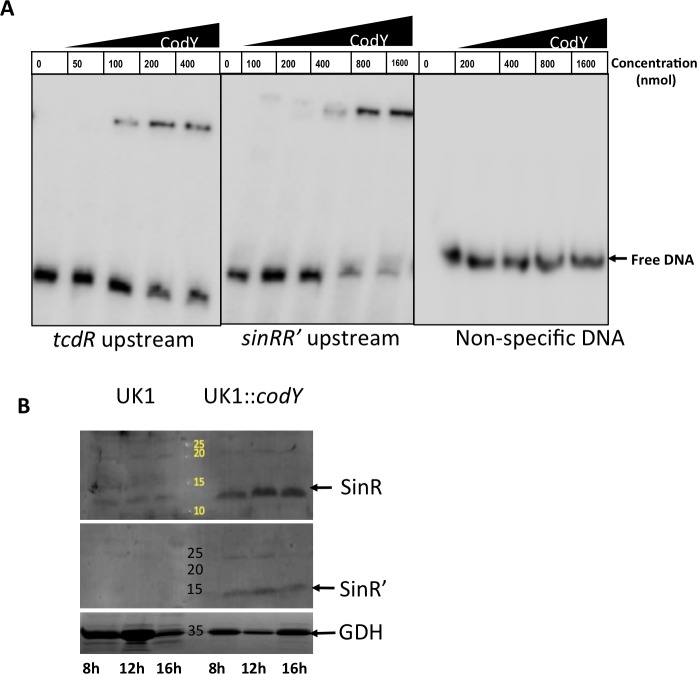
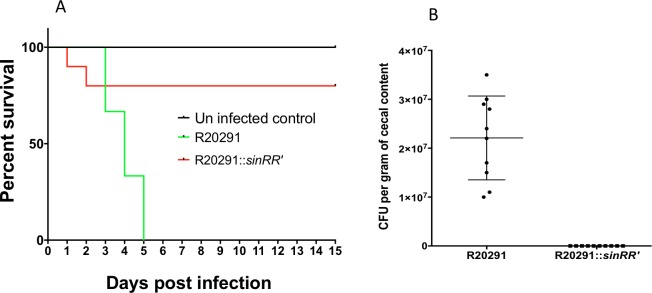
Clostridium difficile is the primary cause of nosocomial diarrhea and pseudomembranous colitis. It produces dormant spores, which serve as an infectious vehicle responsible for transmission of the disease and persistence of the organism in the environment. In Bacillus subtilis, the sin locus coding SinR (113 aa) and SinI (57 aa) is responsible for sporulation inhibition. In B. subtilis, SinR mainly acts as a repressor of its target genes to control sporulation, biofilm formation, and autolysis. SinI is an inhibitor of SinR, so their interaction determines whether SinR can inhibit its target gene expression. The C. difficile genome carries two sinR homologs in the operon that we named sinR and sinR', coding for SinR (112 aa) and SinR' (105 aa), respectively. In this study, we constructed and characterized sin locus mutants in two different C. difficile strains R20291 and JIR8094, to decipher the locus's role in C. difficile physiology. Transcriptome analysis of the sinRR' mutants revealed their pleiotropic roles in controlling several pathways including sporulation, toxin production, and motility in C. difficile. Through various genetic and biochemical experiments, we have shown that SinR can regulate transcription of key regulators in these pathways, which includes sigD, spo0A, and codY. We have found that SinR' acts as an antagonist to SinR by blocking its repressor activity. Using a hamster model, we have also demonstrated that the sin locus is needed for successful C. difficile infection. This study reveals the sin locus as a central link that connects the gene regulatory networks of sporulation, toxin production, and motility; three key pathways that are important for C. difficile pathogenesis.
艰难梭菌是医院获得性腹泻和伪膜性结肠炎的主要病因。它产生休眠孢子,作为一种传染性载体,负责疾病的传播和该生物体在环境中的持续存在。在枯草芽孢杆菌中,编码 SinR(113 个氨基酸)和 SinI(57 个氨基酸)的 sin 基因座负责孢子抑制。在枯草芽孢杆菌中,SinR 主要作为其靶基因的抑制剂,以控制孢子形成、生物膜形成和自溶。SinI 是 SinR 的抑制剂,因此它们的相互作用决定了 SinR 是否可以抑制其靶基因的表达。艰难梭菌基因组在我们命名为 sinR 和 sinR'的操纵子中携带两个 sinR 同源物,分别编码 SinR(112 个氨基酸)和 SinR'(105 个氨基酸)。在这项研究中,我们构建并表征了两种不同的艰难梭菌菌株 R20291 和 JIR8094 中的 sin 基因座突变体,以阐明该基因座在艰难梭菌生理学中的作用。sinRR'突变体的转录组分析显示,它们在控制几种途径方面具有多效性,包括孢子形成、毒素产生和运动性。通过各种遗传和生化实验,我们表明 SinR 可以调节这些途径中关键调节剂的转录,包括 sigD、spo0A 和 codY。我们发现 SinR'通过阻断其抑制活性来充当 SinR 的拮抗剂。通过使用仓鼠模型,我们还证明了 sin 基因座是艰难梭菌成功感染所必需的。这项研究揭示了 sin 基因座作为连接孢子形成、毒素产生和运动性三个关键途径的基因调控网络的中心环节;这三个途径对艰难梭菌的发病机制很重要。