King Abdullah International Medical Research Center, Riyadh, Saudi Arabia.
Department of Oncology, Ministry of National Guards, King Abdulaziz Medical City, Riyadh, Saudi Arabia.
BMC Complement Altern Med. 2018 Mar 12;18(1):88. doi: 10.1186/s12906-018-2150-8.
A significant proportion of cancer patients use complementary and alternative medicine (CAM) along with conventional therapies (CT), whereas a smaller proportion delay or defer CT in favor of CAM. Previous studies exploring CAM use among cancer patients in the Middle East region have shown discrepant results. This study investigates the prevalence and pattern of CAM use by Saudi cancer patients. It also discusses the possible benefits and harm related to CAM use by cancer patients, and it explores the beliefs patients hold and their transparency with health care providers regarding their CAM use.
A cross-sectional study was conducted in oncology wards and outpatient clinics by using face-to-face interviews with the participants.
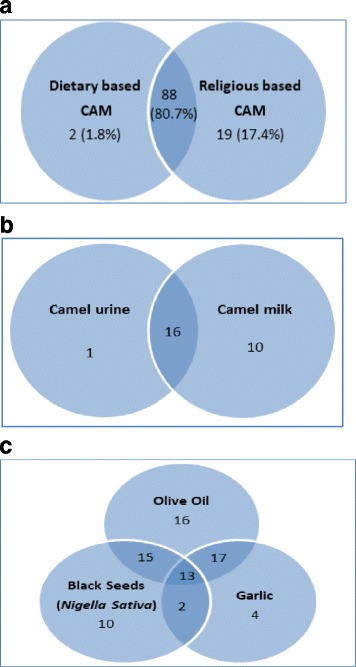
A total of 156 patients with a median age of 50 years (18-84) participated in the study. The prevalence of CAM use was 69.9%; the most prominent types of CAM were those of a religious nature, such as supplication (95.4%), Quran recitation (88.1%), consuming Zamzam water (84.4%), and water upon which the Quran has been read (63.3%). Drinking camel milk was reported by 24.1% of CAM users, whereas camel urine was consumed by 15.7%. A variety of reasons were given for CAM use: 75% reported that they were using CAM to treat cancer, enhance mood (18.3%),control pain (11.9%), enhance the immune system (11%),increase physical fitness (6.4%), and improve appetite (4.6%). Thirty percent of CAM users had discussed the issue with their doctors; only 7.7% had done so with their nurses.
The use of CAM, including camel products, is highly prevalent among cancer patients in the Middle East, but these patients do not necessarily divulge their CAM use to their treating physicians and nurses. Although CAM use can be beneficial, some can be very harmful, especially for cancer patients. Association is known between camel products and brucellosis and Middle East respiratory syndrome coronavirus (MERS-CoV). Both can lead to tremendous morbidity in immune-compromised patients. Doctor-patient communication regarding CAM use is of paramount importance in cancer care.
相当一部分癌症患者在接受常规治疗(CT)的同时,还会使用补充和替代医学(CAM),而一小部分患者则会推迟或放弃 CT 转而选择 CAM。之前在中东地区进行的关于癌症患者使用 CAM 的研究结果存在差异。本研究旨在调查沙特癌症患者使用 CAM 的流行率和模式。同时还探讨了癌症患者使用 CAM 的可能益处和危害,并研究了患者的信念以及他们对医疗保健提供者关于 CAM 使用的透明度。
采用面对面访谈的方式,在肿瘤科病房和门诊进行了一项横断面研究。
共有 156 名中位年龄为 50 岁(18-84 岁)的患者参与了研究。CAM 的使用率为 69.9%;最突出的 CAM 类型是宗教性质的,如祈祷(95.4%)、古兰经诵读(88.1%)、饮用扎姆扎姆水(84.4%)和读过古兰经的水(63.3%)。24.1%的 CAM 用户报告饮用骆驼奶,15.7%的 CAM 用户饮用骆驼尿。人们使用 CAM 的原因多种多样:75%的人表示使用 CAM 是为了治疗癌症,改善情绪(18.3%)、控制疼痛(11.9%)、增强免疫系统(11%)、提高身体素质(6.4%)和改善食欲(4.6%)。30%的 CAM 用户曾与医生讨论过这个问题;只有 7.7%的人与护士讨论过。
在中东,癌症患者使用 CAM,包括骆驼产品,非常普遍,但这些患者并不一定会向他们的主治医生和护士透露他们的 CAM 使用情况。虽然 CAM 的使用可能是有益的,但有些可能非常有害,尤其是对癌症患者。骆驼产品与布鲁氏菌病和中东呼吸综合征冠状病毒(MERS-CoV)有关。这两种疾病都会导致免疫功能低下的患者出现严重的发病率。在癌症护理中,医生与患者就 CAM 使用情况进行沟通至关重要。