Center for Perceptual Systems, The University of Texas at Austin, Austin, Texas, USA.
Facultad de Psicología, Universidad Autónoma de Madrid, Madrid, Spain.
Sci Rep. 2018 Mar 12;8(1):4324. doi: 10.1038/s41598-018-22731-w.
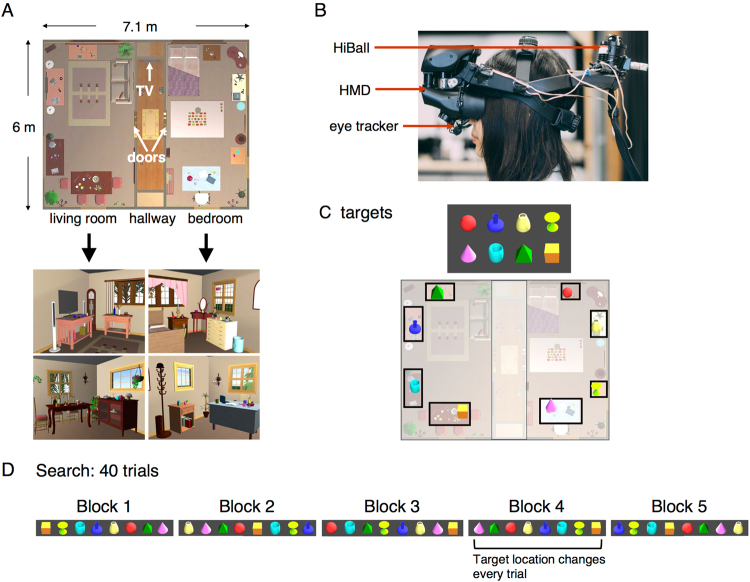
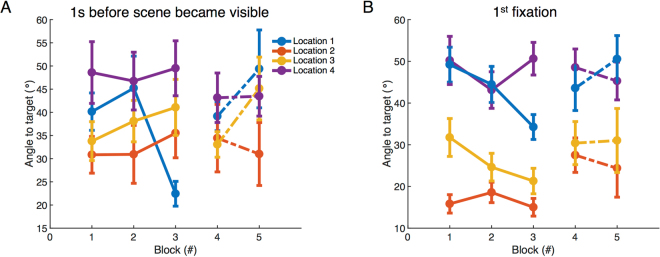
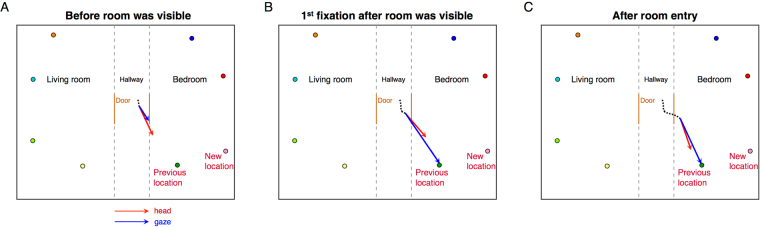
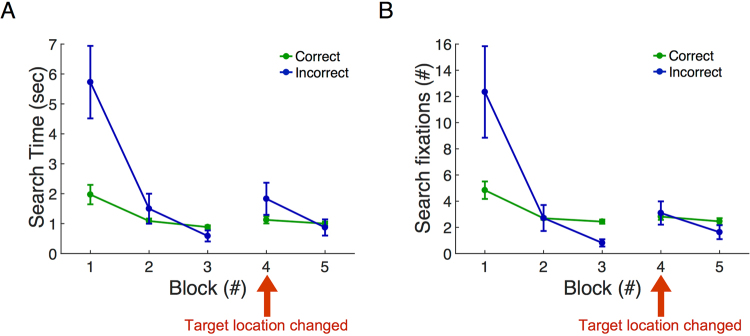
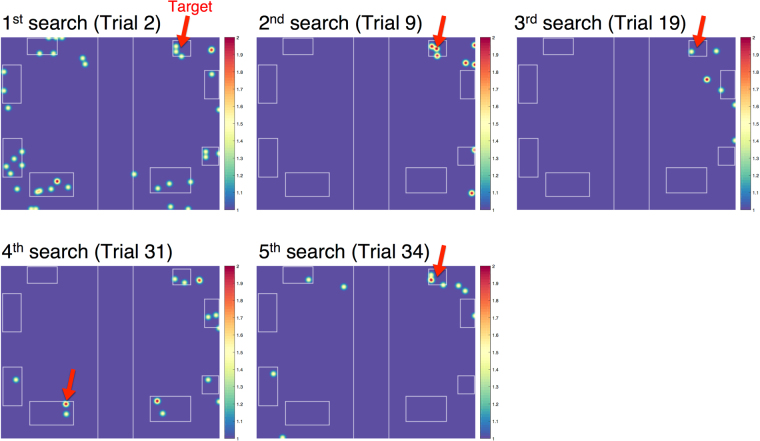
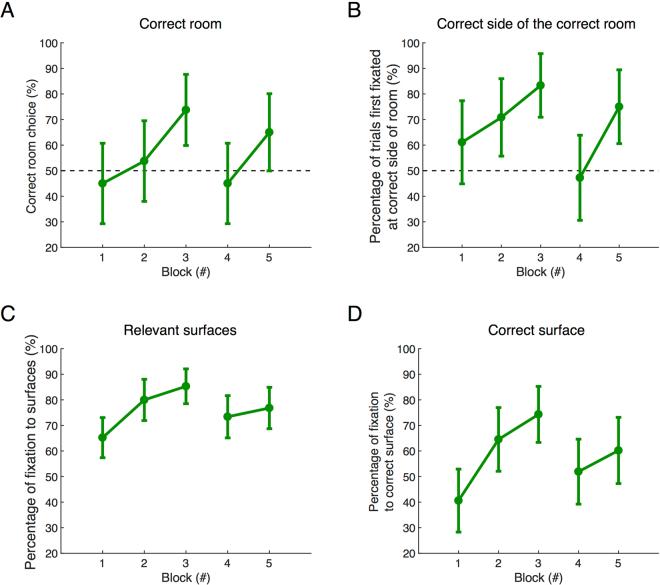
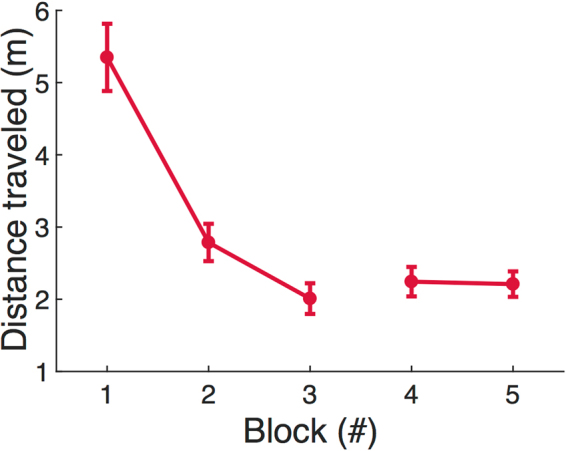
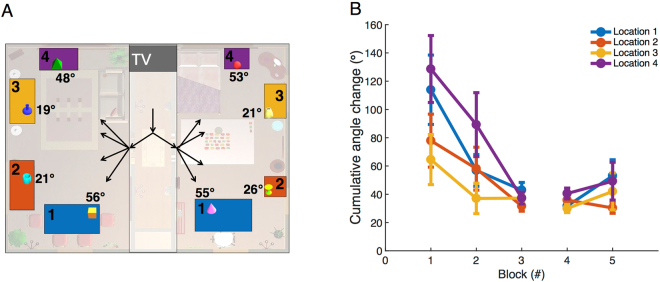
Search is a central visual function. Most of what is known about search derives from experiments where subjects view 2D displays on computer monitors. In the natural world, however, search involves movement of the body in large-scale spatial contexts, and it is unclear how this might affect search strategies. In this experiment, we explore the nature of memory representations developed when searching in an immersive virtual environment. By manipulating target location, we demonstrate that search depends on episodic spatial memory as well as learnt spatial priors. Subjects rapidly learned the large-scale structure of the space, with shorter paths and less head rotation to find targets. These results suggest that spatial memory of the global structure allows a search strategy that involves efficient attention allocation based on the relevance of scene regions. Thus spatial memory may allow less energetically costly search strategies.
搜索是一种重要的视觉功能。我们对搜索的大部分了解都源于这样的实验:实验对象在电脑显示器上观看二维显示。然而,在自然界中,搜索涉及到身体在大尺度空间环境中的移动,目前尚不清楚这会如何影响搜索策略。在这项实验中,我们探索了在沉浸式虚拟环境中搜索时所形成的记忆表象的本质。通过操纵目标位置,我们证明搜索既依赖于情景记忆,也依赖于习得的空间先验。实验对象迅速掌握了空间的大体结构,找到目标的路径更短,头部转动也更少。这些结果表明,对全局结构的空间记忆可以让搜索策略基于场景区域的相关性来实现高效的注意力分配。因此,空间记忆可能允许采用能量消耗更低的搜索策略。