Division of Genetics and Epidemiology, The Institute of Cancer Research, 15 Cotswold Road, London, SM2 5NG, UK.
Department of Medicine, Section of Epidemiology and Population Sciences, Dan L. Duncan Comprehensive Cancer Center, Baylor College of Medicine, Houston, TX, USA.
BMC Med. 2018 Mar 15;16(1):42. doi: 10.1186/s12916-018-1027-5.
An inverse relationship between allergies with glioma risk has been reported in several but not all epidemiological observational studies. We performed an analysis of genetic variants associated with atopy to assess the relationship with glioma risk using Mendelian randomisation (MR), an approach unaffected by biases from temporal variability and reverse causation that might have affected earlier investigations.
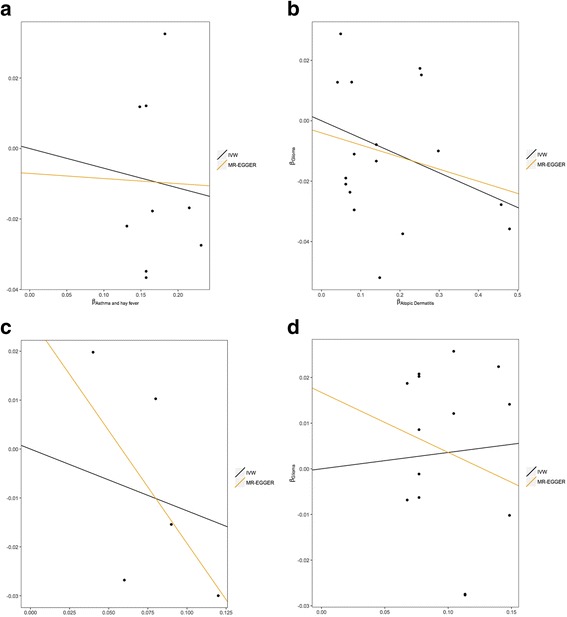
Two-sample MR was undertaken using genome-wide association study data. We used single nucleotide polymorphisms (SNPs) associated with atopic dermatitis, asthma and hay fever, IgE levels, and self-reported allergy as instrumental variables. We calculated MR estimates for the odds ratio (OR) for each risk factor with glioma using SNP-glioma estimates from 12,488 cases and 18,169 controls, using inverse-variance weighting (IVW), maximum likelihood estimation (MLE), weighted median estimate (WME) and mode-based estimate (MBE) methods. Violation of MR assumptions due to directional pleiotropy were sought using MR-Egger regression and HEIDI-outlier analysis.
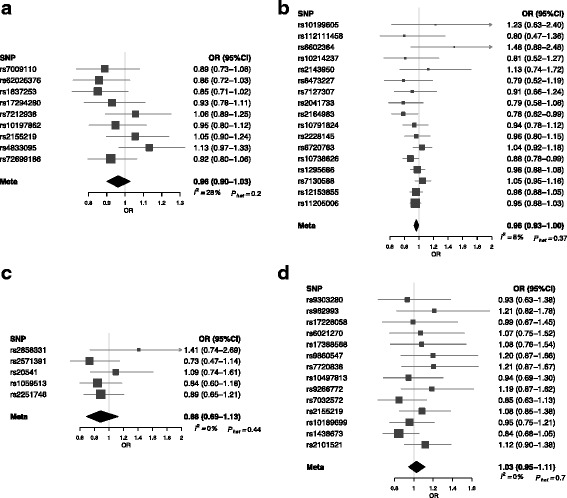
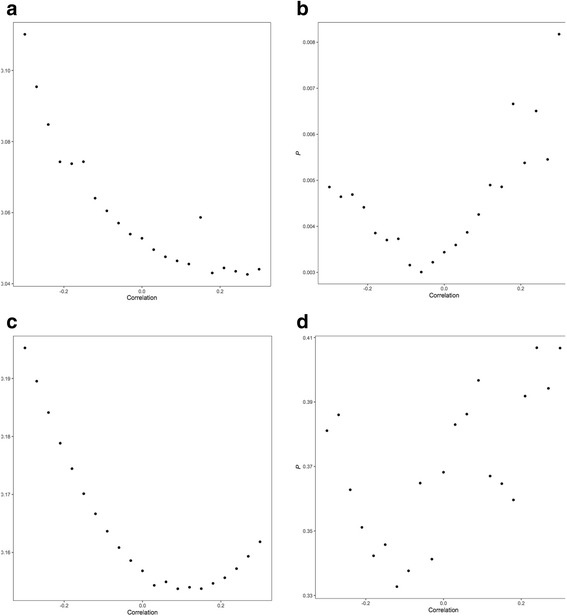
Under IVW, MLE, WME and MBE methods, associations between glioma risk with asthma and hay fever, self-reported allergy and IgE levels were non-significant. An inverse relationship between atopic dermatitis and glioma risk was found by IVW (OR 0.96, 95% confidence interval (CI) 0.93-1.00, P = 0.041) and MLE (OR 0.96, 95% CI 0.94-0.99, P = 0.003), but not by WME (OR 0.96, 95% CI 0.91-1.01, P = 0.114) or MBE (OR 0.97, 95% CI 0.92-1.02, P = 0.194).
Our investigation does not provide strong evidence for relationship between atopy and the risk of developing glioma, but findings do not preclude a small effect in relation to atopic dermatitis. Our analysis also serves to illustrate the value of using several MR methods to derive robust conclusions.
几项但并非所有的流行病学观察研究报告称,过敏与神经胶质瘤风险之间呈负相关关系。我们对与过敏相关的遗传变异进行了分析,以使用孟德尔随机化(MR)评估其与神经胶质瘤风险的关系,这种方法不受时间变化和反向因果关系引起的偏倚的影响,而这些偏倚可能会影响早期的研究。
使用全基因组关联研究数据进行两样本 MR 分析。我们使用与特应性皮炎、哮喘和花粉热、IgE 水平和自我报告的过敏相关的单核苷酸多态性(SNP)作为工具变量。我们使用来自 12488 例病例和 18169 例对照的 SNP-神经胶质瘤估计值,使用逆方差加权(IVW)、最大似然估计(MLE)、加权中位数估计(WME)和基于模式的估计(MBE)方法,计算每个危险因素与神经胶质瘤的比值比(OR)的 MR 估计值。通过 MR-Egger 回归和 HEIDI 异常值分析,寻找由于方向性 pleiotropy 而违反 MR 假设的情况。
在 IVW、MLE、WME 和 MBE 方法下,神经胶质瘤风险与哮喘和花粉热、自我报告的过敏和 IgE 水平之间的关联均无统计学意义。通过 IVW(OR 0.96,95%置信区间(CI)0.93-1.00,P = 0.041)和 MLE(OR 0.96,95% CI 0.94-0.99,P = 0.003)发现特应性皮炎与神经胶质瘤风险呈负相关,但 WME(OR 0.96,95% CI 0.91-1.01,P = 0.114)或 MBE(OR 0.97,95% CI 0.92-1.02,P = 0.194)则不然。
我们的研究没有提供强有力的证据表明过敏与患神经胶质瘤的风险之间存在关系,但这些发现并不能排除与特应性皮炎有关的微小影响。我们的分析还说明了使用多种 MR 方法得出稳健结论的价值。