Department of Food and Nutrition, Hannam University, Daejeon 34054, Korea.
Institute of Functional Foods, KunpoongBio Co. Ltd., Jeju 63010, Korea.
Int J Mol Sci. 2018 Mar 15;19(3):874. doi: 10.3390/ijms19030874.
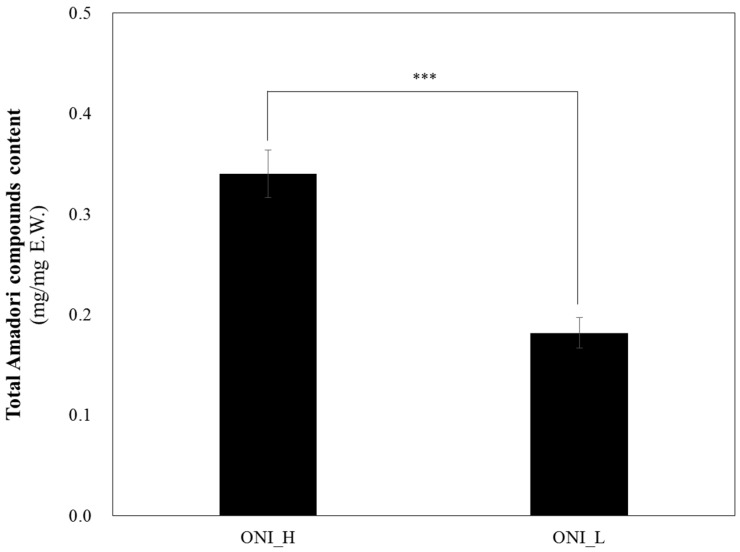
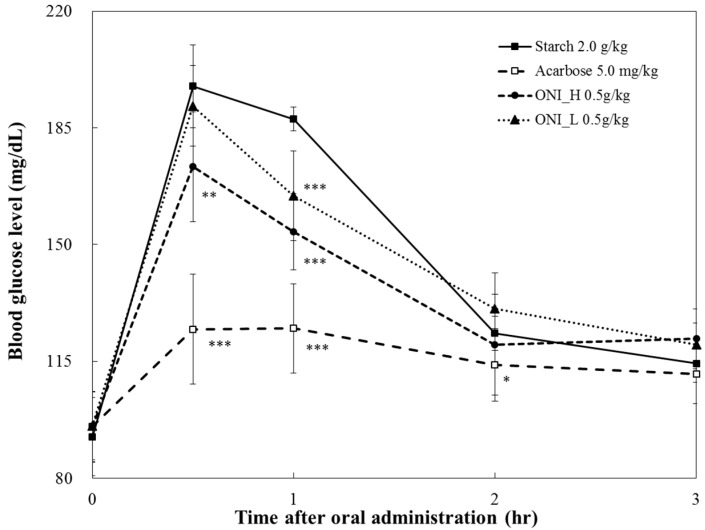
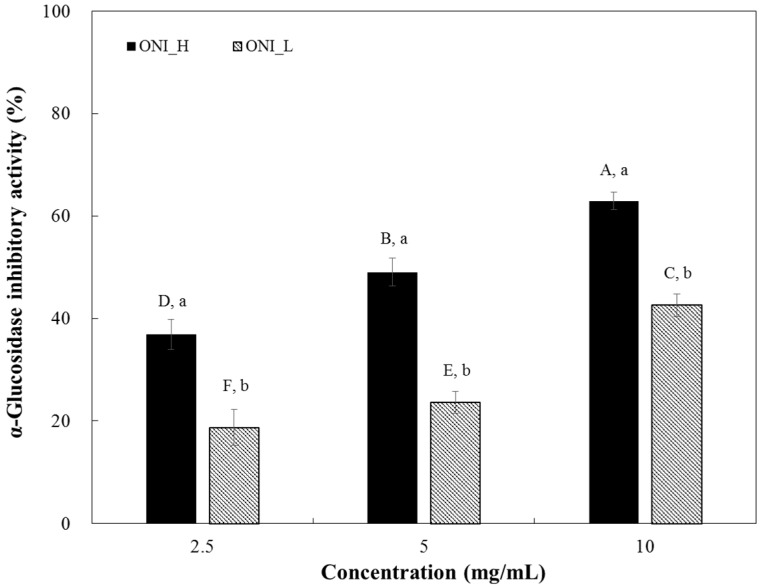
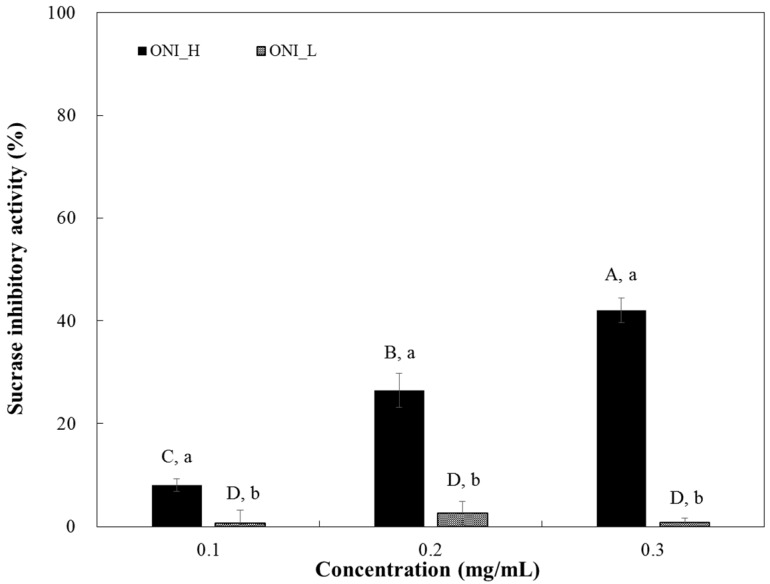
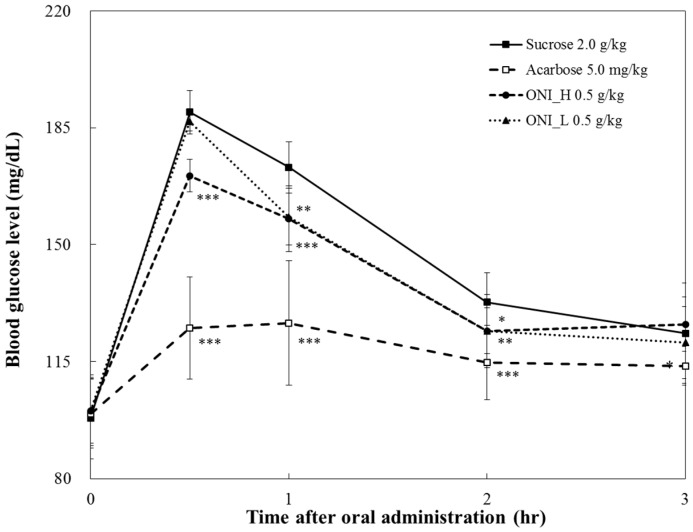
Onion ( L.) is widely consumed as food or medicinal plant due to its well-defined health benefits. The antioxidant and antihyperlipidemic effects of onion and its extracts have been reported well. However, very limited information on anti-hyperglycemic effect is available in processed onion extracts. In our previous study, we reported that Amadori rearrangement compounds (ARCs) produced by heat-processing in Korean ginseng can reduce carbohydrate absorption by inhibiting intestinal carbohydrate hydrolyzing enzymes in both in vitro and in vivo animal models. To prove the enhancement of anti-hyperglycemic effect and ARCs content by heat-processing in onion extract, a correlation between the anti-hyperglycemic activity and the total content of ARCs of heat-processed onion extract (ONI) was investigated. ONI has a high content of ARCs and had high rat small intestinal sucrase inhibitory activity (0.34 ± 0.03 mg/mL, IC) relevant for the potential management of postprandial hyperglycemia. The effect of ONI on the postprandial blood glucose increase was investigated in Sprague Dawley (SD) rats fed on sucrose or starch meals. The maximum blood glucose levels (C) of heat-processed onion extract were significantly decreased by about 8.7% (from 188.60 ± 5.37 to 172.27 ± 3.96, < 0.001) and 14.2% (from 204.04 ± 8.73 to 175.13 ± 14.09, < 0.01) in sucrose and starch loading tests, respectively. These results indicate that ARCs in onion extract produced by heat-processing have anti-diabetic effect by suppressing carbohydrate absorption via inhibition of intestinal sucrase, thereby reducing the postprandial increase of blood glucose. Therefore, enhancement of ARCs in onion by heat-processing might be a good strategy for the development of the new product on the management of hyperglycemia.
洋葱(L.)因其明确的健康益处而被广泛用作食品或药用植物。洋葱及其提取物的抗氧化和抗高血脂作用已得到很好的报道。然而,关于加工洋葱提取物的降血糖作用的信息非常有限。在我们之前的研究中,我们报道了由韩国人参热加工产生的 Amadori 重排化合物(ARC)可以通过抑制体内和体内动物模型中的肠道碳水化合物水解酶来减少碳水化合物的吸收。为了证明热加工洋葱提取物中 ARC 含量的增加可以提高降血糖作用,研究了热加工洋葱提取物(ONI)的降血糖活性与总 ARC 含量之间的相关性。ONI 含有高浓度的 ARC,对大鼠小肠蔗糖酶抑制活性(0.34±0.03mg/mL,IC)具有较高的抑制活性,这与潜在的餐后高血糖管理有关。在给予蔗糖或淀粉餐的 Sprague Dawley(SD)大鼠中研究了 ONI 对餐后血糖升高的影响。热加工洋葱提取物的最大血糖水平(C)分别显著降低了约 8.7%(从 188.60±5.37 降至 172.27±3.96, <0.001)和 14.2%(从 204.04±8.73 降至 175.13±14.09, <0.01)在蔗糖和淀粉负荷试验中。这些结果表明,热加工洋葱提取物中的 ARC 通过抑制肠道蔗糖酶抑制碳水化合物吸收,从而降低餐后血糖升高,具有抗糖尿病作用。因此,通过热加工提高洋葱中的 ARC 可能是开发管理高血糖的新产品的良好策略。