Kim Gi-Jung, Jang Yelim, Kwon Kyoung-Tae, Kim Jae-Won, Kang Seong-Il, Ko Hee-Chul, Lee Jung-Yun, Apostolidis Emmanouil, Kwon Young-In
Department of Food and Nutrition, Hannam University, Daejeon 34054, Republic of Korea.
Jeju Institute of Korean Medicine, Jujusi, Juju 63309, Republic of Korea.
Int J Mol Sci. 2024 Dec 23;25(24):13721. doi: 10.3390/ijms252413721.
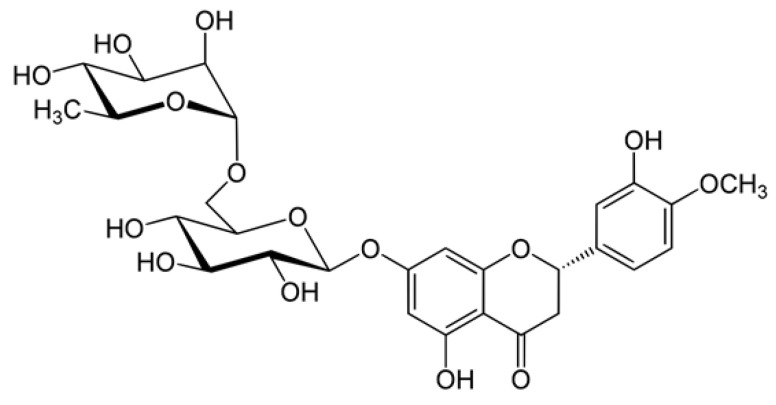
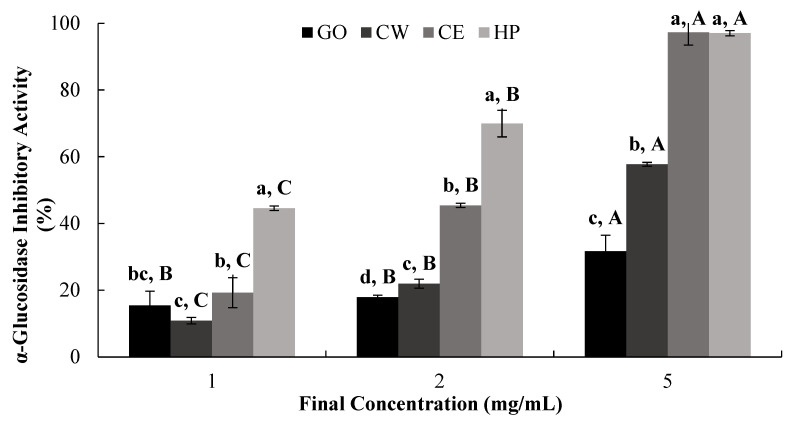
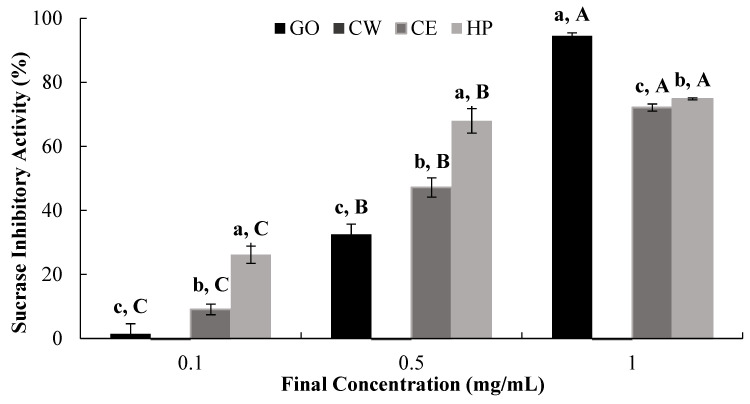
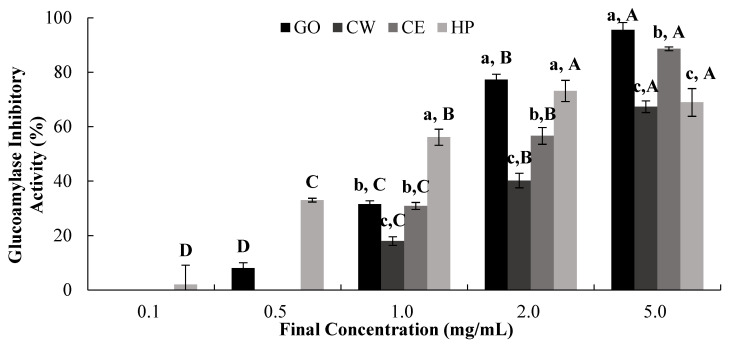
Citrus fruits are widely distributed in East Asia, and tea made from citrus peels has demonstrated health benefits, such as a reduction in fever, inflammation, and high blood pressure. However, citrus leaves have not been evaluated extensively for their possible health benefits. In this study, the α-glucosidase-inhibitory activity of Jeju citrus hot-water (CW) and ethyl alcohol (CE) extracts, along with hesperidin (HP) (a bioactive compound in citrus leaf extracts), was investigated, and furthermore, their effect on postprandial blood glucose reduction in an animal model was determined. The hesperidin contents of CW and CE were 15.80 ± 0.18 and 39.17 ± 0.07 mg/g-extract, respectively. Hesperidin inhibited α-glucosidase (IC, 4.39), sucrase (0.50), and CE (2.62) and demonstrated higher α-glucosidase inhibitory activity when compared to CW (4.99 mg/mL). When using an SD rat model, during sucrose and starch loading tests with CE ( < 0.01) and HP ( < 0.01), a significant postprandial blood glucose reduction effect was observed when compared to the control. The maximum blood glucose levels (C) of the CE administration group decreased by about 15% (from 229.3 ± 14.5 to 194.0 ± 7.4, < 0.01) and 11% (from 225.1 ± 13.8 to 201.1 ± 7.2 hr·mg/dL, < 0.05) in the sucrose and starch loading tests, respectively. Our findings suggest that citrus leaf extracts standardized to hesperidin may reduce postprandial blood glucose levels through the observed inhibitory effect against sucrase, which results in delayed carbohydrate absorption. Our findings provide a biochemical rationale for further evaluating the benefits of citrus leaves.
柑橘类水果在东亚广泛分布,用柑橘皮制成的茶已显示出对健康有益,如降低发烧、炎症和高血压。然而,柑橘叶对健康的潜在益处尚未得到广泛评估。在本研究中,研究了济州柑橘热水提取物(CW)和乙醇提取物(CE)以及橙皮苷(HP)(柑橘叶提取物中的一种生物活性化合物)的α-葡萄糖苷酶抑制活性,此外,还测定了它们对动物模型餐后血糖降低的影响。CW和CE的橙皮苷含量分别为15.80±0.18和39.17±0.07mg/g提取物。橙皮苷抑制α-葡萄糖苷酶(IC,4.39)、蔗糖酶(0.50)和CE(2.62),与CW(4.99mg/mL)相比,显示出更高的α-葡萄糖苷酶抑制活性。在使用SD大鼠模型进行蔗糖和淀粉负荷试验时,与对照组相比,CE(<0.01)和HP(<0.01)在试验过程中观察到显著的餐后血糖降低效果。CE给药组在蔗糖和淀粉负荷试验中的最大血糖水平(C)分别下降了约15%(从229.3±14.5降至194.0±7.4,<0.01)和11%(从225.1±13.8降至201.1±7.2hr·mg/dL,<0.05)。我们的研究结果表明,标准化为橙皮苷的柑橘叶提取物可能通过对蔗糖酶的抑制作用降低餐后血糖水平,从而导致碳水化合物吸收延迟。我们的研究结果为进一步评估柑橘叶的益处提供了生化依据。