Department of Medical Biology, Faculty of Health Sciences, University of Tromsø, Tromsø, Norway.
Front Immunol. 2018 Mar 1;9:387. doi: 10.3389/fimmu.2018.00387. eCollection 2018.
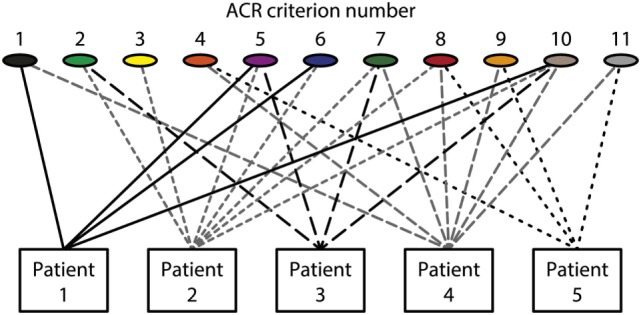
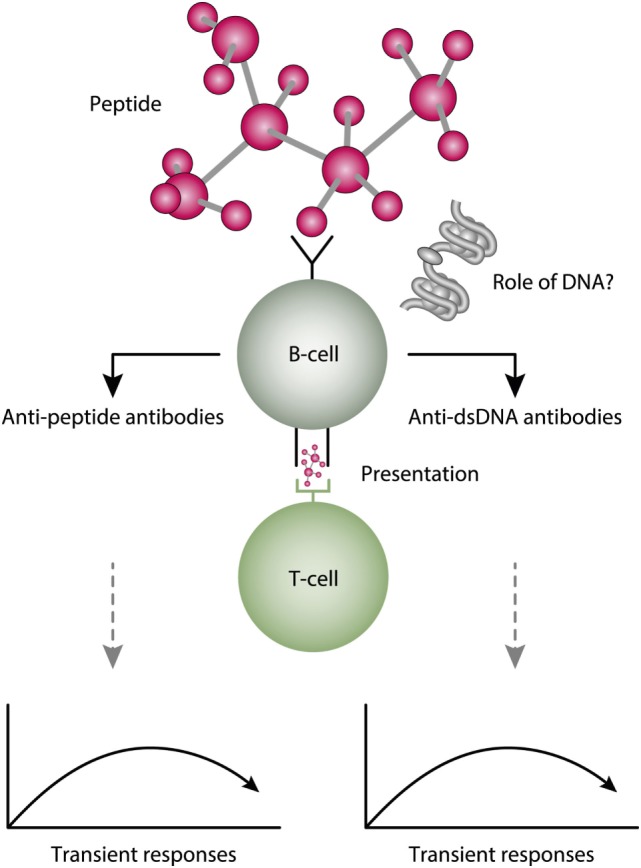
Systemic lupus erythematosus (SLE) is an inadequately defined syndrome. Etiology and pathogenesis remain largely unknown. SLE is on the other hand a seminal syndrome that has challenged immunologists, biologists, genetics, and clinicians to solve its nature. The syndrome is characterized by multiple, etiologically unlinked manifestations. Unexpectedly, they seem to occur in different stochastically linked clusters, although single gene defects may promote a smaller spectrum of symptoms/criteria typical for SLE. There is no known inner coherence of parameters (criteria) making up the disease. These parameters are, nevertheless, implemented in The American College of Rheumatology (ACR) and The Systemic Lupus Collaborating Clinics (SLICC) criteria to classify SLE. Still, SLE is an abstraction since the ACR or SLICC criteria allow us to define hundreds of different clinical SLE phenotypes. This is a major point of the present discussion and uses "The anti-dsDNA antibody" as an example related to the problematic search for biomarkers for SLE. The following discussion will show how problematic this is: the disease is defined through non-coherent classification criteria, its complexity is recognized and accepted, its pathogenesis is plural and poorly understood. Therapy is focused on dominant symptoms or organ manifestations, and not on the syndrome itself. From basic scientific evidences, we can add substantial amount of data that are not sufficiently considered in clinical medicine, which may change the paradigms linked to what "The Anti-DNA antibody" is-and is not-in context of the imperfectly defined syndrome SLE.
系统性红斑狼疮(SLE)是一种定义不充分的综合征。其病因和发病机制在很大程度上仍不清楚。另一方面,SLE 是一个开创性的综合征,它促使免疫学家、生物学家、遗传学家和临床医生努力解决其本质。该综合征的特征是多种病因无关的表现。出乎意料的是,它们似乎以不同的随机关联簇发生,尽管单个基因缺陷可能会促进更典型的 SLE 的较小范围的症状/标准。构成该疾病的参数(标准)之间没有已知的内在一致性。然而,这些参数在《美国风湿病学会》(ACR)和《系统性红斑狼疮协作临床》(SLICC)标准中被实施,以分类 SLE。尽管如此,SLE 是一种抽象概念,因为 ACR 或 SLICC 标准允许我们定义数百种不同的临床 SLE 表型。这是本次讨论的一个主要观点,并以“抗 dsDNA 抗体”为例,涉及到 SLE 生物标志物的有问题的搜索。以下讨论将展示这是多么有问题:该疾病通过非一致的分类标准定义,其复杂性得到承认和接受,其发病机制是多元的,理解不足。治疗集中在主要症状或器官表现,而不是针对该综合征本身。从基础科学证据来看,我们可以增加大量在临床医学中未充分考虑的数据,这可能会改变与“抗 DNA 抗体”在不完善定义的 SLE 综合征中的意义相关的范式。