Program in Molecular Biophysics, Johns Hopkins University, Baltimore, MD, United States.
Department of Informatics, School of Science and Technology, Kwansei Gakuin University, Sanda, Hyogo, Japan.
Front Immunol. 2018 Mar 2;9:413. doi: 10.3389/fimmu.2018.00413. eCollection 2018.
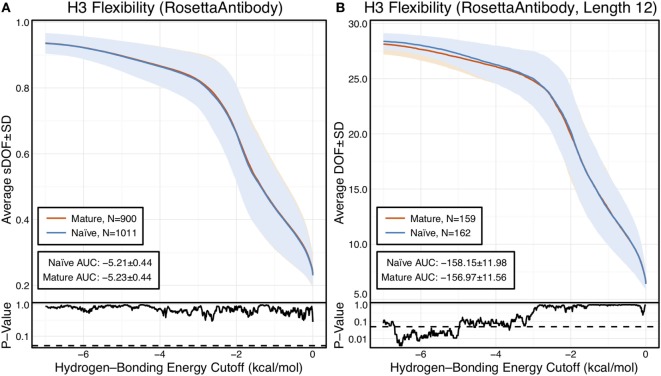
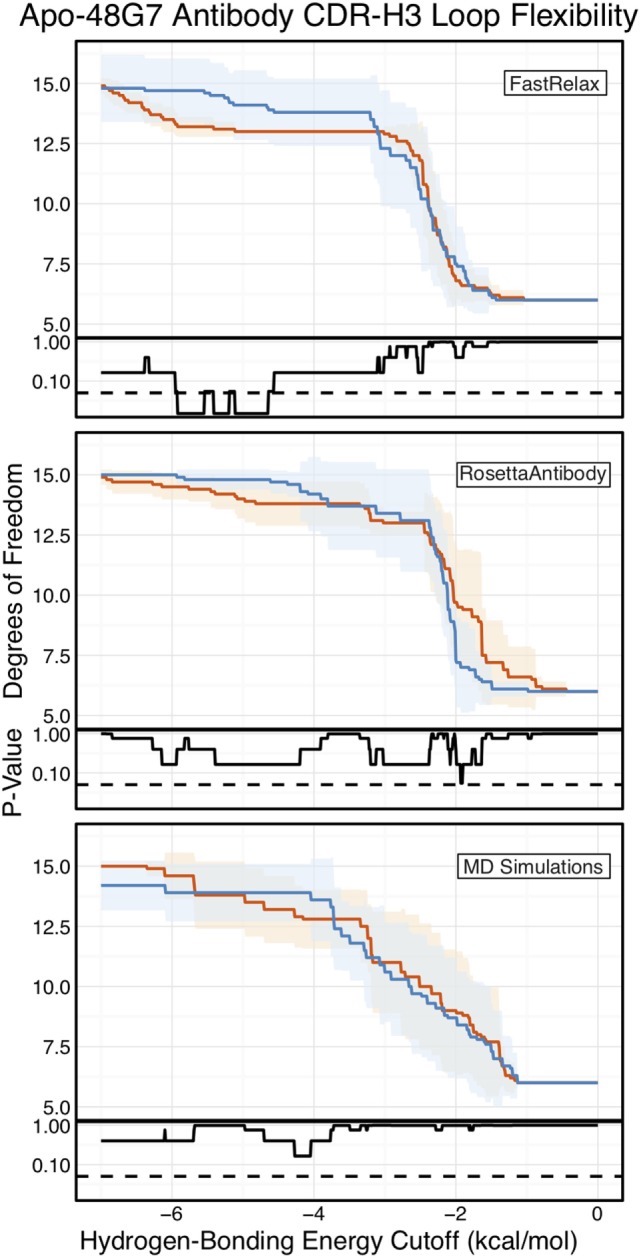
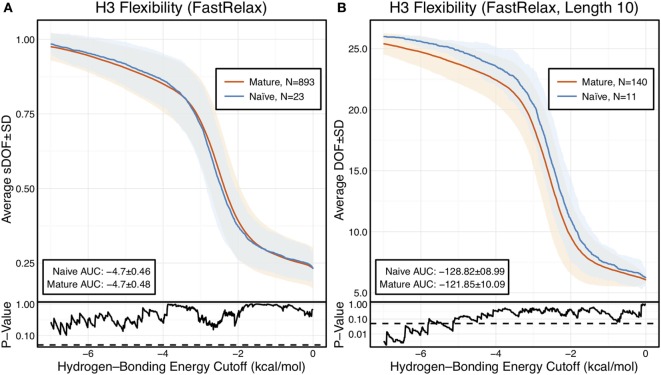
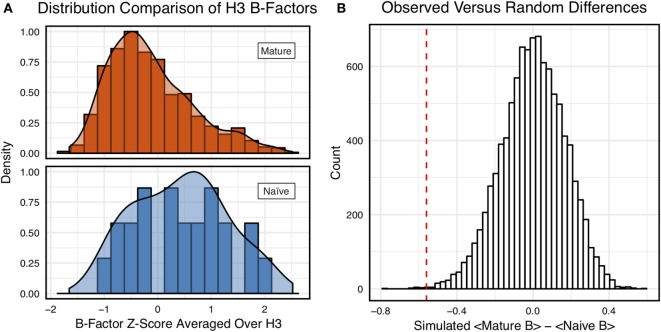
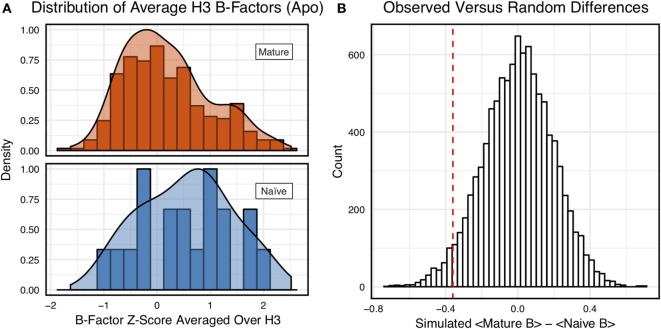
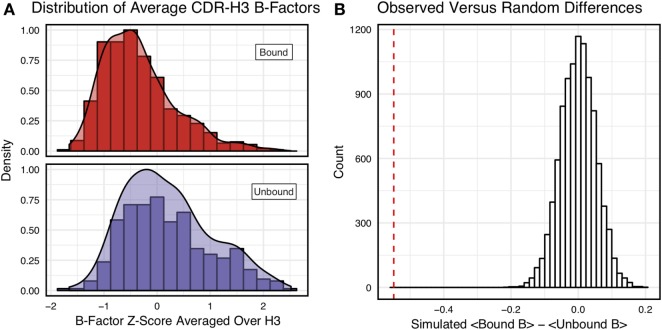
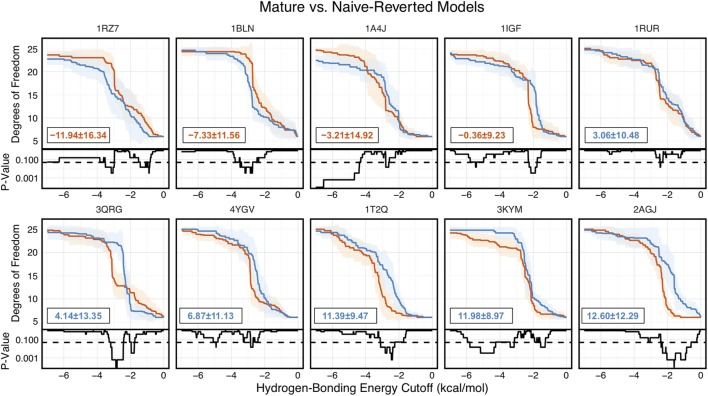
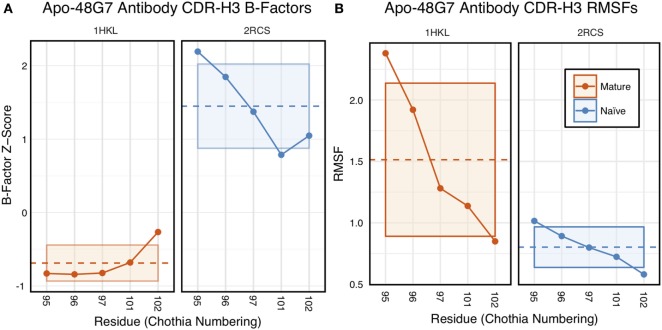
Antibodies can rapidly evolve in specific response to antigens. Affinity maturation drives this evolution through cycles of mutation and selection leading to enhanced antibody specificity and affinity. Elucidating the biophysical mechanisms that underlie affinity maturation is fundamental to understanding B-cell immunity. An emergent hypothesis is that affinity maturation reduces the conformational flexibility of the antibody's antigen-binding paratope to minimize entropic losses incurred upon binding. In recent years, computational and experimental approaches have tested this hypothesis on a small number of antibodies, often observing a decrease in the flexibility of the complementarity determining region (CDR) loops that typically comprise the paratope and in particular the CDR-H3 loop, which contributes a plurality of antigen contacts. However, there were a few exceptions and previous studies were limited to a small handful of cases. Here, we determined the structural flexibility of the CDR-H3 loop for thousands of recent homology models of the human peripheral blood cell antibody repertoire using rigidity theory. We found no clear delineation in the flexibility of naïve and antigen-experienced antibodies. To account for possible sources of error, we additionally analyzed hundreds of human and mouse antibodies in the Protein Data Bank through both rigidity theory and B-factor analysis. By both metrics, we observed only a slight decrease in the CDR-H3 loop flexibility when comparing affinity matured antibodies to naïve antibodies, and the decrease was not as drastic as previously reported. Further analysis, incorporating molecular dynamics simulations, revealed a spectrum of changes in flexibility. Our results suggest that rigidification may be just one of many biophysical mechanisms for increasing affinity.
抗体可以针对抗原迅速进化。亲和力成熟通过突变和选择的循环驱动这种进化,从而提高抗体的特异性和亲和力。阐明亲和力成熟背后的生物物理机制对于理解 B 细胞免疫至关重要。一个新兴的假设是,亲和力成熟降低了抗体抗原结合位的构象灵活性,以最大程度地减少结合时产生的熵损失。近年来,计算和实验方法已经在少数几种抗体上测试了这一假设,通常观察到互补决定区 (CDR) 环的灵活性降低,这些环通常构成抗原结合位,特别是 CDR-H3 环,它贡献了许多抗原接触。然而,也有一些例外,以前的研究仅限于少数几种情况。在这里,我们使用刚性理论确定了数千个人类外周血 B 细胞抗体库的近期同源模型中 CDR-H3 环的结构灵活性。我们没有发现幼稚抗体和抗原经验抗体之间在灵活性上有明显的区别。为了解释可能的误差来源,我们还通过刚性理论和 B 因子分析分析了数百个人类和小鼠抗体在蛋白质数据库中的结构。通过这两种指标,我们发现成熟的抗体与幼稚的抗体相比,CDR-H3 环的灵活性只有轻微下降,而且下降幅度不如以前报道的那么大。进一步的分析,包括分子动力学模拟,揭示了灵活性变化的范围。我们的结果表明,僵化可能只是提高亲和力的多种生物物理机制之一。