Department of Veterinary Microbiology and Pathology, College of Veterinary Medicine, Washington State University, Pullman, WA, USA.
Department of Biological Sciences, University of the Pacific, Stockton, CA, USA.
Int J Parasitol Drugs Drug Resist. 2018 Apr;8(1):137-144. doi: 10.1016/j.ijpddr.2018.02.002. Epub 2018 Feb 16.
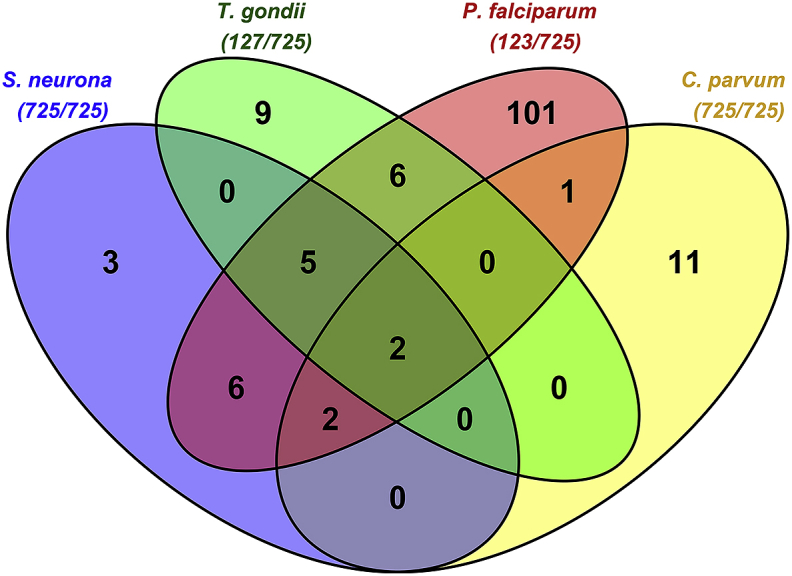
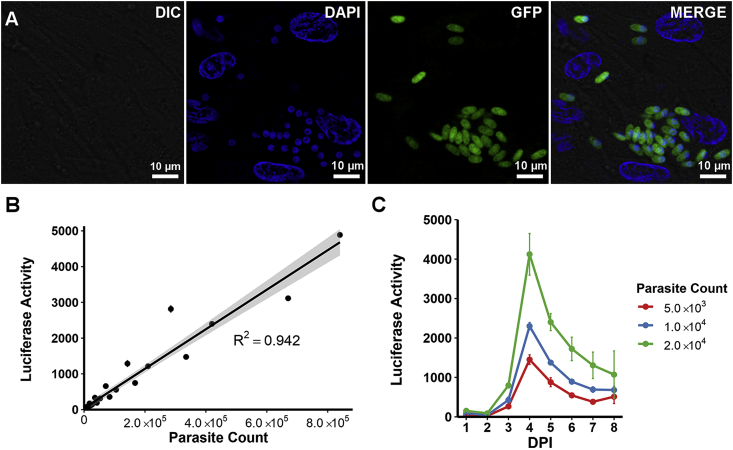
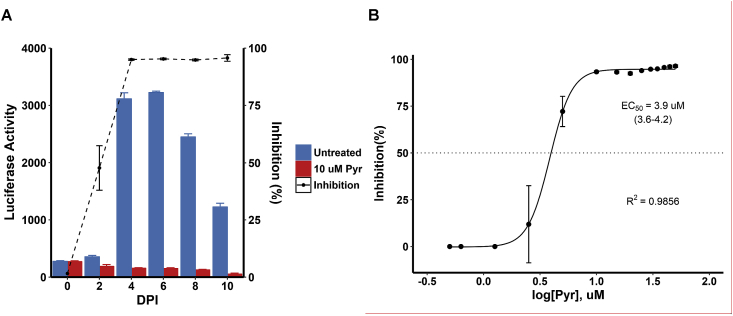
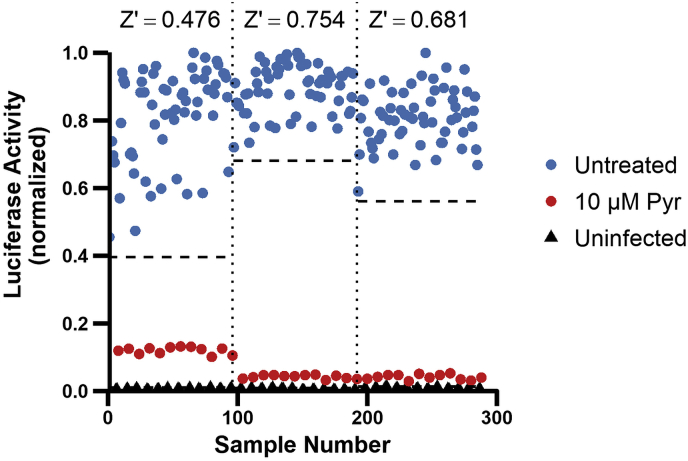
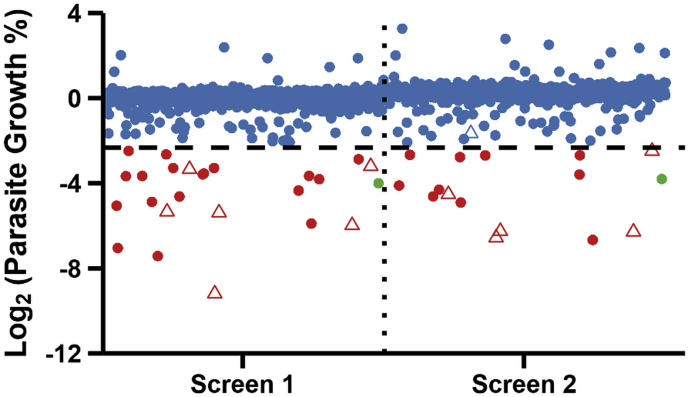
The apicomplexan parasite Sarcocystis neurona is the primary etiologic agent of equine protozoal myeloencephalitis (EPM), a serious neurologic disease of horses. Many horses in the U.S. are at risk of developing EPM; approximately 50% of all horses in the U.S. have been exposed to S. neurona and treatments for EPM are 60-70% effective. Advancement of treatment requires new technology to identify new drugs for EPM. To address this critical need, we developed, validated, and implemented a high-throughput screen to test 725 FDA-approved compounds from the NIH clinical collections library for anti-S. neurona activity. Our screen identified 18 compounds with confirmed inhibitory activity against S. neurona growth, including compounds active in the nM concentration range. Many identified inhibitory compounds have well-defined mechanisms of action, making them useful tools to study parasite biology in addition to being potential therapeutic agents. In comparing the activity of inhibitory compounds identified by our screen to that of other screens against other apicomplexan parasites, we found that most compounds (15/18; 83%) have activity against one or more related apicomplexans. Interestingly, nearly half (44%; 8/18) of the inhibitory compounds have reported activity against dopamine receptors. We also found that dantrolene, a compound already formulated for horses with a peak plasma concentration of 37.8 ± 12.8 ng/ml after 500 mg dose, inhibits S. neurona parasites at low concentrations (0.065 μM [0.036-0.12; 95% CI] or 21.9 ng/ml [12.1-40.3; 95% CI]). These studies demonstrate the use of a new tool for discovering new chemotherapeutic agents for EPM and potentially providing new reagents to elucidate biologic pathways required for successful S. neurona infection.
顶复亚目寄生虫 Sarcocystis neurona 是马原虫性脑脊髓炎(EPM)的主要病原体,EPM 是一种严重的马神经系统疾病。美国许多马都面临感染 EPM 的风险;在美国,约有 50%的马曾接触过 S. neurona,而治疗 EPM 的有效率为 60-70%。为了推进治疗方法,需要新的技术来发现针对 EPM 的新药。为了满足这一迫切需求,我们开发、验证并实施了一种高通量筛选方法,用于测试 NIH 临床收藏库中 725 种已批准的 FDA 化合物对 S. neurona 的活性。我们的筛选方法确定了 18 种具有确认抑制 S. neurona 生长活性的化合物,包括在 nM 浓度范围内具有活性的化合物。许多已确定的抑制性化合物具有明确的作用机制,除了可能成为治疗剂外,它们还是研究寄生虫生物学的有用工具。在比较我们的筛选方法鉴定的抑制性化合物的活性与其他针对其他顶复亚目寄生虫的筛选方法的活性时,我们发现大多数化合物(15/18;83%)对一种或多种相关顶复亚目寄生虫具有活性。有趣的是,近一半(44%;18/18)的抑制性化合物具有报道的对多巴胺受体的活性。我们还发现,已用于马的化合物 dantrolene(剂量为 500mg 后血浆峰值浓度为 37.8±12.8ng/ml)在低浓度(0.065μM[0.036-0.12;95%CI]或 21.9ng/ml[12.1-40.3;95%CI])下抑制 S. neurona 寄生虫。这些研究表明,该新工具可用于发现针对 EPM 的新型化学治疗剂,并可能提供新的试剂来阐明成功感染 S. neurona 所需的生物学途径。