Lopez David, Ribeiro Sébastien, Label Philippe, Fumanal Boris, Venisse Jean-Stéphane, Kohler Annegret, de Oliveira Ricardo R, Labutti Kurt, Lipzen Anna, Lail Kathleen, Bauer Diane, Ohm Robin A, Barry Kerrie W, Spatafora Joseph, Grigoriev Igor V, Martin Francis M, Pujade-Renaud Valérie
Université Clermont Auvergne, Institut National de la Recherche Agronomique, UMR PIAF, Clermont-Ferrand, France.
CIRAD, UMR AGAP, Clermont-Ferrand, France.
Front Microbiol. 2018 Mar 2;9:276. doi: 10.3389/fmicb.2018.00276. eCollection 2018.
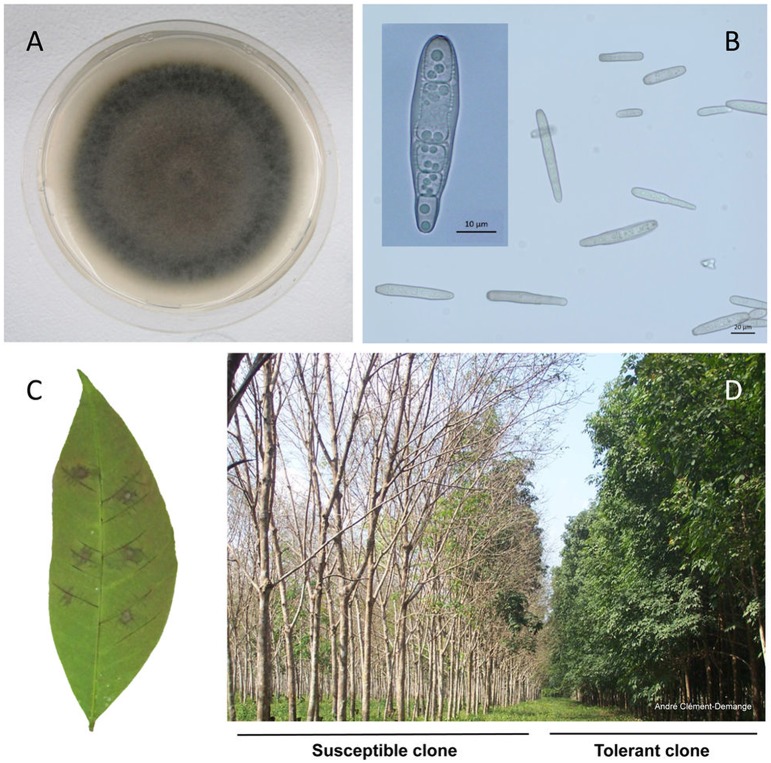
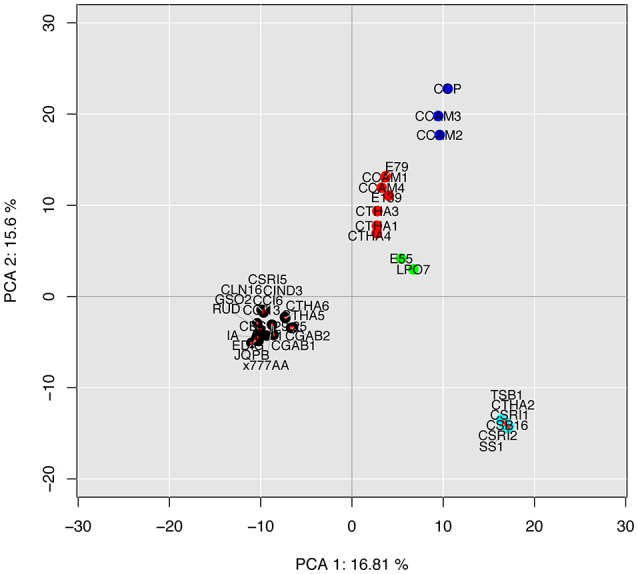
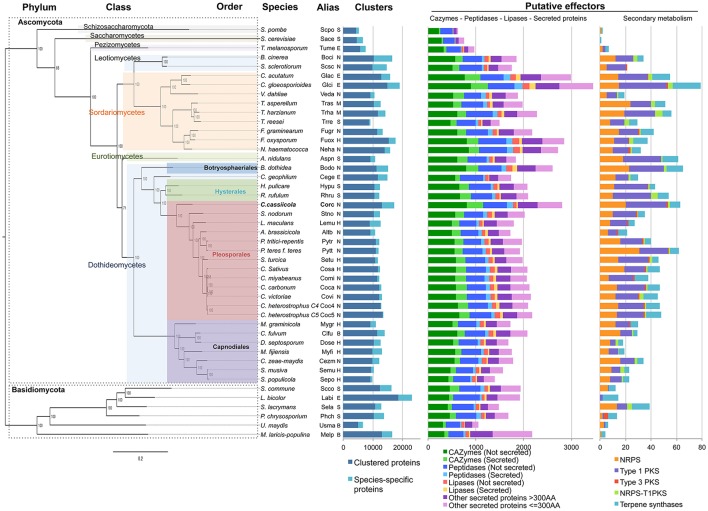
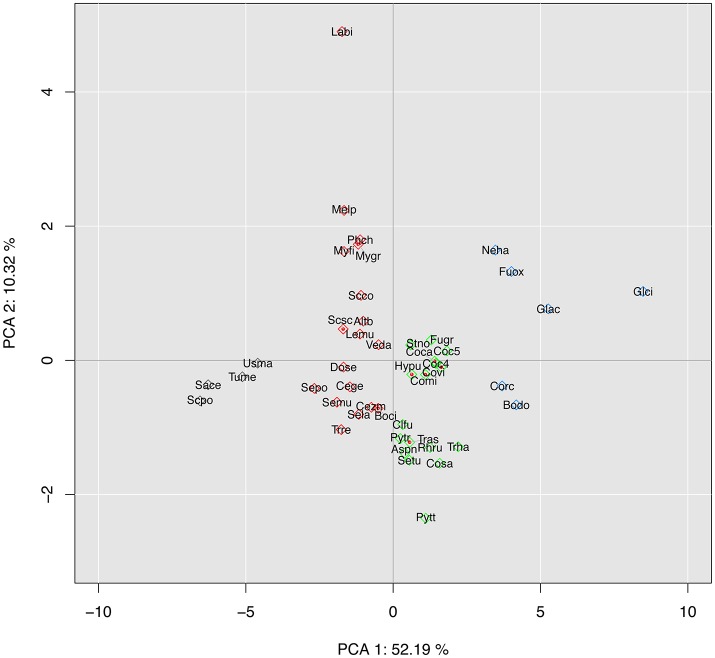
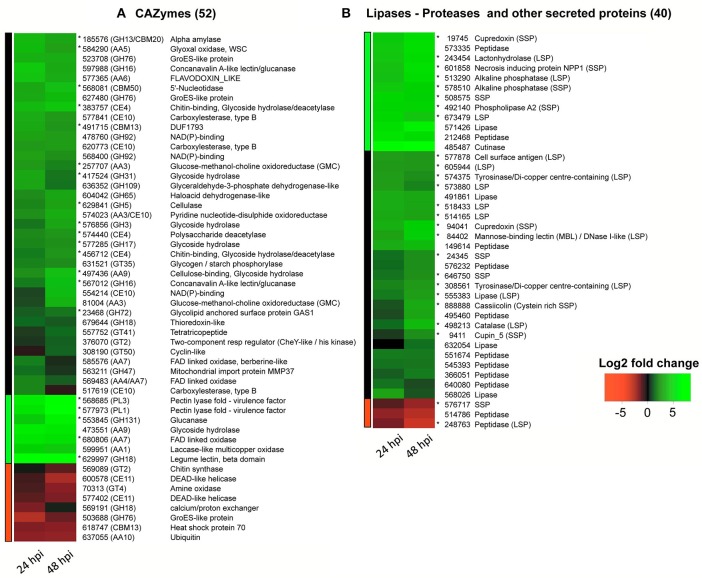
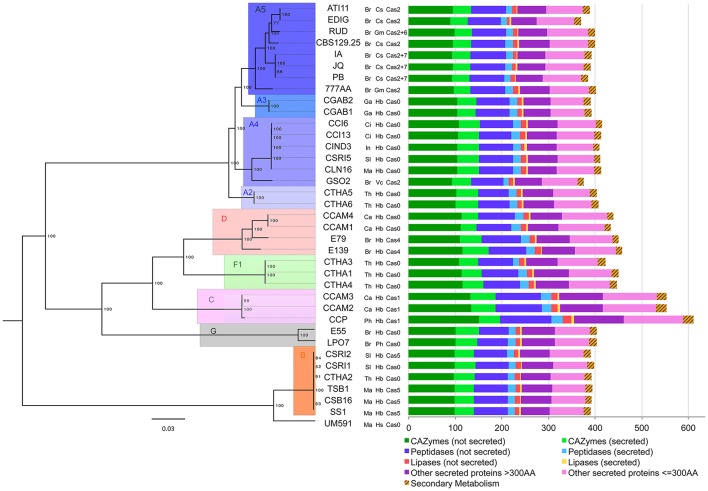
is an Ascomycetes fungus with a broad host range and diverse life styles. Mostly known as a necrotrophic plant pathogen, it has also been associated with rare cases of human infection. In the rubber tree, this fungus causes the leaf fall (CLF) disease, which increasingly affects natural rubber production in Asia and Africa. It has also been found as an endophyte in South American rubber plantations where no CLF outbreak has yet occurred. The species is genetically highly diverse, but no clear relationship has been evidenced between phylogenetic lineage and pathogenicity. Cassiicolin, a small glycosylated secreted protein effector, is thought to be involved in the necrotrophic interaction with the rubber tree but some virulent isolates do not have a cassiicolin gene. This study set out to identify other putative effectors involved in CLF. The genome of a highly virulent isolate from the rubber tree (CCP) was sequenced and assembled. prediction revealed 2870 putative effectors, comprising CAZymes, lipases, peptidases, secreted proteins and enzymes associated with secondary metabolism. Comparison with the genomes of 44 other fungal species, focusing on effector content, revealed a striking proximity with phylogenetically unrelated species (, and ) sharing life style plasticity and broad host range. Candidate effectors involved in the compatible interaction with the rubber tree were identified by transcriptomic analysis. Differentially expressed genes included 92 putative effectors, among which cassiicolin and two other secreted singleton proteins. Finally, the genomes of 35 isolates representing the genetic diversity of the species were sequenced and assembled, and putative effectors identified. At the intraspecific level, effector-based classification was found to be highly consistent with the phylogenomic trees. Identification of lineage-specific effectors is a key step toward understanding virulence and host specialization mechanisms.
是一种子囊菌真菌,具有广泛的宿主范围和多样的生活方式。它主要作为一种坏死营养型植物病原体为人所知,也与罕见的人类感染病例有关。在橡胶树中,这种真菌会引发落叶病(CLF),日益影响亚洲和非洲的天然橡胶生产。在尚未发生CLF疫情的南美橡胶种植园中,它也被发现是一种内生菌。该物种在基因上高度多样化,但系统发育谱系与致病性之间尚未有明确的关联证据。卡西可林是一种小的糖基化分泌蛋白效应子,被认为参与了与橡胶树的坏死营养型相互作用,但一些强毒株系没有卡西可林基因。本研究旨在鉴定参与CLF的其他假定效应子。对一株来自橡胶树的高毒力菌株(CCP)的基因组进行了测序和组装。预测显示有2870个假定效应子,包括碳水化合物活性酶、脂肪酶、肽酶、分泌蛋白以及与次生代谢相关的酶。与其他44种真菌的基因组进行比较,重点关注效应子含量,发现它与具有生活方式可塑性和广泛宿主范围的系统发育无关物种(、和)有显著的相似性。通过转录组分析鉴定了参与与橡胶树相容相互作用的候选效应子。差异表达基因包括92个假定效应子,其中有卡西可林和另外两种分泌的单拷贝蛋白。最后,对代表该物种遗传多样性的35个菌株的基因组进行了测序和组装,并鉴定了假定效应子。在种内水平上,基于效应子的分类与系统发育基因组树高度一致。鉴定谱系特异性效应子是理解毒力和宿主专一化机制的关键一步。